


Kids slipping in the shower is scary. You want fast protection, but you don’t want holes in your tiles. That’s exactly what this 2026 guide solves.
Why avoid drilling? It damages tile, voids warranties, and isn’t allowed in many rentals. We’ll show you safe, tested ways to boost grip and stability without holes—from mats and tape to suction aids and tension hardware—plus how to install, test, and maintain them so they actually work.
Have 10 minutes? You’ll leave with a clear setup plan, a quick checklist, and simple upkeep routines that keep kids steady today and next month—no drill needed.
Less damage: more safety
Start with the goal: better bathroom safety for children, no mess to repair later. Skipping drilling keeps tiles intact and speeds installation, so protection goes in today—not next week.
- No holes in tile or grout, so no cracks, chips, or water ingress.
- Tool‑free setup good for rentals and short‑term living.
- Easy removal or repositioning as kids grow.
- Quick wins: install in minutes; full cure for adhesives after 24 hours.
- Focus on slip reduction first; handholds are secondary for kids.
If you’re unsure where to start, upgrade floor grip first. Most kid falls begin underfoot, not at the wall.
Throughout this article we’ll compare “no‑drill” alternatives to fasteners and show where they shine—and where they don’t—so you can choose confidently.
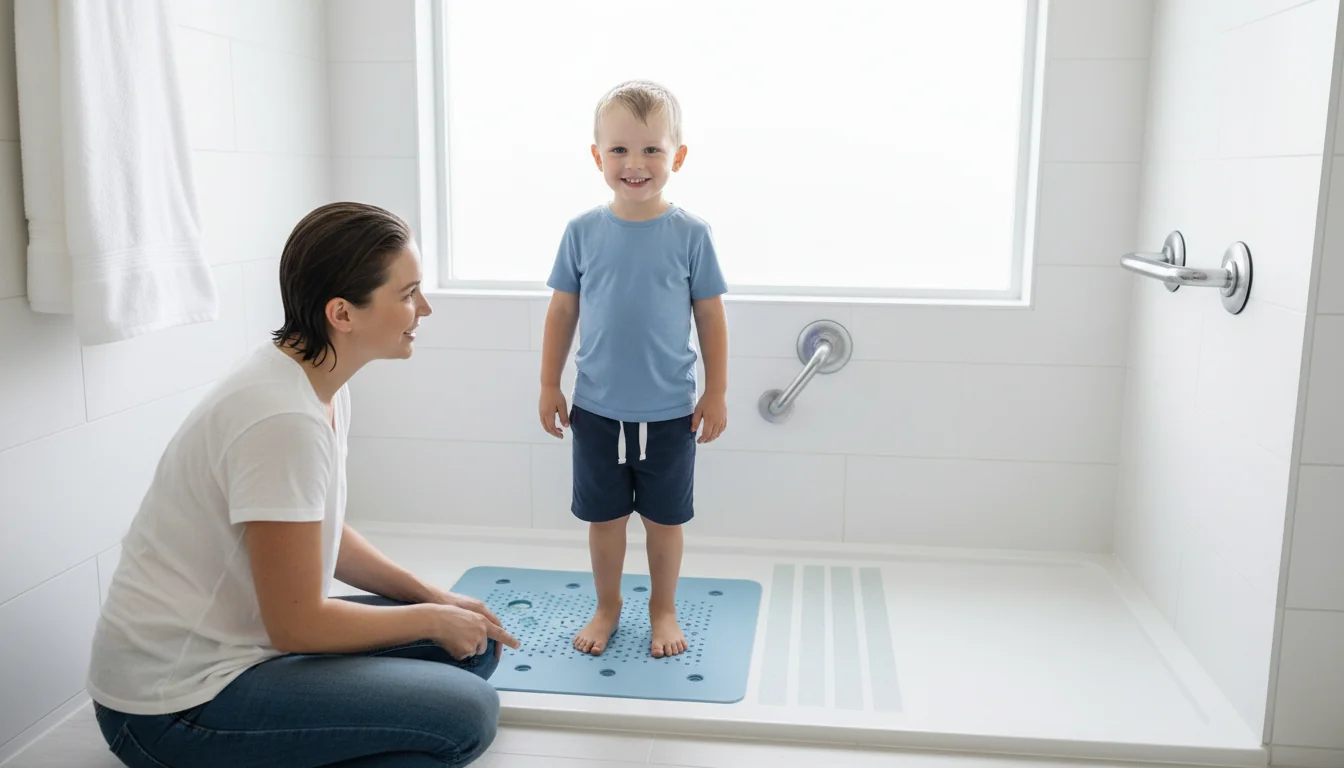
Floor grip: zero holes needed
Underfoot traction is your strongest lever. Choose non‑slip surfaces that anchor firmly, drain well, and clean fast to prevent soap‑film “skates.”
- Non‑slip shower mats with suction cups and drainage holes for fast runoff.
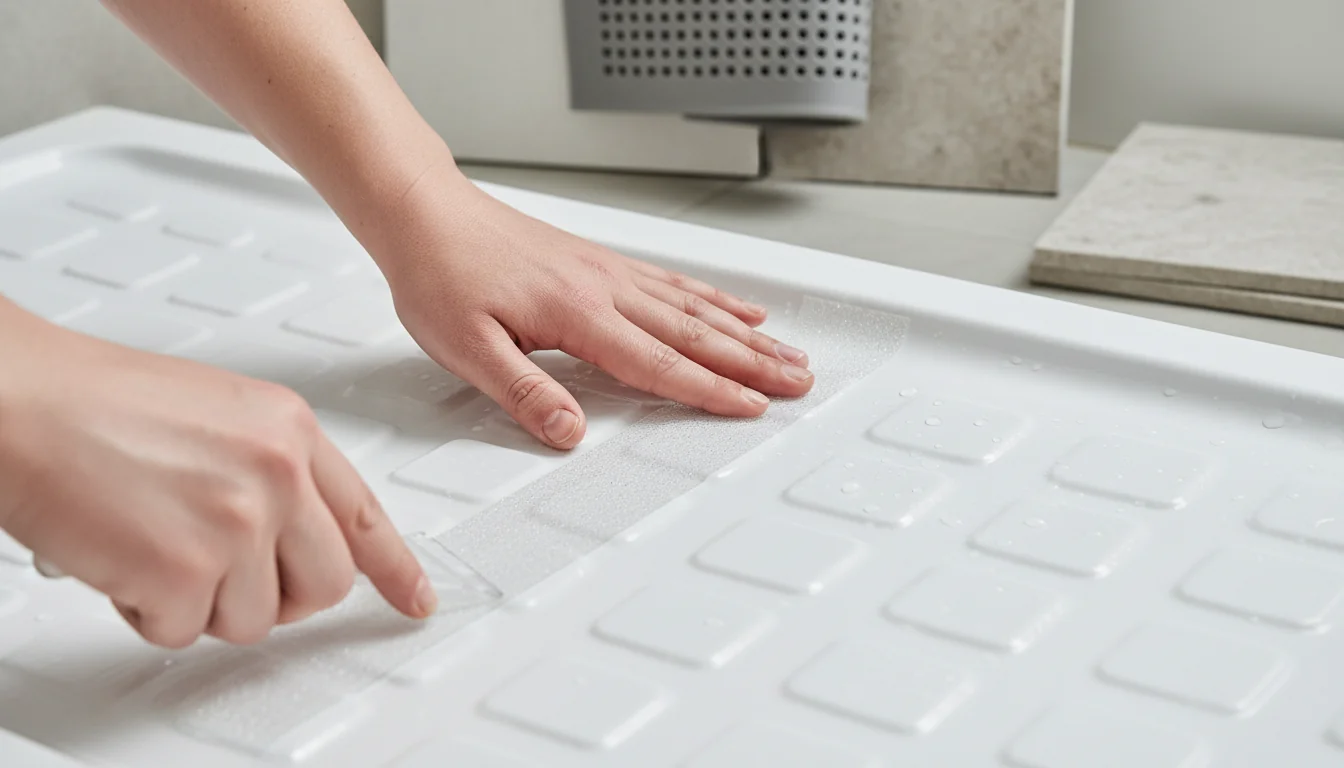
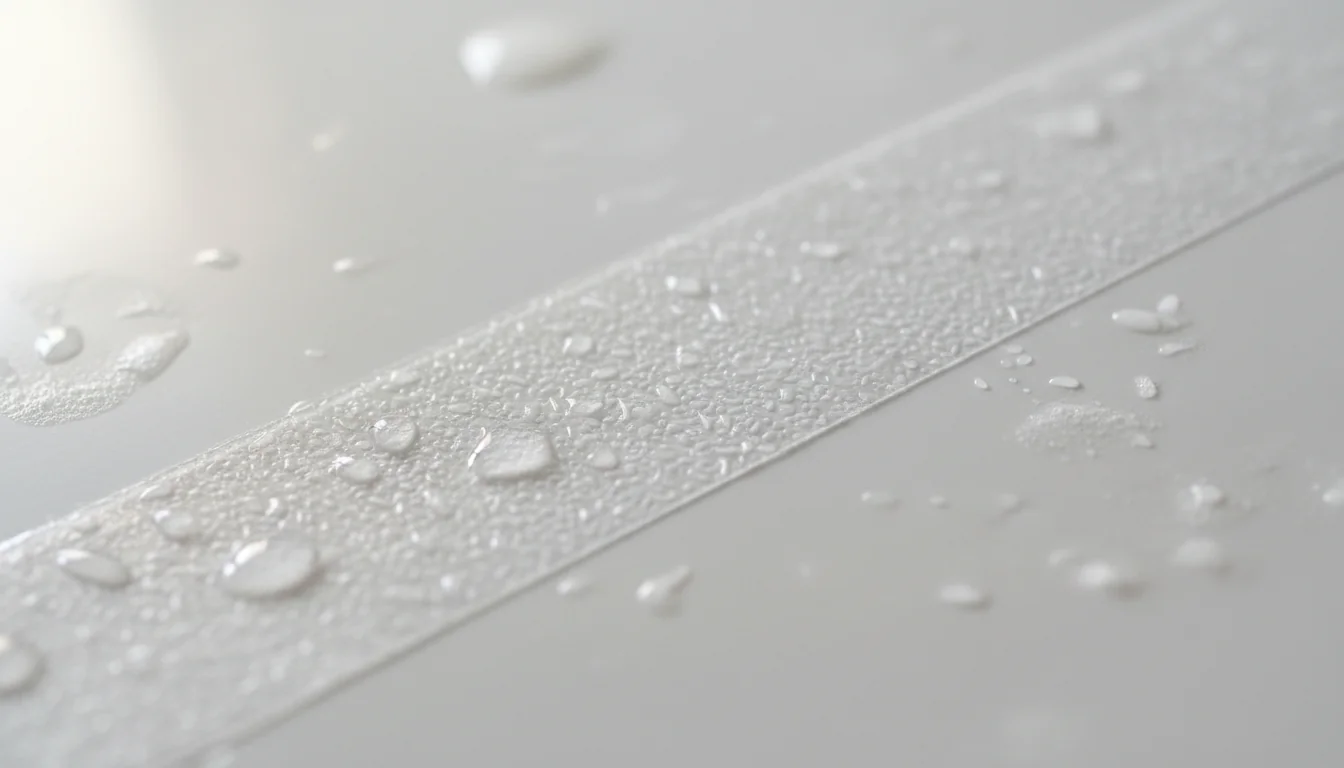
- Anti‑slip tape/decals for tubs and shower trays; create “landing zones.”
- DIY anti‑slip coatings that etch/glaze slightly for micro‑grip.
- Avoid textured bases under suction mats; suction needs smooth tile or acrylic.
- Select PVC‑free or natural rubber if sensitivities matter.
Large mats with more suction cups spread load and resist edge lift when kids pivot, reducing trip edges.
Maintenance matters. Rinse, then hang mats after bathing to dry. Weekly, scrub both sides to remove biofilm; it’s the main cause of sliding—even on “grippy” textures.
| No‑drill option | Where it shines |
|---|---|
| Suction‑cup shower mat | Instant grip on smooth bases; removable for cleaning; great for kids’ routines. |
| Anti‑slip tape/decals | Low‑profile zones in tubs/trays; long‑lasting; won’t bunch at edges. |
| DIY anti‑slip coating | Covers full base; hotel‑style micro‑texture; good for high‑use family showers. |
Do a quick “coin twist” before each bath: twist a coin on a mat tile. If it slides easily, clean and re‑seat the mat before kids step in.
Temporary holds: used the right way
Suction grab handles and clamp‑on aids can help with balance while avoiding screws. For kids, think “steadying touch,” not “pull‑up bar.”
- Suction grab bars: place on smooth tile or glass; avoid grout lines and textures.
- Use locking tabs/indicators as a check, but still perform a tug test before each use.
- Clamp‑on tub rails: secure to tub rim (no holes); great for step‑in/step‑out balance.
- Shower stools/chairs with rubber feet: stable rest points while rinsing hair.
- Teach “one hand sliding hold,” not yanking, to avoid sudden release.
Re‑seat suction bars every week and anytime they’re bumped. Lift, clean both surfaces, dry, and reapply for maximum hold.
For full weight‑bearing, consult an accessibility specialist. As caregiver forums often note, suction aids are for balance only. If a child must hang their body weight, that’s beyond no‑drill limits.
Contain splashes, cut slip risk
Water on bathroom tiles is the other big hazard. Keep it inside the tub or tray with smart, no‑hole hardware and routines.
- Tension shower curtain rods: adjustable and tool‑free; seat pads on smooth walls.
- Weighted curtains or magnets at the bottom to seal splashes.
- Silicone dams or shower lips (adhesive) on curbless entries—no screws.
- Absorbent bath rugs backed with non‑slip tape outside the shower.
- Squeegee glass and tile quickly after each shower to reduce puddles.
Pros list tension rods as easy, adjustable, and no‑drill. The trade‑off: they can slip if overloaded. Keep curtains light and check grip pads.
If you’re tempted to glue a tension rod end cap, skip it. Adhesives on rod caps add shear stress and can still fail; better to improve wall prep, use larger pads, and right‑size curtain weight.
Prep and upkeep: the real secret
No‑drill safety works only as well as the surface it sticks to. Clean, dry, and flat are non‑negotiable for suction and adhesives.
- Degrease tile or tray with mild alkaline cleaner; rinse; dry fully.
- Warm‑press suction mats to expel air; step across the surface to seat cups.
- Adhesive strips/decals: apply above 10°C/50°F; avoid humidity; wait 24–72 hours before soaking.
- Weekly: lift mats, scrub underside; disinfect drain zone; dry walls and floor.
- Monthly: test grip zones; replace worn decals that feel chalky or shiny.
Never rely on towel bars as handholds. They’re not designed for lateral loads and may rip out unexpectedly.
Families following municipal “Prevent Injuries at Home” checklists also add night lights, wipe spills fast, and keep bath toys corralled—simple habits that cut risks when mats and aids are wet.
Know limits before you drill
Most kid‑focused fixes can stay screw‑free. Still, it helps to know when no‑hole methods reach their ceiling so you plan ahead.
- If a child needs full body‑weight support, a permanent, stud‑anchored bar may be indicated.
- If tiles are textured or grout‑heavy, suction may never seat well; choose tape or coatings instead.
- For neurodiverse kids with impulsive pulling, avoid suction handles; favor seated routines.
- In rentals, ask before any fasteners; most landlords approve no‑drill solutions first.
If you ever upgrade to fixed bars, consult accessibility guidance on height and clearance. Meanwhile, keep kid setups no‑drill and low‑risk.
In 2026, many families mix approaches: permanent anchors for adult zones, tool‑free aids in the kids’ corner. That way you avoid unnecessary holes while matching real‑world needs.
Step‑by‑step: safer shower without drilling
- Prep the base: clean, rinse, and dry the shower floor fully.
- Seat a non‑slip mat; press each suction cup; do a gentle slide test.
- Add anti‑slip decals at the entry zone for step‑in and step‑out.
- Install a tension curtain rod and light curtain to contain splashes.
- Place a stool with rubber feet for rinsing hair; teach the tug test for any suction aid.
Mark a “stand here” zone with high‑grip decals. Kids love targets, and you control where traction is best.
Need more coverage for active bath time? Consider extra long shower mat to extend grip under playful feet without a single hole.
Why avoid drilling for kids’ showers?
No‑hole setups protect tiles, speed installation, and suit rentals. For kids, floor traction prevents most slips. Balance aids can stay suction‑mounted and repositionable as they grow.
How do no‑drill options compare to fixed bars?
Fixed bars handle body‑weight loads when anchored to studs. No‑drill aids steady balance only. For young children, pair a mat with a light touch handle and designer shower mat for targeted grip.
Are suction grab bars safe for kids?
Safe as a steadying point on smooth surfaces when re‑seated regularly. Not for yanking or full body‑weight. Teach a sliding, open‑hand hold and perform a quick tug test before use.
What if my shower is small or angled?
Use tape or decals on tight floors and choose a mat cut for corners. A corner‑friendly option adds grip without bunching in compact trays.
How do I maintain no‑drill grip long term?
Rinse and hang after use; scrub weekly; replace worn zones. Prefer materials that stay tacky when wet, like a grippy rubber model with drainage to limit slime build‑up.
Can I use a tension rod instead of drilling for glass doors?
Yes, for curtains. Keep it light, seat pads on clean, smooth walls, and recheck monthly. It won’t replace the rigidity of a screwed frame, but it contains splashes well.
What do home safety checklists recommend?
Public “Home Safety” lists stress non‑slip strips in tubs, quick cleanup of spills, and good lighting. These basics complement your no‑drill setup to prevent injuries at home.
You don’t need holes in tile to stop kids from slipping. In 2026, the quickest path is simple: maximize floor grip, contain splashes, and use balance aids correctly—no drilling required.
- Prioritize traction with a well‑seated mat or decals on smooth bases.
- Keep supports tool‑free and retest often; teach gentle use.
- Maintain surfaces weekly so suction and tape keep working.
For caregivers seeking extra stability without fasteners, explore non slip shower mat for senior to complement your no‑hole setup.

0 comments