


Machine-washing a non-slip shower mat sounds simple—until suction cups peel, rubber cracks, or mildew smells come back. The difference? the right settings.
Which temperature, cycle, and spin setting should you actually pick in 2026 to clean deeply without wrecking grip? This guide shows exact washer configurations for common materials, plus drying choices that protect suction and texture.
You’ll learn practical, step‑by‑step settings, compact tables, and quick fixes for loud spins, odors, and crumbling backings.
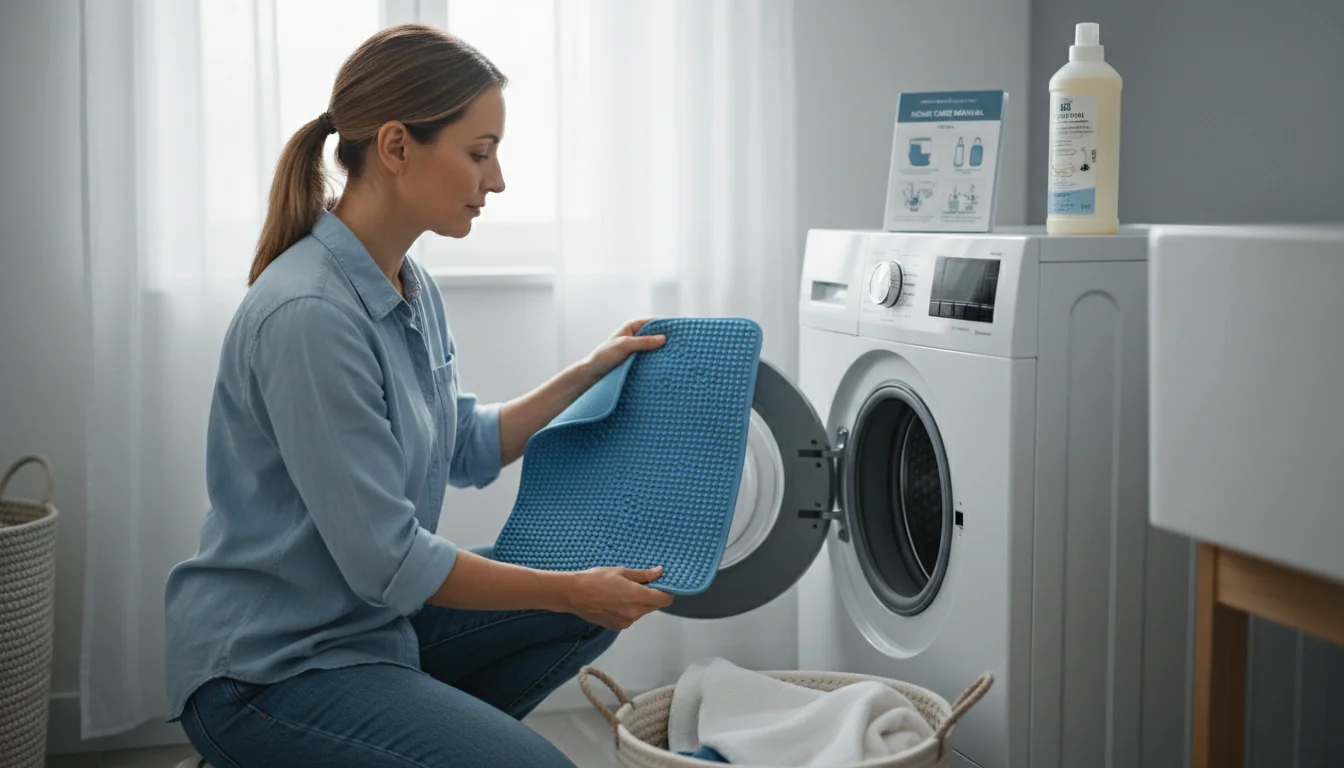
Safe cycles: protect the backing
Start with the care label, then translate it into washer settings that match your mat’s material and non-slip design. The right choice prevents peeling and preserves grip.
- Gentle cycle for rubber, PVC, TPE, and mats with suction cups to limit agitation.
- Cold to warm water for most non-slip shower mats; hot can degrade backing.
- Low spin to reduce shear on cups and edges; high spin stresses the backing.
- Balanced load: add 2 old towels to stabilize the drum and boost scrubbing.
- Mild liquid detergent; avoid powder residue in drain holes and grooves.
Choose “delicates” or “hand-wash” settings. They cap agitation and spin speed, which keeps suction cups intact.
Match your bath, tub, and shower mat type to a setting profile instead of improvising. Below is a quick selector you can copy on laundry day.
| Washer setting | Best for this mat |
|---|---|
| Gentle cycle + cold | Rubber-backed bathtub mat; PVC/TPE non-slip shower mats |
| Gentle + warm (not hot) | Heavier soil on vinyl mats with drain holes |
| No softener + extra rinse | Bathroom rugs that need residue-free grip |
Skip fabric softener. It coats fibers, reduces absorbency, and can make a non-slip surface slick.
If your washer lacks a “gentle” option, reduce spin and choose the shortest standard cycle—those adjusted settings are safer for suction cups.
Right temperature: clean without damage
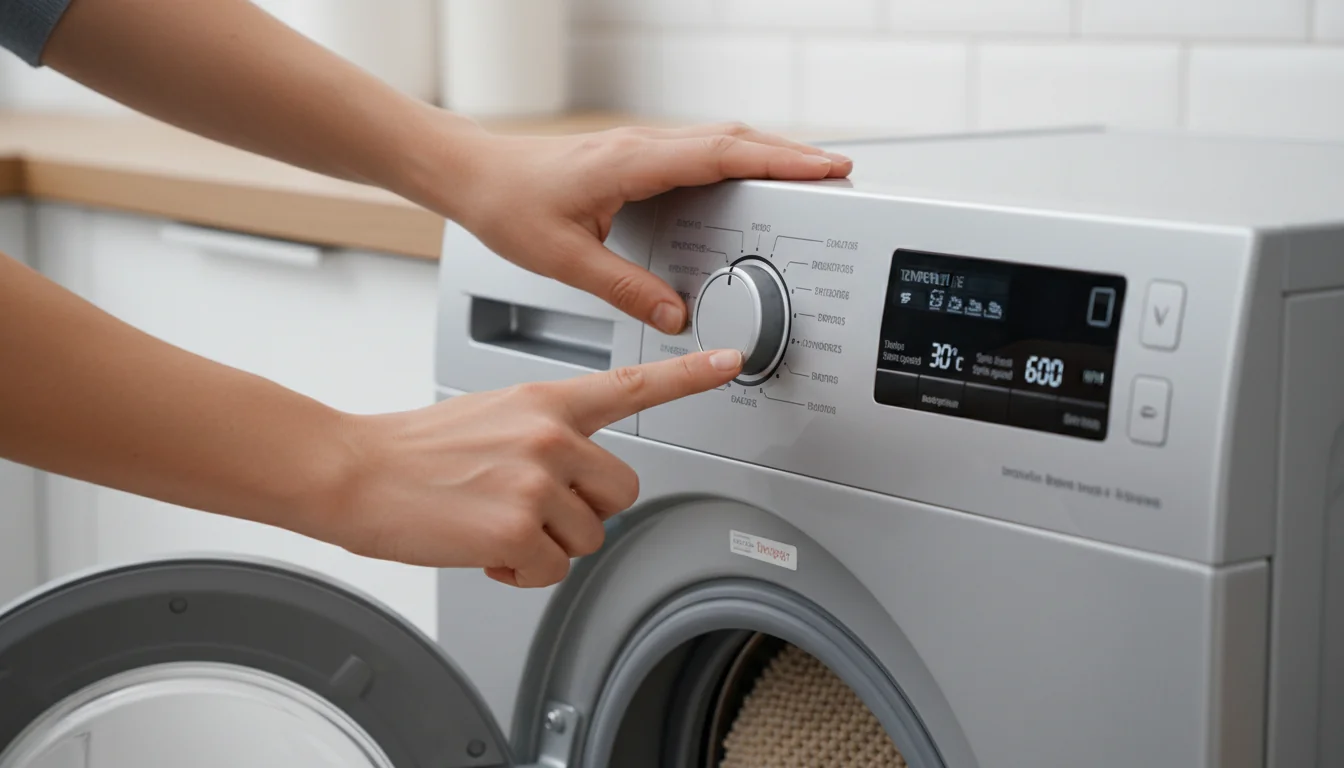
Temperature is the setting that most often ruins a backing. Keep it low to preserve grip, yet warm enough to lift bath oils and soap film.
- Cold (20–30°C) for routine washing; safest for rubber and PVC.
- Warm (30–40°C) when you see mildew shadows or body oil buildup.
- Avoid hot water; it accelerates cracking and peeling on non-slip backing.
- Add 1–2 towels to boost gentle mechanical action at lower temps.
- Use oxygen bleach if needed; chlorine is harsher on bath mats and cups.
On many machines, “tap cold” fluctuates. Manually select cold to lock the temperature setting and protect the mat.
If you’re also comparing options by size or texture, browse our anti-slip shower mat range to align material choice with the temperature setting you prefer.
| Soil level | Temp + additive setting |
|---|---|
| Light, weekly wash | Cold + mild detergent only |
| Soap scum or odor | Warm + 1/2 cup white vinegar in rinse |
| Mildew spots | Warm + oxygen bleach per label |
Pre-rinse the mat to remove loose debris. Cleaner water means lower temperature settings still perform well.
Choose settings that fit your bathroom routine: a cold gentle cycle weekly beats a rare hot wash that risks damage.
Spin speed: keep cups intact
Spin is where many bathroom rugs fail. Excess revolutions stress suction cups and stretch edges, especially on extra-long mats for a bath tub.
- Spin setting: low or 400–600 rpm if your machine shows numbers.
- Disable “max extract” or “high spin” presets for non-slip backing.
- Balance the load with two bath towels to prevent drum thumping.
- If the mat is heavy, stop before final spin and press out water by hand.
Do not wring. Twisting tears at the backing. Firmly press water out with a towel instead.
Front-loaders usually manage low-spin settings well. In top-loaders with agitators, the low-spin choice matters even more for a shower mat with cups.
If your washer doesn’t allow manual spin settings, choose the shortest gentle program. Lower extraction equals safer cups.
Need a tougher surface for a busy family bathroom? Consider a sturdy rubber-based model and keep spin conservative to maintain traction and shape.
Rinse options: residue-free grip
Rinse settings matter because residue kills traction. A clean bathtub mat should feel grippy, not waxy or slick underfoot.
- Extra rinse removes detergent from textured surfaces and drain holes.
- Add 1/2 cup white vinegar to the rinse compartment for odor control.
- No fabric softener; it reduces absorbency and can increase slip risk.
- Pause mid-cycle to check cups for trapped lint; shake if needed.
If water is hard, the vinegar rinse helps dissolve minerals so your settings deliver a softer, cleaner finish.
For kids’ baths, residue-free mats mean fewer slippery films from bubble bath. Extra rinse settings are your quiet safety upgrade.
Avoid chlorine bleach during routine washing. Over time it can stiffen rubber, reducing cup adhesion.
When you tune rinse settings well, bathroom rugs emerge cleaner, grip better, and dry faster on the rack.
Drying method: preserve grip
Drying is not a “setting” on the washer, but it completes the cycle. The wrong heat setting ruins the backing you just protected in the wash.
- Air-dry only for non-slip shower mats; avoid the dryer entirely.
- Hang over the tub edge or stick cups to the wall to speed airflow.
- Flip after 2–3 hours; ensure cups and drain holes are fully dry.
- In humid climates, place a fan nearby to cut drying time in half.
In 2026, many households run dehumidifiers near laundry racks. Drier air preserves rubber elasticity and keeps grip reliable.
Drying finishes what your washer settings started: a mat that’s clean, safe, and ready for the next shower without mildew smells.
If drying time exceeds 12 hours, your bathroom may be too humid. Increase airflow to protect the backing.
Drying method: preserve suction
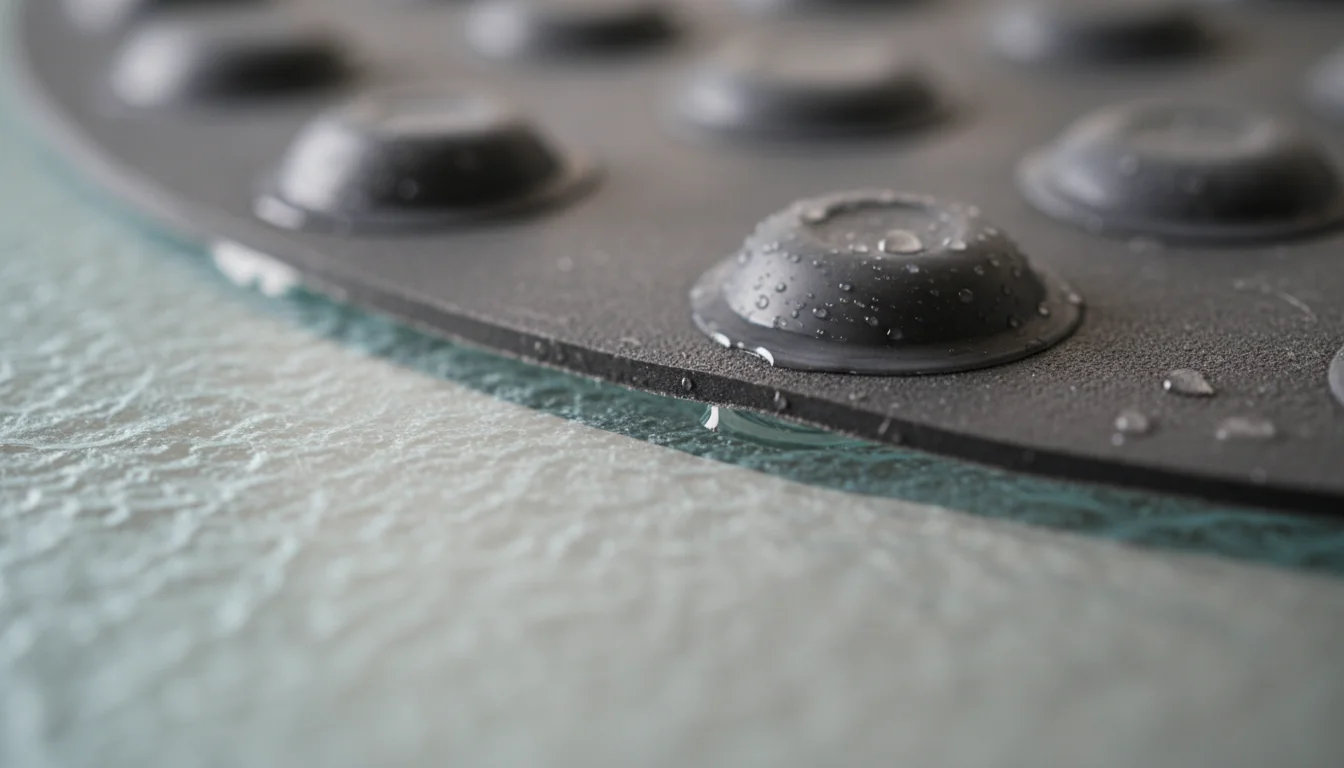
Drying can undo good washer settings if you add heat. Most non-slip mats should be air-dried to maintain elasticity and grip.
- Air‑dry only. Hang over the tub or a rail; avoid tumble heat.
- Flip once mid‑dry for airflow under suction cups.
- Sunlight helps deodorize; avoid prolonged, harsh UV for natural rubber.
- Aim to dry fully within a day to discourage mildew.
Sticking the mat to a tiled wall by its cups lets water drain out of the holes and speeds drying—no heat needed.
Quick guide: the exact washer setup
- Cycle setting: Delicate/Gentle (soil Low–Normal).
- Temperature setting: Cold → 30°C max.
- Spin setting: Low 400–600 rpm (or No Spin if fragile).
- Load setup: Add 2–3 bath towels for balance.
- Rinse options: Extra Rinse; add vinegar in the rinse.
Save these selections as a custom “Mat” program if your washer lets you store settings.
Do not add fabric softener. It coats the mat, reduces traction, and traps odors.
Handling an extra‑long piece? A balanced cycle is easier when the item covers more of the drum. For reference on sizing, see long shower mat.
Why do washer settings matter so much?
Settings control heat, agitation, and spin—three forces that can crack rubber and loosen suction cups. The right configuration cleans thoroughly while preserving non‑slip performance.
Hot water to sanitize—yes or no?
Generally no. Use cold to 30°C, Extra Rinse, and oxygen bleach if the tag allows. Heat risks warping rubber and deforming drain holes.
Best cycle for suction‑cup mats?
Pick Gentle/Delicate, low spin, and add towels for balance. For size context, a standard footprint like antibacterial shower mat washes well on those settings.
Any special care for rubber‑backed designs?
A rubber‑backed option needs cold water, a gentle cycle, low spin, and air‑dry only. Avoid chlorine bleach and all fabric softeners.
How often should I wash it in 2026?
Weekly is a good baseline. Increase frequency after heavy use, illness, or if the mat feels slick. Keep the same saved settings each time for consistency.
Can I machine‑dry a non‑slip shower mat?
No. Choose air‑drying to preserve elasticity and cup shape. If you prefer a compact square format, large square shower mat hangs and dries quickly.
What fixes a musty smell after washing?
Run a Gentle cycle with cold water, add vinegar in the rinse, and select Extra Rinse 5 natural anti‑mold cleaning tips. Dry fully by hanging; partial drying invites mildew back.
The safest way to machine‑wash a non‑slip shower mat in 2026 is precise: gentle cycle, cold‑to‑30°C, low spin, balanced load, and air‑dry only. These settings protect grip, texture, and suction over time.
- Cycle + temp: Delicate, ≤30°C, Extra Rinse.
- Spin + load: Low 400–600 rpm with 2–3 towels.
- Drying: Hang to air‑dry; no heat.
If you prefer a larger footprint that still washes well on these settings, consider non-slip shower mat 90x90. Keep your saved program and enjoy a cleaner, safer bath routine.

0 comments