


Falls in the bathroom are common, but a few targeted upgrades at home can turn a slippery stall into a safe, confidence-boosting space. Are you ready to see the before/after difference in your parent’s shower at home?
In this practical 2026 guide, you’ll learn how to assess risks, choose smart add-ons, and set routines that make showering safer without major remodeling. Short, mobile-first checklists and visuals keep every step easy to apply at home.
Risk scan at home: what to check
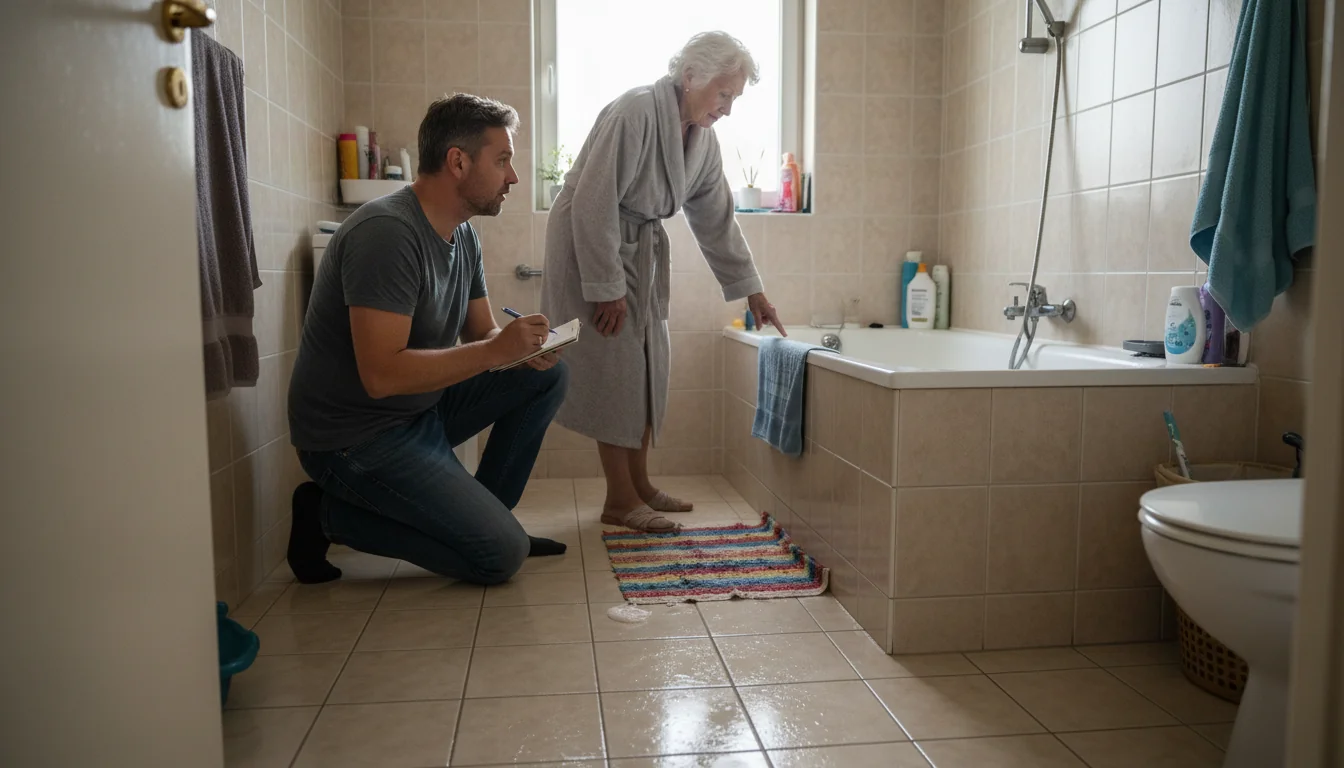
Start with a quick “before” scan of the shower area and the short path to and from it. In a home setting, small hazards add up. Catch them now; your “after” will be cleaner, brighter, and safer.
- Floor traction: slick tiles, soapy residue, loose rugs, wet mats.
- Handholds: missing or poorly placed grab bars, wobbly towel rails used as support.
- Entry: high tub walls, narrow doors, awkward thresholds.
- Lighting: dim corners, nighttime shadows, no night lights.
- Water and heat: scald risk, hard-to-turn knobs, sudden temperature jumps.
- Reach: shampoo low on the floor or high overhead; no seated options.
Photograph the “before” from the doorway and inside the shower. Use the same angles for your “after” to verify each fix at home.
This scan anchors your plan and helps caregivers, family, and older adults agree on priorities without guesswork.
Upgrades at home: no‑drill vs. permanent
Not every house needs renovation. Many elderly parents benefit from simple add‑ons first. Compare quick wins with deeper changes to see what fits your parent’s home and timeline.
| Quick wins (no drilling) | Permanent improvements |
|---|---|
| Shower chair or transfer bench; handheld shower head | Walk‑in shower conversion; widened doorway |
| Textured strips and non‑slip mats on tile | Grab bars secured into studs at custom heights |
| Tension safety pole for standing transfers | Zero‑threshold base; anti‑scald mixing valve |
- Begin with portable seating and handheld shower to improve control.
- Add tactile traction underfoot before touching walls or plumbing.
- When balance is poor, prioritize grab bars into studs at 33–36 in (approx. 84–91 cm).
- Reserve conversions for when transfers remain unsafe despite quick wins.
Suction‑only “grab bars” are not weight‑bearing. Use them as cues, not primary support, and never above hard flooring without a backup.
Think sequence: stabilize today with quick wins at home; plan structural work only if risks persist.
Traction and water: fall control at home
Falls are most common where water meets smooth tile. Your “after” should emphasize underfoot grip and predictable flow so your aging parent can shower safely at home.
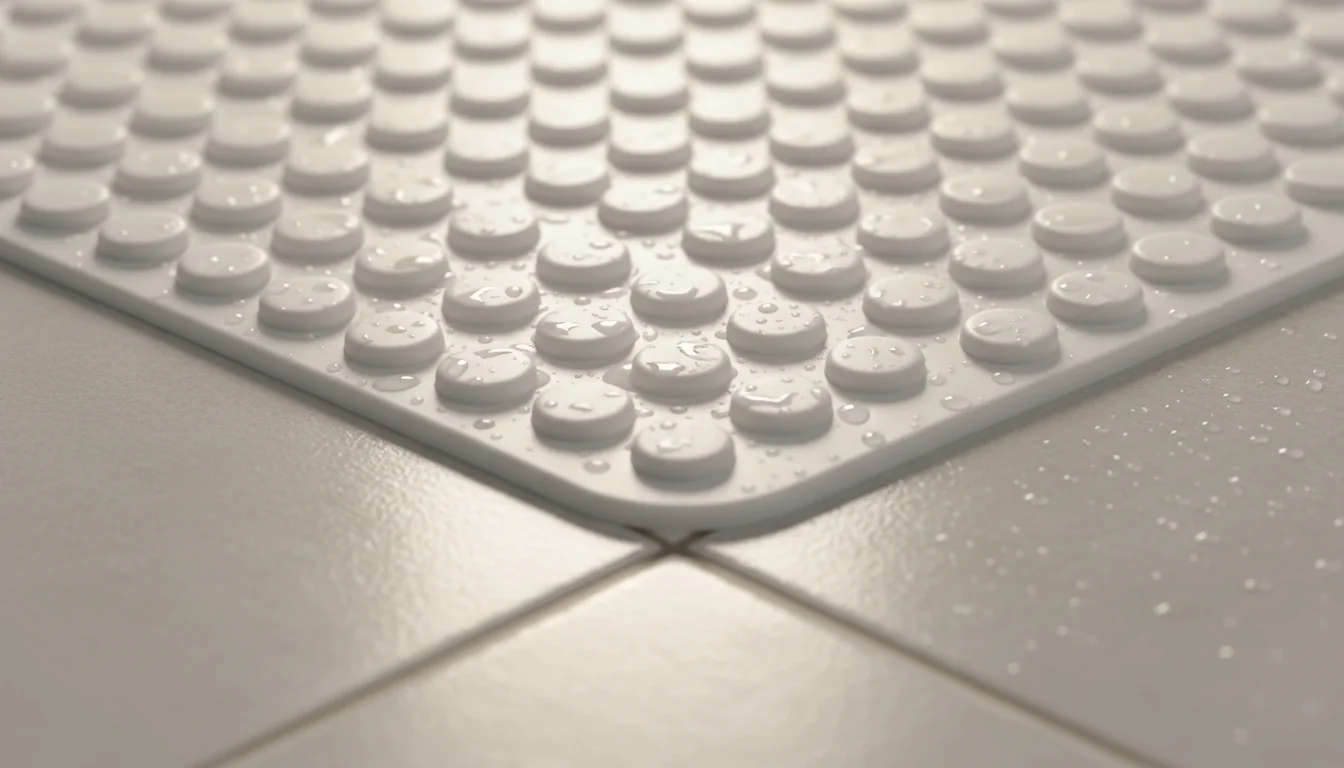
- Non‑slip base: place a full‑coverage, drain‑through mat to add friction under both feet.
- Seated washing: a shower chair with back and armrests reduces sway and fatigue.
- Install a handheld nozzle to keep water aimed while seated and avoid twisting.
- Fit an anti‑scald mixing device and set max temperature around 120°F (49°C).
- Use wall‑mounted dispensers or pump bottles at shoulder height to eliminate bending.
Most “near‑miss” slips happen while turning to reach shampoo. Keep must‑use items within easy reach from the chair.
For homes that need extra coverage on larger floors, consider this large non‑slip shower mat to boost traction across the entire standing zone.

Layout and light: safer paths at home
A safe shower begins in the hallway. Clear, bright, and clutter‑free routes make the whole home bathroom routine steadier for older adults and caregivers.
- No throw rugs: remove loose mats; use rubber‑backed, beveled‑edge bathmats only.
- Add motion‑sensing night lights from bed to toilet to shower.
- Place a sturdy chair outside the shower for drying and dressing.
- Highlight level changes with contrasting tape at thresholds.
- Store towels and clothes at hip‑to‑shoulder height to avoid overhead reach.
Use the “two‑towel rule”: one within arm’s reach inside the shower, one pre‑hung at exit height. It cuts drips—and slips.
If vision is reduced, pick matte, non‑glare bulbs and label shelves with large print for home clarity.
Care routine: before, during, after at home
Many injuries happen on “good” bathrooms used with risky routines. Build a simple sequence seniors and caregivers can repeat at home.
- Before: hydrate, med check (dizziness risks), phone or alert within reach, door unlocked.
- During: seated washing first; stand only with three points of contact (both feet + one hand).
- After: pat feet dry before stepping out; sit to dress; rest two minutes before walking back.
- Schedule showers when energy is best—often mid‑morning for older adults.
Skip lockable knobs. Use privacy latches that open from outside so a caregiver can assist if needed.
If cognition or balance varies day to day, use a visible checklist on the bathroom door to cue each step at home.
Budget smarts: plan the home “after”
A safer shower doesn’t have to be expensive. In 2026, low‑cost measures can deliver outsized safety gains for aging parents living independently.
- Start with under‑$50 changes: traction strips, pump dispensers, night lights.
- Under‑$150: shower chair with back, handheld sprayer, dressing chair.
- Under‑$400: tension pole, mixed grab bars (one vertical, one horizontal), anti‑scald setting.
- Plan ahead for conversions only if transfers remain unsafe or caregivers strain.
- Ask local aging services about home safety assessments or small‑repair help.
Community programs often fund basic home safety items—like grab bars and lighting—to reduce falls and keep seniors at home.
Document your before/after with photos and a checklist. It helps when discussing needs with family or a care professional.
Guide: the 5-step at-home shower makeover
- Declutter and deep-clean floors to restore traction.
- Add seating, a handheld shower, and two stud-mounted bars.
- Boost lighting and install motion night lights to the bath.
- Set water heater to 120°F; add an anti-scald valve.
- Improve floor grip with an extra‑large non‑slip mat designed for wide stalls.
Do a “dry run” at home: rehearse getting in and out fully clothed to confirm bar placement and seat height before the first shower.
Don’t rely on towel bars as supports. They’re not load-rated and can detach from drywall in a home bathroom.
Why focus on the home shower first?
It’s a frequent fall zone with hard surfaces and water. Targeted fixes at home deliver fast safety gains without a full remodel, supporting aging in place.
How does a home shower compare to facility options?
Facilities are built with accessibility from day one. A house needs selective upgrades, but thoughtful at-home changes can match key safety features.
What are the most effective low-cost fixes at home?
Grab bars into studs, a shower chair, non-slip flooring, motion lights, and a handheld nozzle. These reduce slips and make care simpler for families.
Does every house need a walk-in shower?
Not always. A transfer bench over a tub, plus bars and traction, often achieves a safe after-state at home without construction.
How do I set water temperature safely?
Set the heater to 120°F max and add an anti-scald valve. These are simple, house-level controls that lower burn risk instantly.
Any caregiver tips for smaller home showers?
Use a compact chair, mount bars vertically near entry, and store supplies at shoulder height. Cue each step to keep transfers slow and steady at home.
What if my parent resists changes at home?
Start with one fix that eases pain or effort, like a handheld shower. Demonstrate the before/after comfort so the house still feels personal, not clinical.
Who can assess our bathroom at home?
Ask a local occupational therapist or aging-in-place specialist for a home safety review. Many communities offer checklists and guidance for families.
A safer shower at home comes from a few well-placed upgrades and steady routines—not a full renovation.
- Traction first: non-slip surfaces inside and out
- Support next: stud-mounted bars and a sturdy seat
- Smart habits: brighter paths, warm water, calm pacing
Apply these steps now to see a clear before/after—safety, comfort, and confidence right where your parent lives.

0 comments