


Thinking about going all-in on a black bathroom? Smart move: done right, it’s elegant, grounded, and surprisingly soothing.
This 2026 guide shows exactly how to balance colors and materials so the room feels rich, bright, and easy to use day to day.
You’ll learn which tiles, stones, paints, metals, and woods pair best with black, plus layout tips, lighting rules, and care advice tailored to a hardworking bathroom.
Light first: brighter, calmer spaces
Before picking tile or paint, design the light. Black absorbs illumination, so every decision should lift the room and reduce glare around the vanity and shower zone.
- Layered lighting: ceiling ambient, vertical vanity lights, and a soft night glow under the cabinet.
- Aim for 2700–3000K near mirrors to flatter skin; use 3500–4000K for general light if you prefer a crisper look.
- Choose wall paints with a mid-to-higher LRV in adjoining zones to bounce light into the bathing area.
- Use tall mirrors that reach near the ceiling; they double brightness and expand a compact bath.
- Glass shower panels beat walls for openness; keep hardware slim and aligned with tap finishes.
If your bath lacks daylight, paint the ceiling the same deep tone as the walls. It removes the visual “cut” and can make the room feel taller.
Result: a black-led scheme that feels intentional, not cave-like, and supports daily routines from shower to skincare.
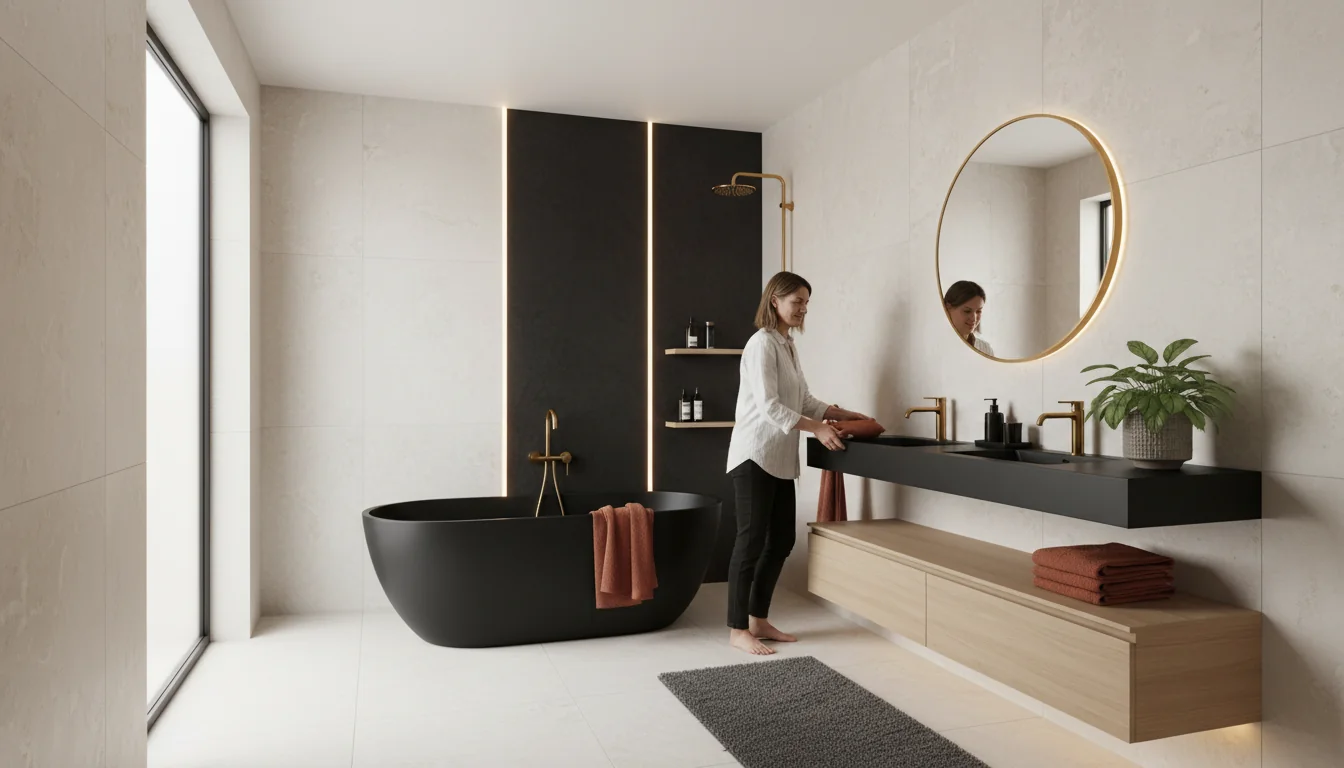
Tiles that elevate: pattern and grout
Tile does the heavy lifting in a black bathroom. It sets scale, controls slip, and creates rhythm on walls and floors.
- Wall rhythm: vertical stack or herringbone draws the eye upward and softens heavy tones.
- designing a small bathroom without compromising safety: mosaics or 2"×2" tiles add grout lines for traction; look for good wet grip values and textured surfaces.
- Grout strategy: charcoal grout hides soap marks; 2–3 mm joints keep patterns crisp on small floors.
- Accent smart: a black-and-white patterned floor enlivens a powder room without crowding walls.
- Sheen matters: semi-polished wall tile reflects light; matte tile reduces glare in the shower.
| Material | When it shines in a black scheme |
|---|---|
| Porcelain tile | Hardwearing, low-porosity floors and showers; stone-look versions add depth without upkeep. |
| Marble (dark veining) | Feature walls and niches; veining ties black walls to light counters; seal routinely. |
| Quartzite or sintered stone | Countertops and benches; heat and stain resistance with refined movement. |
| Mosaic pebble or penny | Shower floors; excellent grip and a spa-like feel alongside matte black fixtures. |
Darker floors show soap scum. Finish with a penetrating sealer on stone and squeegee daily to keep a crisp finish.
Keep patterns focused: one bold element (floor or one wall) is usually enough in a compact bath.
Warmth through wood and stone
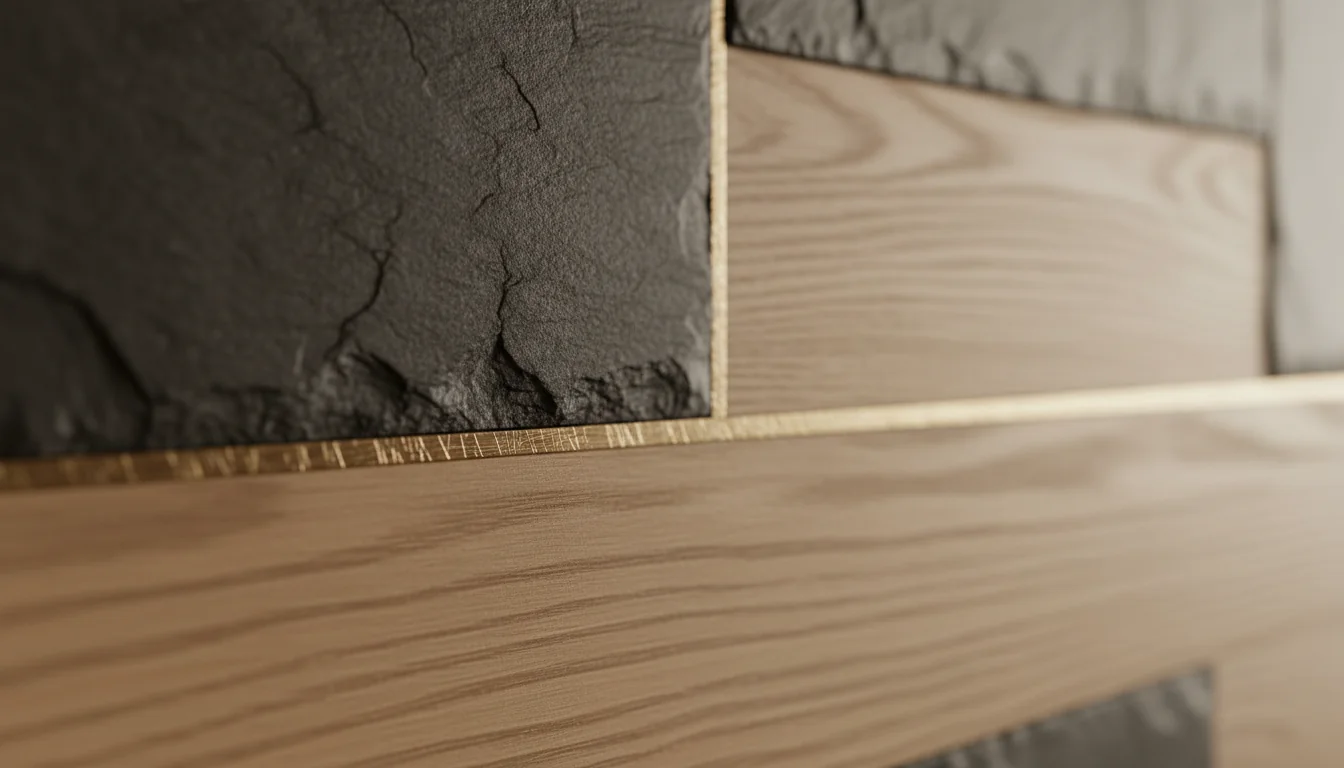
Black pairs beautifully with natural materials. Wood introduces tactile warmth; stone adds depth and light play.
- Wood tones: white oak, walnut, or teak vanities soften dark walls and keep the room grounded.
- Finish choice: oil for a natural touch; sealed finishes for humidity resistance and easy wiping.
- Counters: light quartzite, durable porcelain slab, or honed granite to contrast a black vanity.
- Niches and trims: repeat your floor stone on niche backs or use stone shelves for clean edges.
- Sustainability: FSC-certified cabinetry and recycled-content tiles support a long-life bath.
A honed finish on stone hides water spots better than polished. It’s a subtle but high-impact choice in a dark palette.
Together, wood grain and stone veining keep a moody bath from feeling flat, especially under warm vanity light.
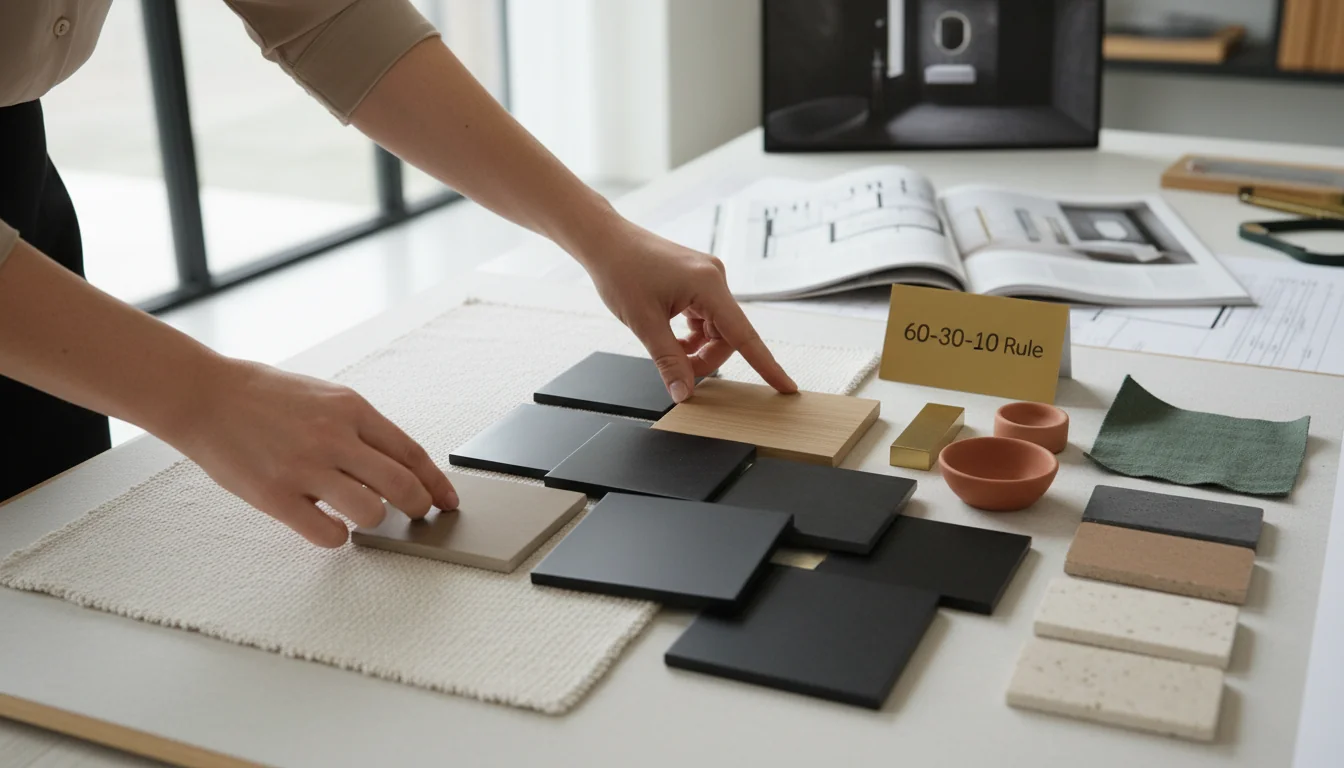
Metals that match: finish harmony
Metal finishes are the jewelry of your wash space. They anchor the style, tie into black fixtures, and control reflections.
- Matte black taps: crisp and modern; pair with warm wood and light counters.
- Chrome or polished nickel: add sparkle that counters dark walls; great for small bathrooms.
- Gunmetal and brushed nickel: cooler, industrial vibe; forgiving with water marks.
- Brushed gold or brass: a soft glow that lifts charcoal tiles and black vanities.
- Mix thoughtfully: keep one dominant finish; use a second for accents like pulls or mirror frames.
| Finish | Best pairing in a black-led room |
|---|---|
| Matte black | Natural stone, oak, and mid-beige textiles; low-glare, contemporary mood. |
| Chrome | Glossy tile and mirrors; adds bounce and apparent brightness in small spaces. |
| Brushed gold/brass | Charcoal walls with creamy counters; warm highlight over dark backdrops. |
Black metal shows limescale. Wipe fixtures after use and avoid abrasive creams; use mild soap and a soft cloth.
Two finishes are often enough: one for taps and shower, a second for pulls and lighting trims.
Paint and palette: balanced depth
The right paint color is the glue. Choose a black with an undertone that suits your tile and counter, then layer calmer neutrals.
- Blue-black walls: feel airy and recede; great behind veined marble or quartzite.
- Charcoal with warm undertones: pairs easily with oak and brushed gold hardware.
- Ceiling strategy: same color as walls for height; or one tone lighter to soften contrast.
- Accent colors: warm beige, creamy white, gentle green, or soft gray to frame the vanity.
- Textiles: off-white or mushroom towels keep balance; a dark bath mat grounds lighter floors.
Expect textured tiles, subtle pattern, and natural materials to anchor moody palettes without overwhelming small rooms.
Test large paint samples on two walls and view them under your actual lighting before committing.
Layout, scale, and storage wins
A black-led washroom thrives on quickly adapt your bathroom. Keep sightlines open and storage integrated.
- Vanity choices: a black unit works if counters are light and lighting is layered; open shelving reduces heaviness.
- Mirrored cabinets over the basin boost light and hide clutter; repeat the metal finish of your taps.
- Shower design: clear glass, linear drain, and a patterned floor to anchor the space.
- Small bathroom trick: floor-to-ceiling drapery or tile to stretch height visually.
- Hardware scale: slim pulls and narrow profiles keep the room feeling spacious.
If you’re unsure about a dark vanity, sample doors next to your tile and countertop under evening light first.
A bold choice for modern spaces? Absolutely—provided your black elements are balanced with reflective surfaces and organized storage.
How to build a black palette step by step
- Audit light first: note daylight quality and plan three lighting layers.
- Pick a dominant surface (tile or stone), then select a complementary black paint.
- Choose one main metal finish and a supporting finish for accents.
- Balance with warm wood or textured textiles for softness.
- Test samples together and confirm maintenance fits your routine.
Too many focal points. Limit bold elements to one hero surface and one standout metal.
If slip safety is key in your bathroom, consider non slip shower mat for elderly that adds traction without clashing with dark floors.
For compact shower zones, a square mat in grey shower mat can stabilize footing while keeping the layout tidy.
Why choose a black-led wash space?
It brings instant structure, hides visual clutter, and frames key features like the vanity and mirror. With the right materials, a black scheme feels calm, modern, and timeless.
How does it compare with lighter alternatives?
Light palettes bounce brightness easily but can feel flat. Black adds depth and definition. The sweet spot is contrast: dark anchor surfaces with reflective counters and mirrors.
What are the main advantages?
Clear lines, strong contrast, and a boutique feel. Black fixtures pair well with wood, stone, and soft neutrals, creating a sophisticated daily routine zone.
Is black suitable for small showers?
Yes—use lighter counters, tall mirrors, and a patterned floor for scale. A compact mat in small square shower mat maintains safe footing without crowding the tray.
What about walk-in layouts?
Open glass, a linear drain, and textured flooring work best. A larger square mat like non-slip shower mat 90x90 complements generous trays and supports grip near the entrance.
How do I maintain black fixtures and tiles?
Squeegee glass after showers, wipe taps daily, and use pH-neutral cleaners. For stone, reseal on schedule and choose honed finishes to disguise water marks.
Which towel and textile colors work best?
Off-white, warm beige, soft gray, and muted green feel spa-like. Add a dark bath sheet for contrast and a light waffle towel for quick drying.
A successful black bathroom balances depth with light. Pair dark anchors with reflective counters, thoughtful lighting, and tactile materials for daily comfort and long-term durability.
- Light first: layer ambient, task, and accent.
- Mix materials: wood warmth and stone sheen.
- Curate metals: one main, one supporting.
Need added stability on darker floors? A antibacterial shower mat blends discreetly with a moody palette while improving safety.

0 comments