


Designing a tiny bath that feels calm, looks refined, and stays safe with a step‑by‑step safety plan for seniors should never mean compromising. Yet cramped footprints often push people toward risky shortcuts.
What if every inch worked harder without trade‑offs? In this 2026 guide, you’ll learn layout tactics, slip‑resistant finishes, lighting, and accessible features that protect you without compromising style or comfort.
Safe flow: micro layout tactics
Space planning is where most safety concessions creep in. Get the circulation right first so you won’t be compromising later on fixtures, lighting, or storage.
- Prefer an outswing or pocket door to free floor space and prevent blocked egress.
- Keep predictable clear paths: about a forearm’s width beside the toilet and vanity for stable side steps.
- Choose wall‑hung or shallow‑depth vanities to gain toe‑clearance and reduce shin bumps.
- Align the entry sightline to a clear zone, not directly to a wet area or sharp corner.
- Use vertical storage (recessed niches, mirrored cabinets) to declutter floors and avoid trip points.
Tape the floor to outline fixtures and do a slow, towel-in-hand “wet exit” rehearsal. If you pivot or backtrack, the plan is still quick adaptation tips for roommates compromising safety.
Door swings should never cross a step or curb. If a fall occurs, the door must open freely for help to enter—no compromises.
For fast traction gains without remodeling, consider this senior‑friendly anti‑slip mat as an interim safety layer that doesn’t disrupt your layout.
Once traffic lines are clear, every other choice—shower type, lighting, storage—can support safety without compromising the room’s calm, open feel.
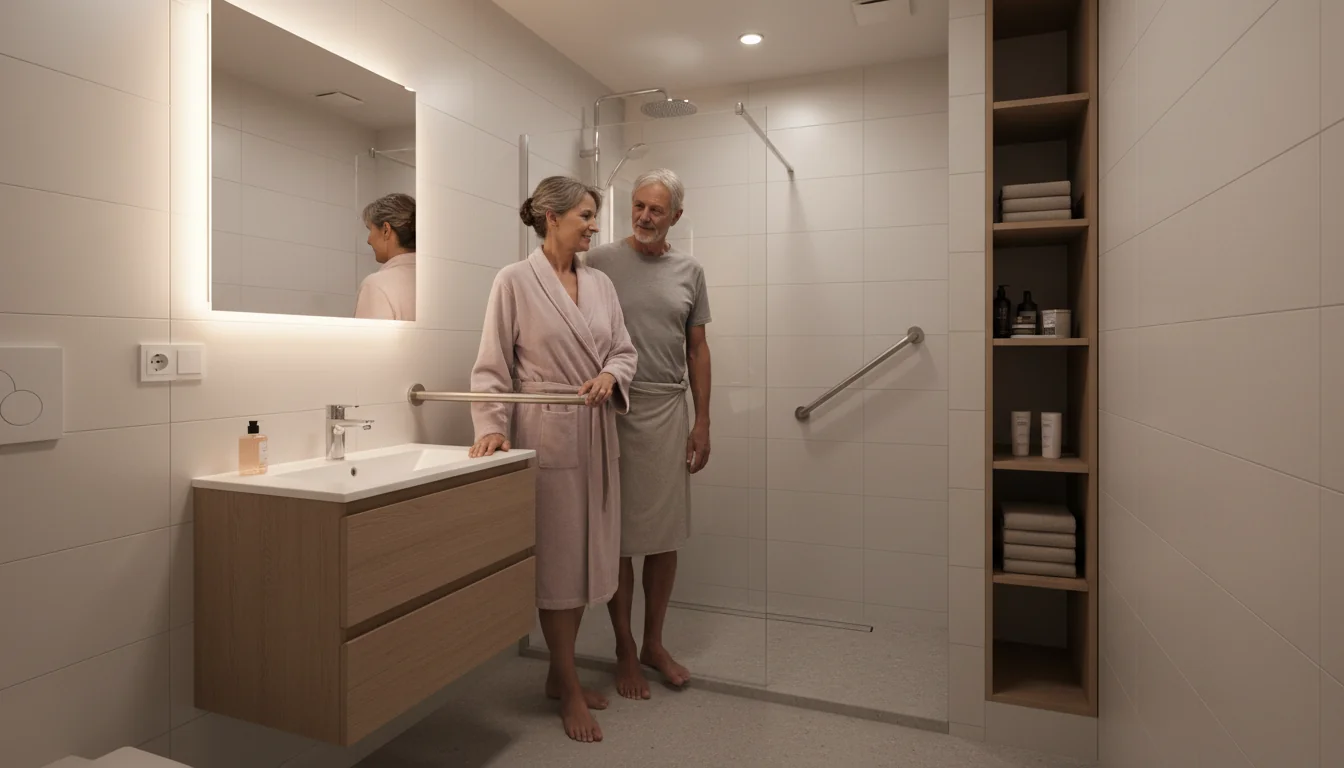
Wet zone: slip‑free surfaces
The wet area is where “no trade‑offs” matters most. Choose finishes that keep traction high while looking clean and unified across a small footprint.
- Textured porcelain or fine‑grain mosaics boost grip; wider grout lines add micro‑edges without visual noise.
- Run the same color family on walls and floors, switching only the finish: smooth on walls, slip‑resistant underfoot.
- Curbless or low‑threshold entries reduce trip risk and simplify cleaning in tight rooms.
- Use a linear drain along the wall to keep slope subtle and standing areas level.
- Add anti‑scald valves and thermostatic mixing to prevent sudden temperature spikes.
Visual continuity makes small bathrooms read larger. You can keep one tile “look” but shift to an anti‑slip finish for floors—no compromising on safety or style.
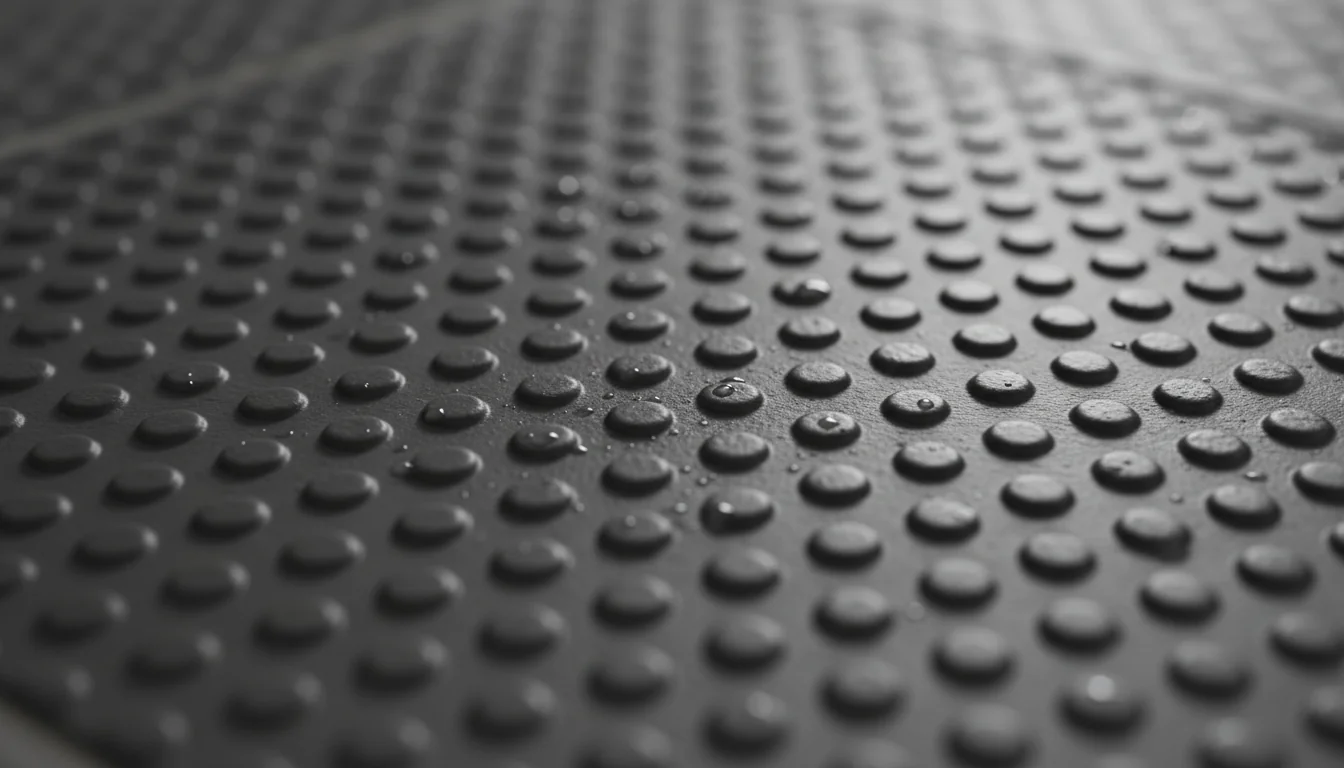
Any mat in the shower must sit flat, shed water, and resist lift at corners. Bulky edges or poor suction are hidden compromises that cause trips.
If you want removable grip underfoot, opt for a rugged rubber shower mat that drains fast and stays in place without visual clutter.
These surface choices align function and aesthetics so the wet zone stays secure without compromising your design intent.

Light, contrast: see hazards fast
Poor visibility is a frequent hidden compromise. Layer light and add subtle contrast cues so edges, water, and obstacles are obvious at a glance.
- Pair overhead ambient light with glare‑free vanity task bars and a wet‑rated shower sconce.
- Create a low‑level night path using toe‑kick or baseboard LEDs to guide safe movement half‑asleep.
- Use light walls with a slightly darker, matte floor to signal footing without visual shrinkage.
- Specify high‑CRI sources for accurate skin tone and mirror tasks.
- Add motion sensors or large paddle switches to avoid fumbling with wet hands.
| Area | No‑compromise upgrade |
|---|---|
| Vanity | Edge‑lit mirror + side bars for shadow‑free faces |
| Shower | Wet‑rated sconce; bright walls to bounce light |
| Floor | Matte finish + contrast grout for edge reading |
Stand in the doorway at night and test paths with only the night lights on. If you hesitate, visibility is compromising safety.
A brighter, better‑contrasted room helps users of every age navigate confidently, without compromising the calm you want in a compact bath.
Shower entry: curbless, no shortcuts
Curbless entries are the gold standard for no‑compromise access in small bathrooms. They demand precision, not guesswork.
- Pre‑slope the pan and extend waterproofing up the walls and outside the spray zone.
- Favor a wall‑edge linear drain to keep slopes subtle across standing areas.
- Plan a clear opening wide enough for steady, unturned entry; avoid narrow pinch points.
- Add a built‑in or fold‑down bench plus a handheld shower on a true grab‑bar‑rated slide rail.
- Contain spray with a fixed glass panel or a weighted curtain for tighter rooms.
If structure won’t allow recessing the shower, use a low threshold and ramp the adjacent floor. Skipping slope is a major compromise—expect pooling.
A fixed panel aligned to splash zones often controls water as well as full doors, without compromising maneuvering room in small baths.
Done right, curbless access blends minimalism and safety—no compromising on either.
Support, storage: discreet and dependable
Support that looks “added on” is a common compromise. Build aid into the architecture so safety reads as design, not equipment.
- Install blocking everywhere a hand might reach: beside the toilet, inside the shower, and near transitions.
- Choose decorative grab bars rated for real loads; place them horizontally where leverage is natural.
- Use corner shelves and shampoo niches at reachable heights to avoid bending on wet floors.
- Pick lever handles and pressure‑balanced valves to prevent slips while adjusting temperature.
- Keep daily items between shoulder and hip height so nobody has to step on damp tiles to reach them.
If you can add only one piece of reinforcement, choose the shower’s long wall at chest height. That single move avoids many risky reaches.
Prioritizing built‑in support avoids last‑minute hardware that feels clinical—proof you can add safety without compromising the room’s vibe.
Step‑by‑step: a no‑compromise mini‑remodel
- Map the safest path from door to shower and toilet; clear that line first.
- Upgrade lighting layers and add a night path before touching tile.
- Improve traction underfoot with slip‑resistant flooring or quality mats.
- Add blocking and install discreet, load‑rated grab bars.
- If feasible, convert to a low‑threshold or curbless entry with a linear drain.
Do not shrink clearances to “fit” a larger vanity. That trade‑off looks nice on paper but compromises real‑world stability.
Working with a square base? Add traction with a square 60×60 option that keeps water moving and corners flat.
Swap to lever handles, raise storage, and add a handheld shower before major works. These upgrades improve safety without compromising timelines.
Why prioritize “no‑compromise” planning?
Because small rooms magnify risk. A plan built around safe flow, slip resistance, and clear visibility prevents daily workarounds that end up compromising safety.
How does this differ from standard small‑bath tips?
It rejects trade‑offs. Instead of “fit more storage,” it asks, “Can you reach it without a risky step?” A no‑compromise lens puts safety ahead of bulk.
Can a walk‑in shower fit a very tight bath?
Yes, with a linear drain and one fixed panel. For grip in narrow stalls, consider an elongated 60×100 mat that covers the main standing path without bunching.
What small upgrades deliver big safety gains?
Night lighting, handheld showers, pressure‑balanced valves, and discreet grab bars. Each reduces risk without compromising appearance or space.
Will grab bars make my bathroom look clinical?
Not if integrated. Choose finishes that match fixtures and lines that echo your hardware. Good placement blends in while avoiding any compromise on support.
How do I keep style without sacrificing traction?
Use one tile look in two finishes: smooth on walls, slip‑resistant on floors. That maintains cohesion without compromising underfoot safety.
For extra traction in compact showers, consider non slip shower mat for elderly as a subtle layer that avoids visual clutter.
- Plan flow first so fixtures never force awkward, wet pivots.
- Prioritize traction with slip‑resistant finishes and curbless access.
- Light the path so hazards are visible without glare or guesswork.
Design small—and safe—by refusing false choices. In 2026, you can elevate comfort and accessibility without compromising a single square inch.

0 comments