


Mold ruins materials from the inside out, but smart treatments can change the clock. Wondering how the lifespan of mold-resistant treated options stacks up against classic, untreated versions?
In this 2026 comparison, you’ll see how service life shifts by material (wood, vinyl, canvas, composites), climate, and maintenance. You’ll learn what extends useful years, what accelerates failure, and exactly how to budget by years of use.
Foundations: what extends life
Before any comparison, anchor the variables that move real-world lifespan. Treatments help, but conditions decide how much longer materials keep performing.
- Moisture cycle: repeated wet/dry accelerates rot, swells fibers, and feeds mold.
- Sun exposure: UV breaks down binders; color fading is a proxy for surface degradation.
- Airflow and drying time: slower drying = more mildew; fast drainage adds years.
- Biocides and coatings: fungicides and water repellents reduce colonization and staining.
- Maintenance cadence: light, regular cleaning beats heavy, infrequent scrubs for longevity.
For equal use, a surface that dries in under 72 hours typically outlasts a slow-drying equivalent by multiple seasons.
Keep these in mind as we compare the extended lifespan of mold-resistant treated options with classic, unmodified materials.

Exterior wood: years you can bank
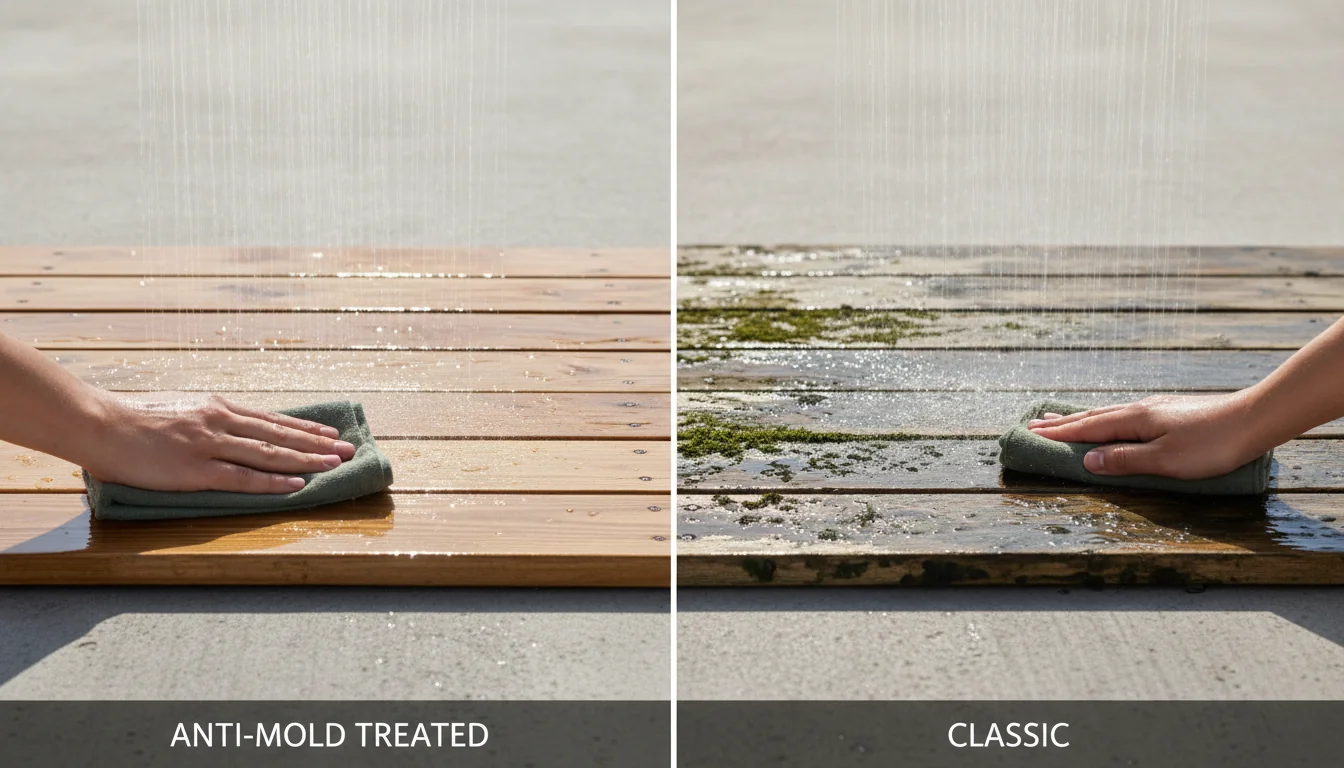
Wood durability swings widely with treatment level, species, and exposure. Here’s how pressure-treated, stain-sealed, and classic boards compare in service life.
- Classic pine (unsealed): 3–6 years outdoors; mold stains appear in season one in humid zones.
- Cedar or redwood (lightly sealed): 8–15 years; fungal resistance is natural but not absolute.
- Pressure-treated pine: 10–18 years; deeper protection against decay in ground-contact zones.
- Topcoat + preserver combo: add 3–5 years vs untreated by limiting moisture uptake.
- Composite/PVC decking: 25+ years under normal use; no food for mold but biofilm can stain.
| Classic wood (baseline) | Mold-resistant treated |
|---|---|
| Pine, unsealed: 3–6 yrs; high mildew risk | Pressure-treated pine: 10–18 yrs; slower decay |
| Cedar/redwood, light seal: 8–15 yrs | Preserver + exterior stains: +3–5 yrs vs baseline |
| Ipe (untreated): 20+ yrs if ventilated | Ipe with oil/seal: maintains performance, reduces checking |
Water traps shorten lifespan. End-grain, fastener penetrations, and tight joist spacing collect moisture and push even treated boards toward early failure.
Key takeaway: treatments raise the floor for durability, but airflow and detailing often decide the top end of lifespan.
Vinyl and marine seating: resisting salt and sun
Marine-grade vinyl is engineered with additives and coatings that resist saltwater, UV, and mildew. Regular vinyl can crack, chalk, and harbor stains faster.
- Marine vinyl (UV/mildew treated): 7–12 years on boats and poolside seating with rinsing.
- Regular vinyl (indoor grade): 2–5 years outdoors; shorter in high UV or coastal spray.
- Quick-dry foam + venting: speeds evaporation; extends cushion lifespan by limiting mildew.
- Colorfast pigments: reduce heat buildup and plasticizer loss that ages vinyl.
- Non-toxic cleaners: preserve coatings better than aggressive solvents.
The most common cause of vinyl “mold” is actually biofilm on sunscreen and dust. Rinse seats after use to curb staining and preserve service life.
Compared lifespan: treated marine vinyl regularly outlasts classic vinyl outdoors by roughly 2× when exposed to humidity and sun.
Canvas, acrylic, and outdoor textiles
Fabric choice dictates how long shade sails, awnings, tents, and cushions look clean and structurally sound in damp air.
- Untreated cotton canvas: 1–3 seasons; strong but mildew-prone if stored damp.
- Canvas treated with fungicide/water repellent: 3–7 seasons; needs periodic reproofing.
- Solution-dyed acrylic: 7–12 seasons; colorfast, breathable, mold-resistant surface.
- Polyester with vinyl coating: 5–9 seasons; waterproof but less breathable.
- Mesh/HDPE screens: 6–10 seasons; fast-drying, lowers mildew pressure.
Store textiles bone-dry and free from debris. A 10-minute sun-dry after rain can add seasons to fabric lifespan.
When comparing treated vs classic fabrics, breathability plus treatment often beats water resistance alone for long-term lifespan in humid climates.
Tents and shelters: dry time is destiny
For tents and soft shelters, the speed at which the fabric dries largely predicts how many trips it will survive without mold odor or staining.
- Classic cotton tents: tough but require meticulous drying; 4–8 seasons if cared for.
- Canvas treated with wax/biocide: 6–10 seasons; reproof every 2–3 seasons to maintain repellency.
- Acrylic/polyester flysheets: 6–12 seasons; faster drying reduces mold and mildew risk.
- Zippers, seams, and trims: the first points of failure; keep them clean to protect overall lifespan.
- Storage: ventilated bins beat vacuum-tight bags after wet trips.
Packing even slightly damp canvas invites spore growth within days. One damp weekend can halve a tent’s remaining lifespan.
In short, treated textiles and disciplined drying together multiply service life compared with classic storage habits.

Interiors: baths, kitchens, and soft goods
Indoors, humidity spikes challenge drywall, grout, upholstery, and bedding. Smart materials keep mold at bay and protect useful life.
- Moisture/mold-resistant drywall behind sinks and showers stabilizes walls and prevents early repaint cycles.
- Bathroom textiles: quick-dry weaves and anti-mildew treatments reduce odors and preserve lifespan.
- Upholstery: leather and vinyl resist mildew better than cotton in humid rooms, if wiped and ventilated.
- Mattress talk: natural latex is less hospitable to mildew than polyurethane foams; use slatted bases for airflow.
- Kitchens: silicone-sealed edges and water-resistant trims stand up to steam; fewer replacements, less waste.
Small decorative enhancements like vented toe-kicks or slatted shelves can improve airflow and add years to cabinetry service life.
Across interiors, picking mold-resistant treated components yields a longer, cleaner lifespan than classic alternatives used without airflow in mind.
How to forecast service life (2026 Guide)
- Map exposure: sun hours, splash zones, shade, and salt.
- Check material: wood, vinyl, canvas, composite, or acrylic.
- Note treatment: preservatives, UV/mildew inhibitors, or none.
- Set care plan: cleaning and recoats by season.
- Estimate lifespan: start with the ranges above; adjust for climate.
If unsure, choose the lower end of the range. You can extend life with better drying and timely recoats.
Why prioritize service life over price?
Because cost per year matters more than sticker price. Treated options often last longer, cut maintenance, and keep finishes stable, delivering better value over the total lifespan.
How does treated vs classic compare outdoors?
Treated wood resists rot, mold, and insects longer. Composites and PVC avoid rot entirely. Classic softwoods need frequent sealing and have a shorter service life under sun and rain.
Which fabrics hold up best in humidity?
Acrylics and solution‑dyed textiles with mildew guards outperform cotton canvas. Marine vinyl also endures salt, UV, and splashes, lengthening practical years in wet climates.
Do quick‑dry materials extend useful years?
Yes. Faster drying denies mold time to colonize, cuts odor, and reduces cleaning stress, effectively adding seasons to cushions and covers in humid zones.
What routine adds the most years?
Keep surfaces clean and dry, recoat finishes before failure, and store fabrics breathable. This trio preserves lifespan across wood, vinyl, and canvas alike.
Any indoor tips for bathrooms and kitchens?
Ventilate, squeegee water, and choose mildew‑resistant mats and textiles. Simple drying habits noticeably increase the service life of soft goods in wet rooms.
Compared lifespan depends on material, treatment depth, climate, and care. In 2026, the smart path is to plan by verified years, not by label alone.
- Choose materials that naturally resist rot and mildew.
- Match treatments and topcoats for full compatibility.
- Maintain drying and recoat before failure to bank extra years.
Apply these steps once, then enjoy more seasons with fewer repairs.

0 comments