


Corner showers waste space when mats ignore geometry. Smart designs solve this with shapes, textures, and drainage patterns made for the corner—improving stability without clutter.
Do you want a mat that grips, dries fast, and actually fits your stall? In this 2026 guide, you’ll learn how design choices—form factor, traction patterns, and materials—transform daily use in compact showers.
We’ll decode non-slip corner shower mats through the lens of design: geometry that locks in, tread engineering that resists slides, drainage that speeds drying, and sizing that feels intentional.
Exact fit: corner geometry
Design starts with shape. Corner showers vary—triangular, L-shaped, semi-circular, even fan-shaped—so the mat’s outline must mirror the base. A precise footprint prevents edge curl, improves stability, and guides water toward the drain.
- Triangular or sector cuts suit right-angle stalls and reduce unused surface.
- Curved fronts match semi-circular entries and avoid bunching near the threshold.
- L-shaped formats hug benches or a vanity return, keeping the floor dry.
- Slim radiused edges help doors clear the mat without scrubbing.
Trace the shower base on kraft paper, cut the outline, and test the template. This simple step prevents returns and ensures the mat’s design aligns with your drain position.
Good geometry also sets the stage for smarter drainage. When edges nest into the corner, runoff follows channels instead of pooling under your feet.
| Corner layout | Best-fitting mat silhouette |
|---|---|
| Right-angle triangle base | Triangular/sector with squared back edges |
| Curved entry (semi-circular) | Arc-front semi-circular mat, low-profile radius |
| Bench return or L wall | L-shaped cutout to clear the obstruction |
A mat that’s 2–3 cm shy of the curb on all sides reduces edge lift and lowers trip risk, especially where doors swing inward.

Reliable traction: grip technology
Non-slip performance comes from the interface between mat and floor and the texture underfoot. Smart designs balance secure grip with easy lift-out cleaning—no wrestling with stubborn suction that traps grime.
- Textured top layers (pebbled, ribbed, basket-weave) improve wet-foot friction.
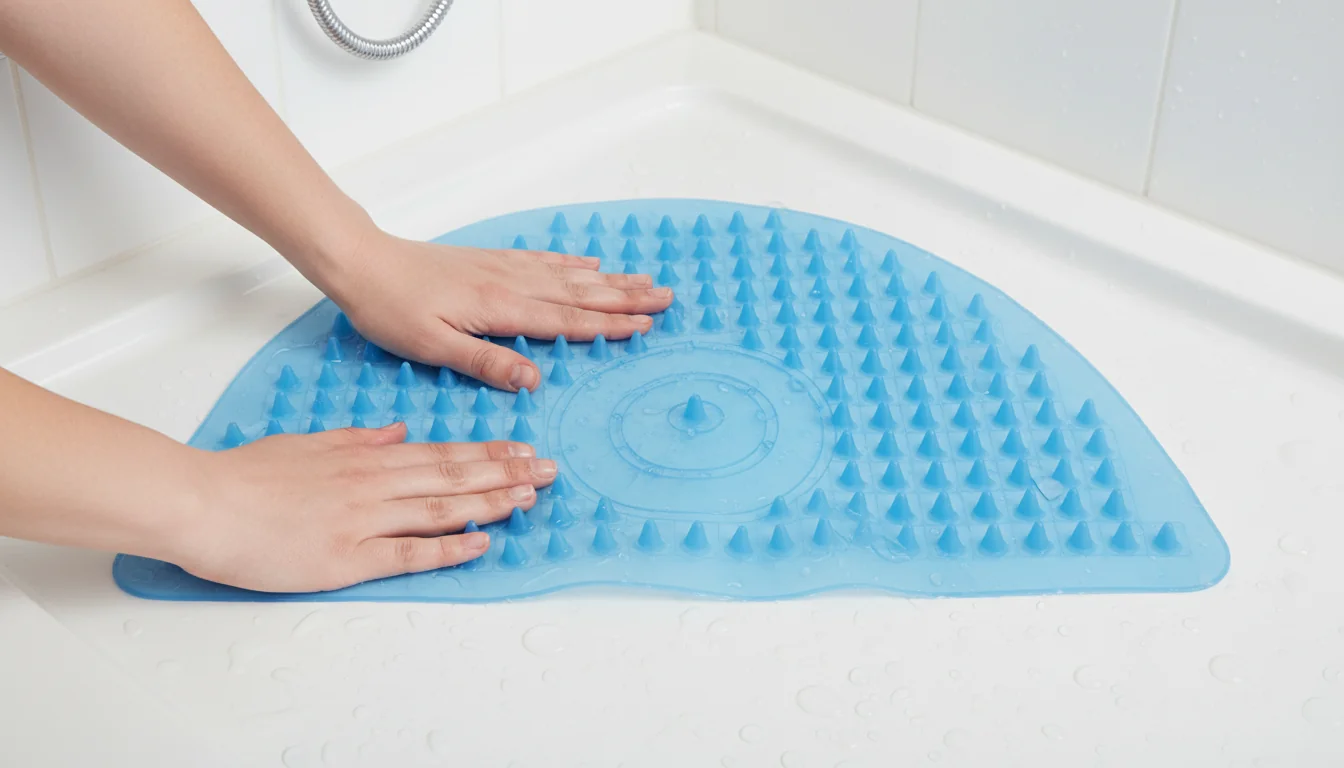
- Micro-grip bases use hundreds of low-profile nubs for slip-resistant stability on tile.
- Selective suction rings hold corners without sealing the whole base, easing daily lift.
- High-friction materials (PVC blends, rubber, silicone) maintain grip on solid surface pans.
Overly aggressive suction can trap moisture. Choose base patterns that vent air and water so mildew doesn’t bloom under the mat.
For broader anti-slip options that complement corner formats, explore this curated anti-slip range. Comparing surface textures side by side helps match the traction you prefer with the cleaning routine you’ll actually maintain.
Underfoot ridges about 1–2 mm high deliver grip without feeling spiky, a comfort sweet spot for daily showers.
Fast drying: drainage patterns
Drainage is a design choice with hygiene consequences. The best corner mats align perforations with your pan’s drain, channel surface water away, and expose more edges to air for quicker drying.
- Staggered holes promote flow even if shampoo or hair blocks a row.
- Raised channels guide water toward a corner drain pan without puddling.
- Quick-dry lattices let air reach both sides, reducing odor and mildew risk.
- Cut-outs near the curb keep thresholds clean and splash-free.
Hold the mat up after each use and let it drip for 30–60 seconds. This simple habit speeds drying and extends the mat’s lifespan.
Stick-on anti-slip strips or self-adhesive stickers can supplement traction in tight spots, but they lack the broader drainage strategy built into well-engineered corner mats.
If water lingers for minutes after you step out, the hole pattern is too sparse. Seek more perforations per cm² or deeper channels.
Sensible materials: wet-room surfaces
Materials influence grip, comfort, and maintenance. In corner showers with acrylic or solid surface bases, compatibility matters as much as texture.
- PVC blends: versatile, often the best balance of traction, flexibility, and cost.
- Rubber: high friction on smooth floors; choose non-marking formulas to protect light bases.
- Silicone: grippy and stable, with good temperature tolerance and easy cleaning.
- Slatted wood or stone composites: elevated feel and fast airflow, but less cushion underfoot.
On glossy acrylic, test a small area first. You want firm grip without staining; rinse and dry the test patch before full use.
Smart designs also consider cleaning chemistry. Mild soap and a soft brush preserve textured surfaces better than harsh agents that degrade flexible polymers over time.
A low-pile texture on top feels steadier than plush foam in wet zones. It dries faster and collects less debris from daily use.
Safer access: sizing and mobility
The right dimensions stabilize movement and support mobility aids. In 2026, corner mats coordinate with a shower stool, a compact footrest, or a low threshold to create a safer route in and out.
- Common footprints: 21 × 21 in, 31 × 31 in, or metric 60 × 60 for square stalls.
- Keep a clear corridor to the drain and to any seating solution.
- If you brush teeth at the sink barefoot, extend coverage to that splash zone.
- For family bathrooms, choose designs that remain stable under varied foot sizes.
If a mat bulges near the corner, it’s too large. Trimming should follow the manufacturer’s guide to avoid cutting through key drainage paths.
For people with reduced mobility, predictable traction beats plushness. Opt for firmer textures and edges that won’t snag canes or a stool’s feet.

How to pick smart corner layouts
Use this quick, design‑led method to land a safe, tidy fit on the first try.
- Measure the base: note width, depth, and door sweep to set shape limits.
- Map the drain: choose hole patterns that won’t seal over it.
- Match geometry: triangular, quadrant, L‑shape, or fan—mirror the stall outline.
- Check grip: pick textures for your floor—smooth tile vs. textured solid surface.
- Plan care: prefer quick‑dry channels and machine‑washable builds.
Test stance widths before buying—your toes and heels should sit on high‑grip zones, not drain spans.
For a ready‑to‑fit corner example, see corner shower mat with drainage that respects corner positioning.
Why prioritize design in a corner mat?
Because geometry, tread, and drainage work together. Smart layouts lock into corners, route water, and keep grip consistent under soap film—improving safety without making the stall feel cramped.
How do corner layouts compare to rectangles?
Rectangles can bunch at edges or block doors. Corner‑first designs hug perimeters and leave drains free. If you need a straight format, this antibacterial shower mat shows how channels keep flow moving.
What’s best for small 60 × 60 stalls?
Choose compact triangles or quadrant arcs so doors clear. Look for fine‑mesh treads and fast‑dry perforations. A small square shower mat helps avoid curl and overlap.
Do designs work on textured or solid‑surface floors?
Yes—pick cup‑less or rubberized undersides. They grip micro‑ridges without leaving rings. Consider a rubber‑based variant for stable footing on patterned tiles.
How do I maintain a design‑forward mat?
Rinse after use, hang to drip‑dry, and machine‑wash if allowed. Designs with ventilated undersides dry faster, cutting mildew risk. Avoid harsh chemicals that can glaze textures and reduce grip.
Which size suits quadrant or 80 × 80 bases?
For curved doors, quadrant arcs track the perimeter and protect stance zones. An large square shower mat balances coverage with drain clearance and door glide.
Smart corner mat design blends geometry, traction, and drainage to make compact showers safer and easier to maintain in 2026.
- Match the shape of your stall for stable placement.
- Pick tread patterns that grip your specific floor.
- Favor ventilated drainage for quick drying and hygiene.
Apply these design cues and your corner shower will feel safer, cleaner, and better organized—every single day.
Refined look: patterns and color
Design also shapes ambiance. Neutral tones blend with tile and stone, while geometric patterns add definition in glass-screened corners. Smart layouts place motifs away from the drain so they stay visible and clean.
- Understated neutrals tame small rooms and keep the line of sight calm.
- Pebble, rib, or slate effects signal texture and support grip expectations.
- Color accents near the curb help users spot edges quickly.
- Pattern scale should match mat size; bold motifs fit larger sectors.
In dim bathrooms, choose mid-tone mats. They show edges better than very light or very dark surfaces, aiding quick foot placement.
Compared with plain rectangles, corner-focused designs make the shower feel intentional—an integrated part of the bathroom’s visual rhythm.

0 comments