


Slips are fast; mold is sneaky. Both thrive in wet bathrooms. That’s why what you choose for your shower floor matters more than it seems.
In this 2026 guide, you’ll learn how to choose non-slip, mold-resistant shower mats with confidence: match to your surface, pick safe materials, read drainage patterns, and set a care routine that actually lasts.
Have two minutes now to choose smarter? Let’s turn your bath into a safer, cleaner space.
Secure grip: match mat to surface
Start your selection with the floor under your feet. The right non-slip choice depends on whether your shower or tub is smooth, textured, or tiled.
- For smooth acrylic or porcelain: suction‑cup mats with a textured top provide the most traction.
- For textured or tiled bases: opt for non‑suction solutions (weighted mats or peel‑and‑stick strips) that grip without vacuums.
- Check compatibility: refinished tubs often prohibit suction cups; pick alternatives to avoid damage.
- Full coverage reduces edge catches; long mats prevent trip points at entry and exit.
- Test before you trust: press firmly on a wet floor and tug corners to confirm hold.
Suction cups rarely adhere on textured or pebble tiles. Choose weighted or adhesive options instead.
When in doubt, decide by surface first. A perfect material is useless if the mat won’t stay put.
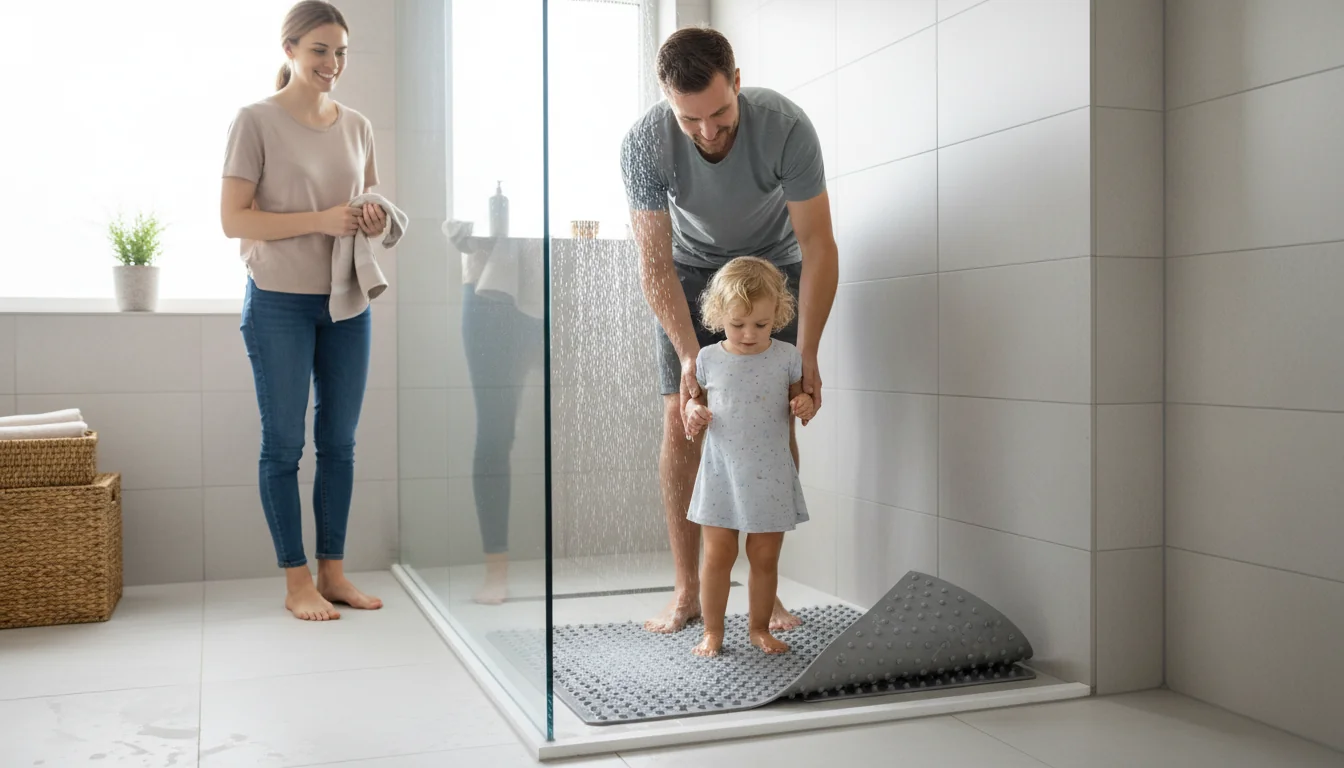
Hygiene wins: materials that block mold
Mold needs moisture, nutrients, and time. Pick materials and constructions that disrupt all three to keep your mat fresher for longer.
- Vinyl/PVC or TPE: durable, machine‑washable, often BPA‑free, with good non‑slip texture.
- Natural rubber: grippy underfoot; check for non‑toxic formulations and low odor.
- Diatomaceous “stone” mats (outside the tub): ultra quick‑dry, great for stepping out, not for standing showers.
- Bamboo slats (outside only): ventilated and fast draining; keep them oiled and dry between uses.
- Look for machine washable claims and large drainage holes to limit biofilm growth.
| Type | When to prefer it |
|---|---|
| Vinyl / TPE | Smooth tubs, frequent washing, need for strong suction and big drain holes. |
| Natural rubber | High grip feel, cushioned standing, low‑temperature wash cycles. |
| Diatomite stone (out of tub) | Fast drying at exit; avoids soggy textiles on the bathroom floor. |
Choose non‑toxic, skin‑safe materials. Labels like “BPA‑free” and “latex‑free” are helpful for sensitive users.
Your decision here affects smell, staining, and long‑term hygiene more than color or pattern ever will.
Coverage matters: size, shape, and fit
The wrong size creates slip zones. Decide by measuring the usable area, not just the outer shell of your tub or shower stall.
- Common tub coverage is ~35×16 inches; stalls may need square formats.
- Align with drains; choose mats with drainage holes dispersed across the surface.
- Extra‑long versions protect both standing spots and the entry step.
- Avoid tight fits that curl; edges should lie flat to prevent trips.
- If trimming is allowed, leave an intact ring of suction cups around the edge.
A mat that covers entry and turning points cuts near‑miss slips more than thicker cushioning alone.
For more layouts and formats, explore this curated anti‑slip range to compare sizes before you decide.
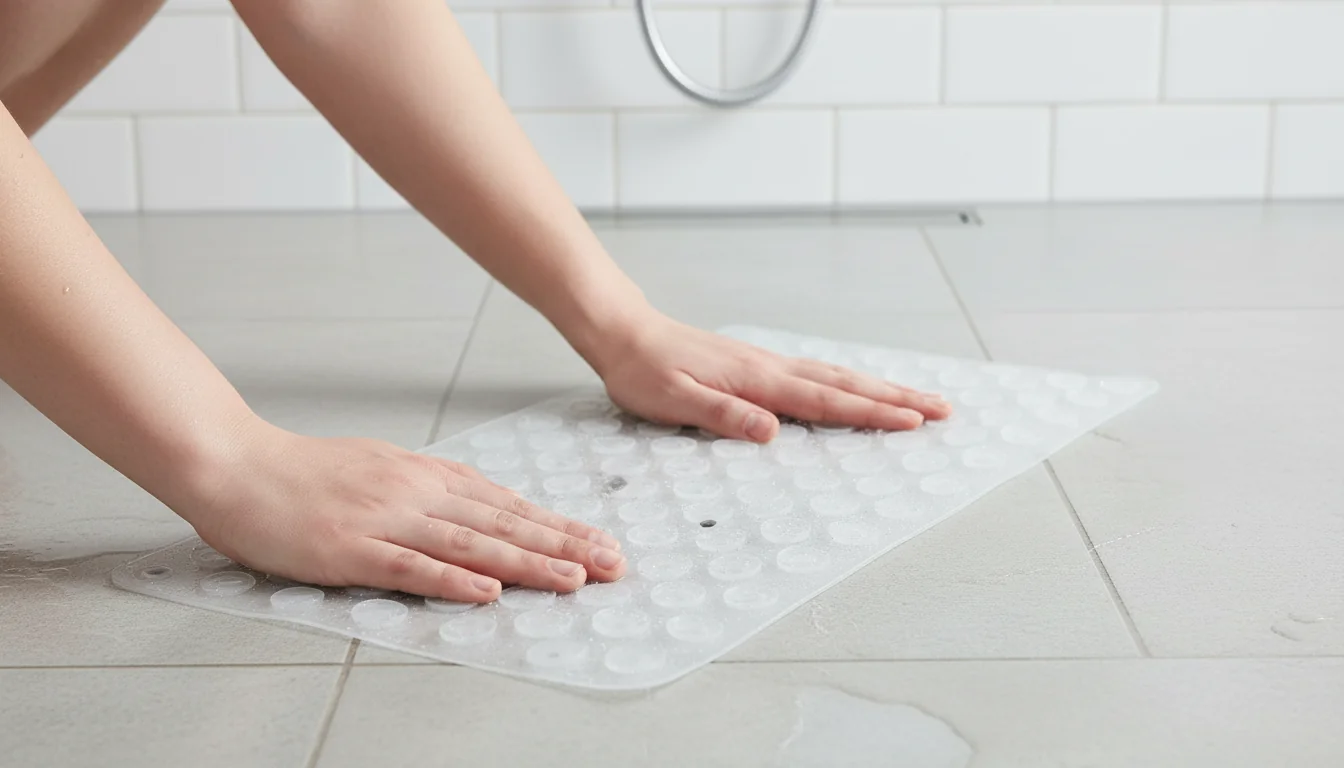
Fast drying: design features that help
To outsmart mold, force water to move and air to circulate. Your choice of pattern and underside matters as much as material.
- Large perforations drain faster than pinholes and reduce pooling.
- Raised textures (pebble, wave) lift feet above films of soap and shampoo.
- Slim, flexible mats hang dry more easily; included hooks speed airflow.
- Weighted, suction‑free mats for textured floors should have channelled undersides for runoff.
- Consider peel‑and‑stick safety strips in poor‑drain stalls; they don’t trap moisture underneath.
Never leave a mat down for more than 72 hours without lifting it to rinse and dry both sides.
Choose drainage first, then aesthetics. A great‑looking mat that dries slowly invites mildew.
Care routine: keep traction every day
A smart choice includes maintenance. Decide now how you’ll clean and store the mat so it stays grippy and odor‑free.
- After each shower: rinse soap off, then hang to dry on a wall or rail.
- Weekly: scrub both sides with mild detergent; focus on suction cups and edges.
- Machine washable models: cold, gentle cycle in a mesh bag; air‑dry flat.
- Monthly: soak in 1:1 water–white vinegar for 15 minutes; rinse thoroughly.
- Avoid bath oils; they reduce friction and feed biofilms on many plastics.
Put two self‑adhesive hooks inside the stall. Hang the mat vertically so gravity speeds drying.
Choose a routine you’ll actually follow. Consistency beats harsh chemicals every time.

Specific needs: users and layouts
Your final pick should reflect who uses the shower and how. Safety needs vary between kids, adults, and older users.
- Elderly or rehab: choose thicker texture on top, full coverage, and high‑contrast color for visibility.
- Shower chairs or walkers: avoid mats with big holes where legs can catch; prefer fine‑pattern tops.
- Low‑drain stalls: pick mats with many large perforations; standing water makes any mat slippery.
- Sensitive skin: non‑toxic, odor‑light materials reduce irritation on bare feet.
- Pet washing: textured grip and easy rinse patterns simplify clean‑up.
Color contrast at the mat’s edge helps depth perception and steadier footing during entry.
Think about users first, then decide on materials and patterns that meet those needs.
How to decide in five quick steps
- Measure the usable floor; mark drains and entry points.
- Identify the surface: smooth, textured, or tiled.
- Pick a material for hygiene and feel (vinyl, rubber, TPE, or stone outside).
- Prefer big drain holes and a grippy top texture.
- Plan care: rinse daily, wash weekly, air‑dry vertically.
If you’re unsure between two options, choose the one that dries faster. Dry time beats thickness.
For an anti‑mold build focused on drain size and washability, see anti mould shower mat as a reference point when you compare.
Working with a square shower tray? A small square shower mat helps you decide coverage without trimming.
Why prioritize decision‑making over aesthetics?
Because grip and drying dictate safety and hygiene. When you choose by surface, drainage, and care, you avoid slips and prevent mildew. Color can come last; function should lead the shortlist.
How do suction mats compare to adhesive strips?
On smooth tubs, suction mats deliver strong non‑slip traction and comfort. On textured floors, peel‑and‑stick strips or weighted mats win. Decide by surface first; suction won’t hold on uneven tiles.
What size should I pick for a generous stall?
Measure depth and width, then allow space for drain flow. A larger square like an large square shower mat can simplify coverage without seams or overlaps.
Is a bigger mat always safer for older users?
Bigger helps if edges lie flat and drains breathe. Choose full coverage with high‑contrast edges. For roomy trays, a non-slip shower mat 90x90 can reduce exposed slippery zones.
How do I maintain mold resistance over time?
Rinse daily, hang dry, and machine wash weekly if allowed. Lift the mat every few days to clean the floor underneath. Decide on a recurring schedule and stick to it.
Which texture feels best underfoot without losing grip?
Pebble or wave textures balance comfort and traction. Choose a pattern that’s gentle yet tactile enough to resist sliding when soapy water pools.
To choose well in 2026, decide by surface first, then by drying speed and care ease; aesthetics can follow.
- Match to floor type to secure real non‑slip performance.
- Favor big drain holes and quick‑dry builds to deter mildew.
- Plan simple care so hygiene lasts beyond the first month.
If you prefer a grippy, classic feel, a rubber‑based alternative can be a sound, long‑lasting pick.

0 comments