


Shower Mat vs Liquid Non‑Slip Coating isn’t a generic debate; it’s about real‑world uses that change how safe and easy your daily routine feels in 2026. Wondering which approach fits your space, surfaces, and cleaning habits?
In this guide, you’ll see the specific use cases where mats shine, where a liquid non‑slip coating makes more sense, and how to match each option to tile, acrylic, fiberglass, or concrete. Clear steps, quick checks, and maintenance tips included.
Everyday safety: quick, movable grip
Think “temporary” or “adjustable” uses. A shower mat adds fast traction on a smooth surface, cushions bare feet, and can be lifted out to clean. It suits rentals, guest baths, or homes that need a removable anti‑slip layer without any coating or prep.
- Best for smooth tubs or trays where suction cups can seal well.
- Great when you want zero curing time and easy repositioning.
- Helpful for kids or anyone who prefers a softer, cushioned feel.
- Handy in rentals: no alteration to the original surface.
Rinse the mat after use and let it drip‑dry to reduce soap film. A quick cold‑water spray prevents slippery build‑up.
Where mats struggle: textured tile, deep grout lines, or uneven stone can break suction. They can trap moisture if left in place. These limits shape when this approach is the right fit, and when a thin liquid layer is the better answer.
Suction cups need a smooth surface. Don’t cover the drain; edges that curl increase trip risk—replace worn mats promptly.
Loofah‑style and rubber mats give grip without abrasive granules. They’re kinder to skin and easier to clean with non‑abrasive soap.
If your main need is flexible placement and quick setup, a mat‑first approach aligns with those uses. If you want a low‑profile, always‑on surface, keep reading.

Long‑term traction: thin, built‑in texture
Liquid non‑slip coating turns the floor itself into the grip layer. That’s ideal when you want no edges, easy squeegee drying, and a surface that feels natural underfoot. These applications suit walk‑in showers and tiled floors with grout lines.
- On ceramic or porcelain tile: micro‑treatments increase traction on the surface.
- On acrylic or fiberglass: clear, paint‑on films with a fine texture add barefoot‑friendly grip.
- On concrete: sealers or textured topcoats provide durable anti‑slip for wet areas.
- Very low profile: nothing to hang, wash, or reposition after showering.
Tape off edges and the drain. Many water‑borne, low‑odor formulas roll on easily; some “ready‑to‑use” sprays treat tile in 6–10 minutes before a thorough rinse.
Expect a curing window: light use after several hours; full durability after 24 hours or more. Avoid abrasive pads; choose non‑abrasive cleaners to preserve the textured film.
Harsh acids or strong bleach can dull coatings. For slip‑resistant zones, spray a liquid cleaner, wait 3–5 minutes, agitate lightly, rinse, and dry.
Prefer a removable route? Explore our non‑slip shower mat range as a flexible alternative to permanent treatments.
If your use case involves frequent squeegeeing, minimal clutter, and consistent grip across grout, a coating’s “always there” texture is a strong fit.
Surface match: tile, acrylic, concrete
Choosing by uses starts with the substrate. Different shower floors need different anti‑slip strategies to balance traction, comfort, and maintenance.
| Surface type | Better‑suited approach |
|---|---|
| Smooth acrylic/fiberglass trays | Mat for instant grip; or clear roll‑on with fine texture |
| Ceramic & porcelain tile (grouted) | Tile treatment or textured coating to overcome grout breaks |
| Stone, pavers & natural stone | Non‑slip sealer or coating; mat only if suction is reliable |
| Concrete & terrazzo (porous) | Densifier + sealer or textured topcoat; mat as a temporary add‑on |
| Vinyl & rubber flooring | Mat for cushion; coating only if confirmed compatible |
- Textured epoxy or quarry tile often benefits from a non‑slip coating that evens traction across patterns.
- Porous concrete may need a primer or densifier before a topcoat for lasting grip.
- Glazed enamel or high‑gloss finishes can be tricky—check compatibility and prep steps.
Do a small water‑drop test. If water beads and sits, a tile treatment or light abrasion may be needed before any film‑forming layer.
Across home “wet zones,” you’ll see similar logic: Ceramic & Porcelain, Concrete & Terrazzo, Pavers & Natural Stone, Vinyl & Rubber Flooring. The right choice follows the intended use and the floor’s porosity.
Some spray‑on tile treatments are “apply, wait, rinse.” Others are roll‑on films. Pick the method that suits your application skills and downtime.
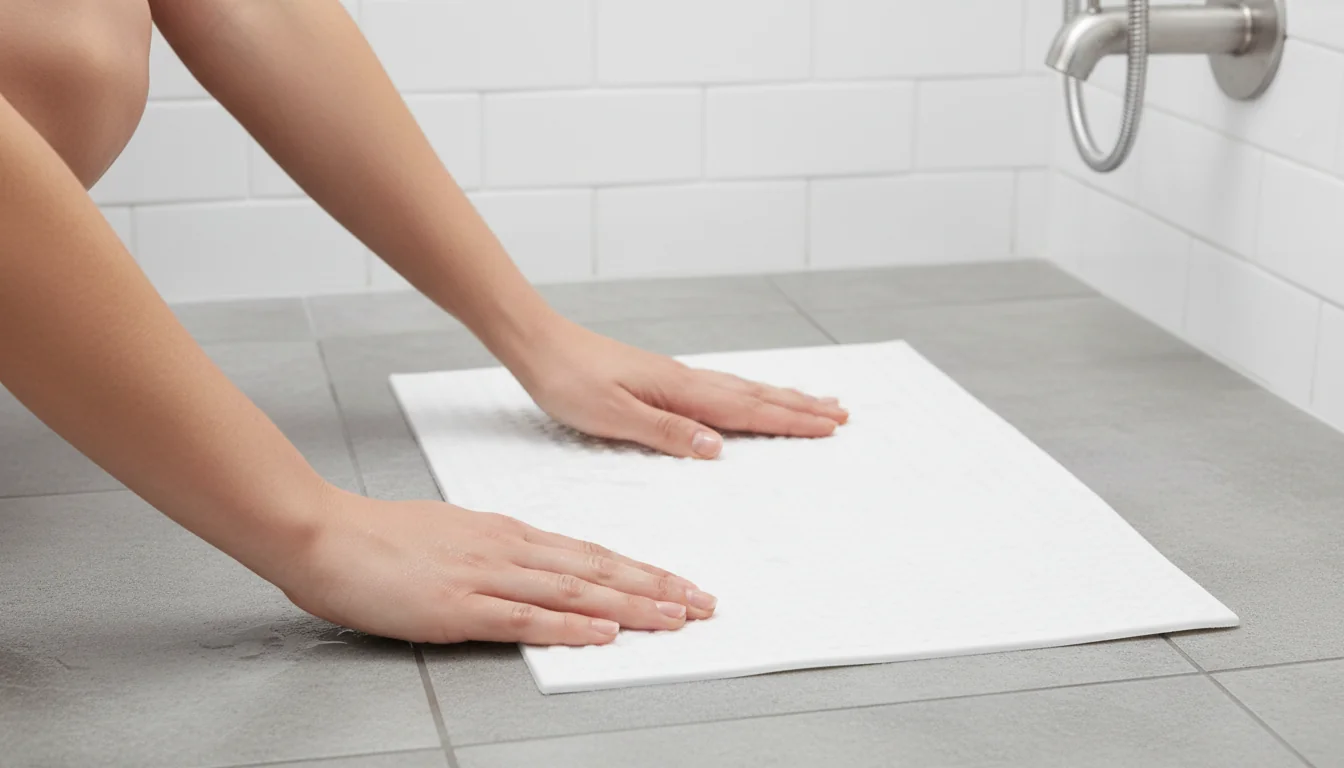
Cleaning realities: hygiene and upkeep
Your cleaning habits shape the best uses. Mats are fast to remove and scrub, but they need drying. Coatings are simple to squeegee and wipe daily, but they call for non‑abrasive routines to protect the textured film.
- Daily: Rinse, squeegee the floor, and let air dry to limit soap film.
- Weekly: Use a liquid cleaner, let it sit 3–5 minutes, agitate lightly, rinse thoroughly.
- For mats: Machine‑washable models simplify deeper cleaning; always dry fully.
- Avoid strong bleach or harsh acids on coated surfaces to preserve traction.
Keep a soft nylon brush in the shower. Two passes per week on the floor texture prevent oils and soap from reducing grip.
If you love a minimal, always‑clear floor, coatings align with that use case. If you prefer tossing a mat in the washer, the removable route may win.
Never leave a suction‑cup mat on a damp floor long‑term—lift and dry it. Trapped moisture can lead to odors and slippery biofilm.
For porous floors, a no‑rinse daily cleaner designed for grouted areas helps preserve the anti‑slip profile without residue.
Compliance needs: codes and access
Many facilities require a non‑skid shower floor or a non‑slip, impervious mat. At home, the same logic applies: reduce fall risk, remove tripping edges, and keep high‑grip under wet, soapy conditions.
- Coatings minimize transitions and edges—useful near grab bars and benches.
- Mats add cushion but must sit flat; edges shouldn’t curl or ride up.
- For caregivers: smooth, unobstructed floors simplify safe transfers.
- In small stalls, thin films maximize usable space compared with thick mats.
Pair traction with lighting and storage at easy reach. Reducing bending and twisting complements anti‑slip uses.
If accessibility is your driver, thin coatings help keep the floor flush. If comfort underfoot is key, a mat can be the right compromise—just commit to upkeep.
Whatever you choose, keep most‑used items within easy reach. Slips often happen when stretching or twisting on a wet floor.

Costs vs time: coverage and lifespan
The best uses also respect budget and downtime. Mats cost less up front and require no curing. Coatings demand prep and drying time but can deliver multi‑year traction with simple cleaning.
| Scenario | Practical choice |
|---|---|
| Need traction today, no tools | Mat (place, test grip, rinse after use) |
| Grouted tile you squeegee daily | Coating or tile treatment; thin, always‑on texture |
| Minimal clutter, small stall footprint | Coating (no edges, easier to clean) |
| Frequent deep‑cleans, machine wash | Mat (remove, scrub or wash, dry fully) |
Plan downtime: many coatings allow light foot traffic after several hours, but full cure often needs 24 hours or more.
Mats typically need replacement sooner, especially if edges harden or the back loses grip. A good textured film, maintained with non‑abrasive cleaning, can deliver reliable traction for extended periods.
In 2026, “ready‑to‑use” tile treatments that spray, wait, rinse remain a quick option for grouted floors with minimal tools.
Guide 2026: decide in five steps
- Identify the surface: acrylic, fiberglass, ceramic, stone, or concrete.
- Check flatness: smooth for suction cups, grouted/porous for treatments.
- Pick your priority: instant use vs. thin, always‑on texture.
- Plan maintenance: washing a mat vs. non‑abrasive cleaning for films.
- Confirm downtime: none for mats; coatings need drying and cure.
If you’re undecided, test a small area with an anti‑slip film in a corner to gauge feel and cleaning effort.
Need a larger footprint right away? Consider non-slip shower mat 90x90 for quick coverage while you evaluate a permanent coating later.
Don’t apply a coating over wax, oils, or soap film. Deep‑clean and dry the floor first to ensure proper bonding.
Prefer extra cushioning underfoot? A durable pick like a rubberized style pairs comfort with traction and can be lifted to dry after each shower.
Why focus on practical uses?
Because slip resistance fails when it ignores context. Matching solutions to specific uses—surface type, cleaning style, and downtime—delivers safer results than generic advice.
How does a coating compare to a mat?
Coatings are thin, permanent textures with easy squeegee care. Mats are instant and removable. In compact stalls, large square shower mat can be a simple trial before committing to film‑forming layers.
What are the main advantages of each?
Mats: zero curing, soft feel, removable. Coatings: no edges, consistent grip over grout, easier daily drying. Your use case decides which benefit set matters most.
Is there a better fit for long, narrow stalls?
Thin films keep tight spaces clutter‑free. If you trial a mat first, choose antibacterial shower mat that avoids drain channels and sits completely flat.
How should I maintain slip resistance?
Rinse daily, squeegee, and dry. Weekly, use a non‑abrasive cleaner, wait 3–5 minutes, agitate lightly, and rinse. For mats, wash and fully dry to prevent slippery buildup underneath.
What if my shower base is very small?
Try a compact mat to validate coverage and feel—small square shower mat prevents bunching and keeps edges away from the drain zone.
Choosing between a shower mat and a liquid non‑slip coating is about matching uses to your surface, cleaning rhythm, and tolerance for downtime.
- Mats excel for instant, removable grip and cushioned comfort.
- Coatings deliver thin, consistent traction that’s easy to squeegee.
- Surface type and hygiene habits should guide your final call.
Start with your surface and routine, then apply the option that fits your 2026 bathroom best—safely and confidently.

0 comments