


Storing your non-slip shower mat: hang it up or roll it? In 2026, the debate matters because storage affects hygiene, drying speed, and safety. If your bathroom is tight on space, a neat roll may be a game changer.
Wondering whether to coil it after you rinse, or sling it over a rail to drip-dry? This no-fluff guide explains when a tidy roll outperforms hanging, how to roll without warping suction cups, and ways to prevent mold—step by step.
Faster drying: roll-and-stand
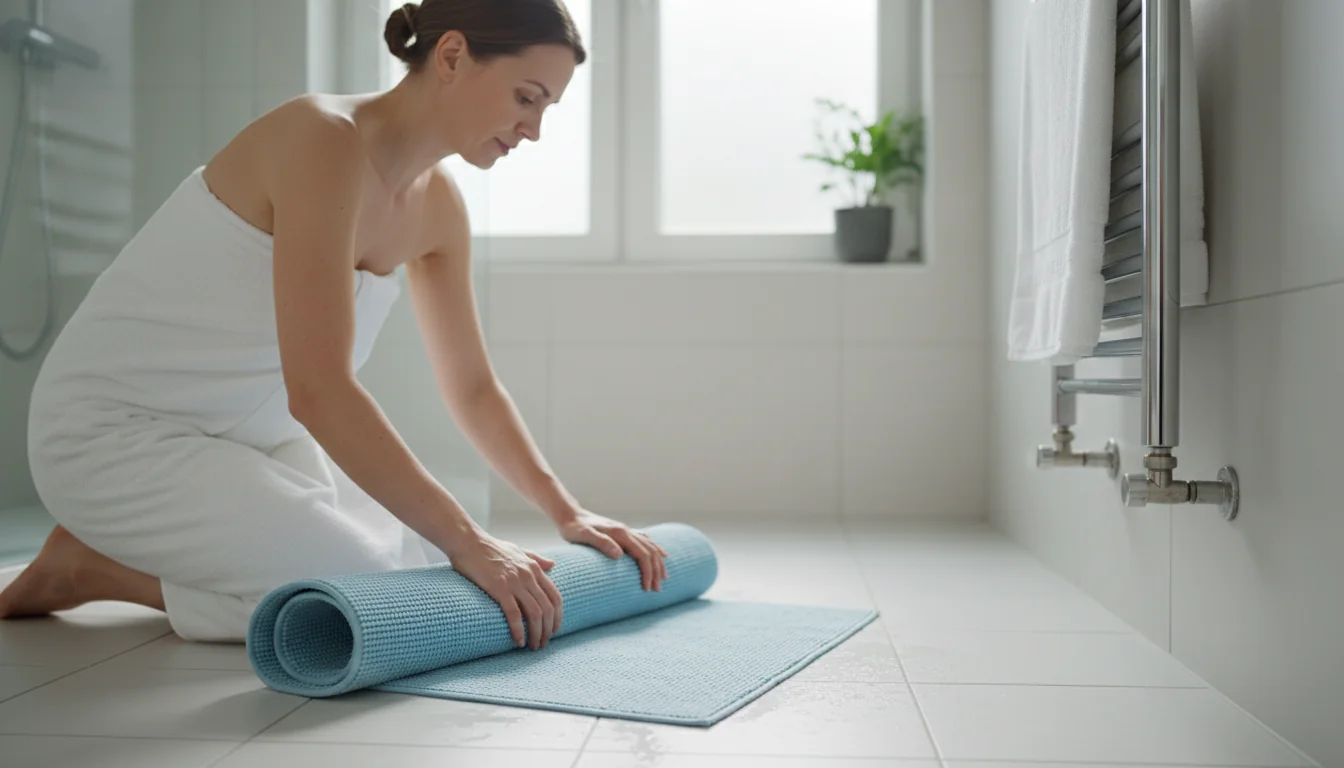
Rolling the non-slip shower mat into a loose tube and standing it on edge accelerates evaporation. Water runs down, not across, and air can circulate around the whole surface. That’s the core reason the roll method wins for daily use.
- Gravity helps: drips exit via drain holes instead of pooling.
- Air wraps the roll’s perimeter, drying both sides at once.
- Less contact with the tub or floor; fewer damp spots remain.
- Quick reset: unroll and re-suction in seconds.
| Method | Typical surface-dry time |
|---|---|
| Loose roll, stood vertically | About 30–90 minutes with good airflow |
| Hung over tub/shower rail | About 60–180 minutes depending on thickness |
After a quick rinse, shake off excess water before you roll. Less water trapped inside = faster drying.
If you prefer to hang occasionally, do it after the roll has already shed most water. Think of hanging as a finish step, not the starting point.
Less mold: minimize contact
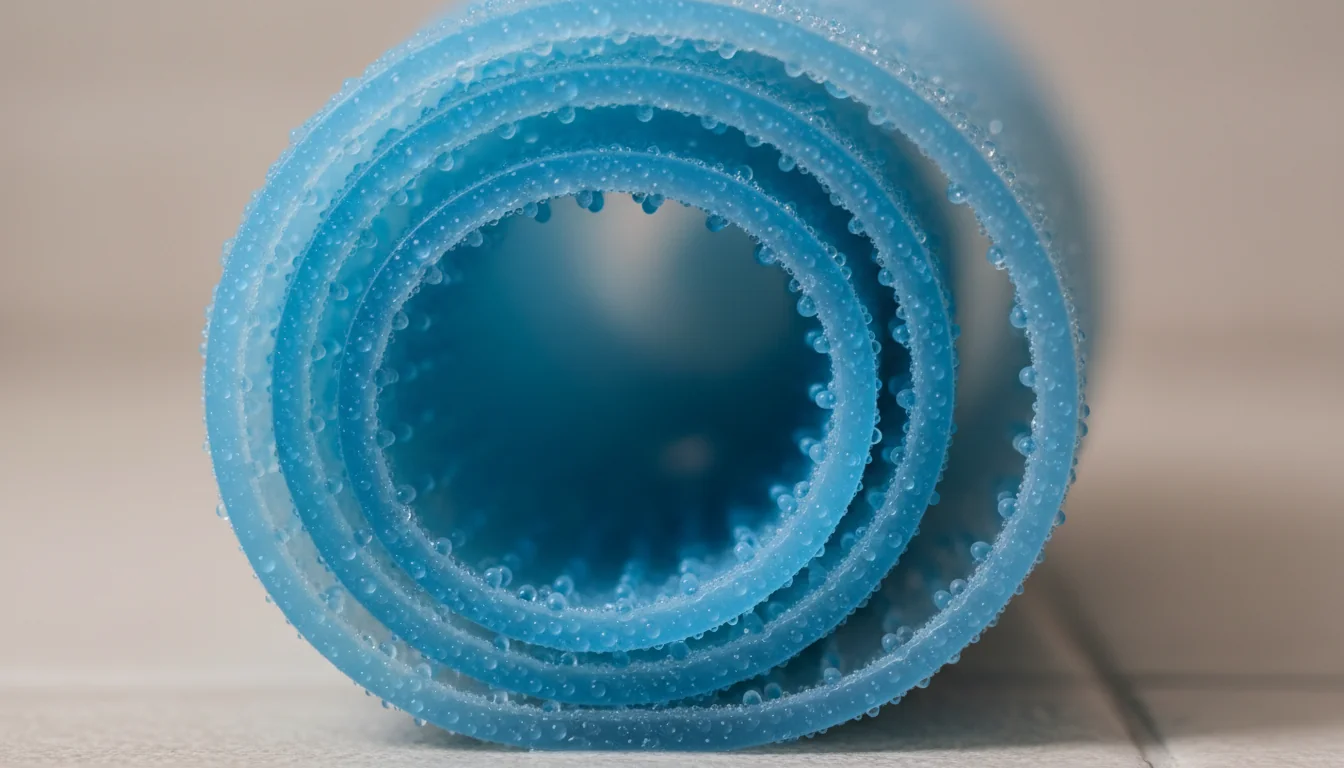
Mold loves trapped moisture. Rolling the mat into a cylinder means less flat contact with tile, less water sitting under suction cups, and more airflow across the underside where buildup starts.
- Underside dries faster; black spots around cups are less likely.
- Roll prevents puddles from resting under the mat’s center.
- Hanging can sag; water may collect in folds or corners.
- Roll pairs well with vent fans or a slightly open window.
A breathable storage bag helps between uses. Explore this safety-focused selection to match formats that dry cleanly.
For households centered on Home Safety or advising in a Caregiver Forum context, a roll-first routine reduces maintenance load while keeping footing secure for seniors and kids.

Material care: protect structure
Rolling must be gentle to protect the mat’s geometry. Over-tight spirals can crease textured panels, stress the backing, or flatten cups. A soft, loose roll supports long-term grip without warping.
- Avoid sharp folds; a cylinder preserves the mat’s plane.
- Roll with texture facing outward to prevent imprint lines.
- Align the tube so cup rims are not crushed at the core.
- Let the roll “breathe” slightly; no compression bands.
Do not roll tight. A compacted tube can deform cups and edges, reducing future adhesion.
If you notice minor curl after storage, lay the mat flat for a few minutes before pressing cups down. A brief warm-water rinse re-softens flexible materials for a perfect set.
Space gains: compact storage
Rolling reduces the footprint to a neat tube you can tuck behind bath taps, stand in a corner, or slide onto a shallow shelf. This is invaluable in small bathrooms where every inch counts.
- Stand the roll on its edge at the back of the tub.
- Use a ventilated hook rack to cradle the rolled tube.
- Slip the roll into a breathable mesh bag; avoid plastic.
- Label a niche in a cabinet to keep it accessible.
If you share the bathroom, dedicate a small holder for the rolled mat so it never blocks the floor or drips over towels.
Hanging can still work if you have a high rail and solid airflow, but the roll is easier to place discreetly and won’t crowd your shower curtain or liner.
Ready use: quicker reset
Rolling supports a fast “down–use–up” routine. You unroll, press cups, shower, then rinse and roll again. It’s consistent, safe, and repeatable, even in busy households.
- No searching for a place to hang after every use.
- No damp mat lying flat where people can trip.
- Unroll where you need it; press cups once, done.
- Encourages daily rinse because roll becomes a habit.
For Non Slip Shower Mats For The Elderly, a predictable roll routine with a grab bar nearby simplifies handling and reduces risk.
If someone in your home has limited grip strength, keep the roll diameter wider and store it at hip height to reduce bending and strain.
How to roll and store properly
- Rinse both sides to remove soap film and hair.
- Shake excess water; lay cups up on the tub floor.
- Coil from the short edge with cups facing out.
- Set the cylinder upright on a corner or ledge.
- Let air circulate; uncoil fully at next use.
Place a microfiber cloth disc under the coil to catch drips without wetting the bathroom floor.
Do not strap the roll tightly with bands. Compression marks can deform cups and reduce grip.
If you prefer a sturdier feel underfoot that still coils well, look at this rubber-based option as an example of a material that tolerates repeated rolling.
FAQ: rolling vs hanging, answered
Why choose a rolled cylinder at all?
It saves space, dries cups faster, and keeps walkways clear. A vertical coil also reduces wall contact, so fewer streaks and less lingering moisture—a simple win for daily hygiene.
How does coiling compare with hanging over a bar?
Hanging spreads the mat and can dry flat surfaces well, but cups may stay damp. Rolling upright exposes cups to air. Consider a patterned mat like shower tray mat if you also care about looks while stored.
Will rolling damage suction cups or cause curling?
Not if you keep the coil wide and cups outward. Avoid tight spirals and bands. Unroll fully before use to reset the surface and restore full non-skid contact.
What if my shower base is square and compact?
A square mat is easy to coil from one side and park upright in a corner. Consider a compact footprint similar to large square shower mat for tight stalls.
How do I prevent mold on the underside while storing rolled?
Rinse after every use, then stand the coil so drips exit through the holes. Weekly, scrub the cups with mild detergent; monthly, disinfect with diluted bleach (1:10), then rinse and air-dry completely.
Does a square pattern with many drain holes roll well?
Yes—holes reduce bulk and help airflow through the cylinder. See a square-layout reference like square shower mat for how perforations aid drying when coiled.
Is rolling suitable for households focused on accessibility?
Often, yes. A predictable, upright “parking spot” keeps floors clear, which supports safer movement. Many home safety discussions favor storage that removes obstacles from walk paths.
Coiling your Non Slip Shower Mat—then standing it upright—balances space, hygiene, and speed. It’s a small routine with big payoffs for a clean, safe bathroom in 2026.
- Roll cups outward and keep the cylinder vertical
- Rinse, scrub, and disinfect on a set schedule
- Pick materials that tolerate a wide coil
For a stall-friendly footprint that still coils neatly, review a size akin to non-slip shower mat 90x90 and adapt the method to your layout.

0 comments