


Choosing a bath mat shape might look trivial—until you step into a wet shower and need sure footing. Square vs rectangular can change coverage, drainage, and how confidently you move inside the enclosure.
Which footprint truly suits your shower floor and drain layout? In this 2026 guide, you’ll learn how shape affects slip resistance, cleaning, fit by stall type, and the step‑out zone—so you pick the right mat the first time.
Safer footing: match the stall floor
In a wet stall, shape affects how your weight is distributed and how the mat grips. The goal is full, stable contact with the shower base while keeping water moving to the drain.
- Square mats fit square shower pans and center drains with balanced coverage at all edges.
- Rectangular mats suit alcove enclosures and linear drains along one side or end.
- On a textured floor or small tiles with deep grout, choose a mat designed to grip without relying solely on suction.
- For corner or quadrant bases, pick a shape that doesn’t curl up into curves; trim-to-fit helps keep toes flat.
- Check that holes or channels align to maintain flow; blocked perforations can increase slickness.
If your base is refinished or highly textured, avoid heavy suction cups. Opt for a weighty, anti-slip underside that grips by surface contact.
Think of it this way: a square footprint gives even edge-to-edge stability in compact stalls, while a rectangle mirrors long, narrow pans, reducing overhangs that can catch underfoot.
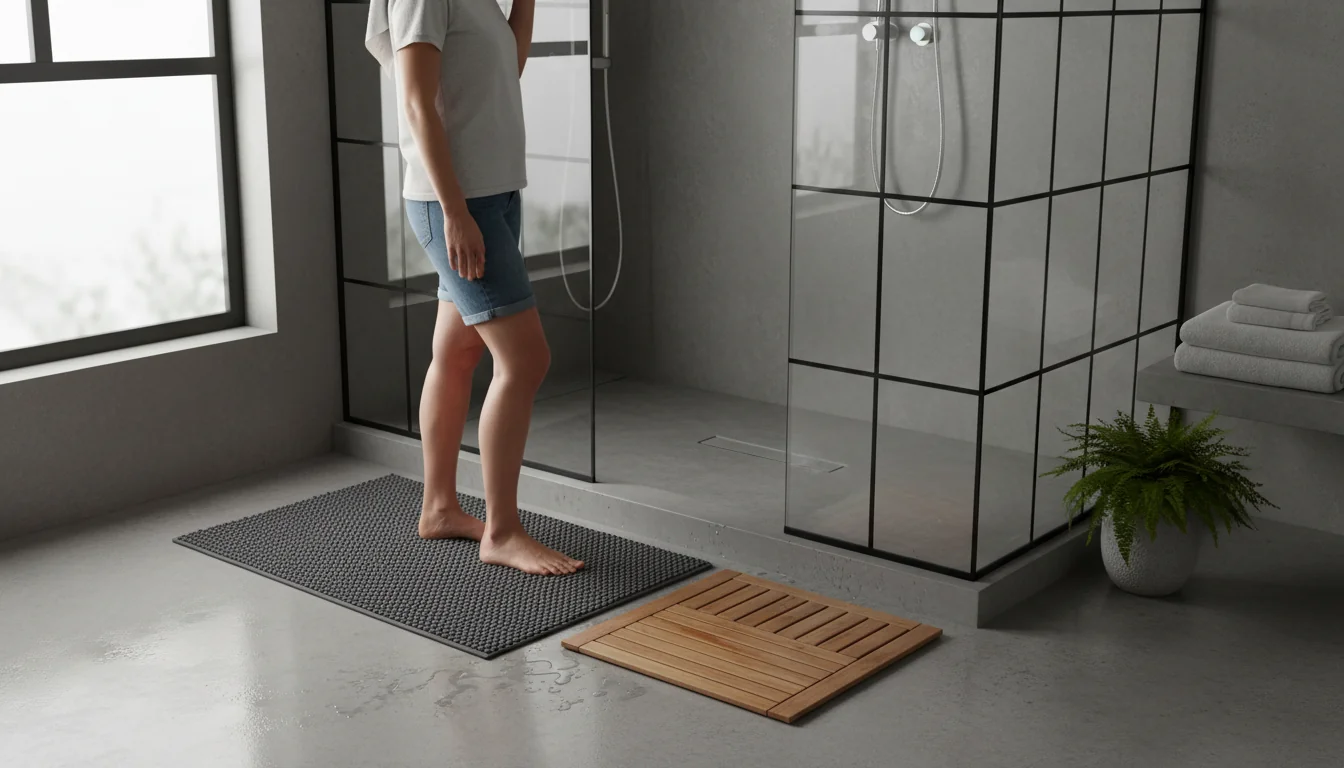
Better fit: drains and door swing
Fit is more than dimensions. In the shower, drain placement and door clearance dictate whether a mat feels natural—or fights your layout.
| Square shape | Rectangular shape |
|---|---|
| Best for square pans, center drains, and compact stalls. | Best for alcove pans, linear drains, and elongated floors. |
| Typical fit: 21"–24" per side for inside-the-shower coverage. | Typical fit: 16"×28" to 20"×32" to span standing zones. |
| Drain alignment is easy with centered perforations. | Align long slots with a side or end drain channel. |
| Fewer corners near hinges; good for pivot doors. | Watch door sweep; leave at least 6–10 mm clearance. |
- Map obstacles: door sweep, seat, and any grab bar legs that could snag holes.
- Corner, neo‑angle, or quadrant bases need careful trimming; avoid curled edges.
- On small mosaics, thicker mats can bridge grout lines for steadier footing.
- For tub‑showers, a rectangle usually covers the long standing lane better.
Open and close the door with the mat dry, then wet. If it lifts or drags, reduce size or rotate 90° to protect the seal.
Keep a simple “Rug Size Guide” note in your phone with your stall width, depth, and drain position. It speeds up browsing through bathroom rugs and shower mats.
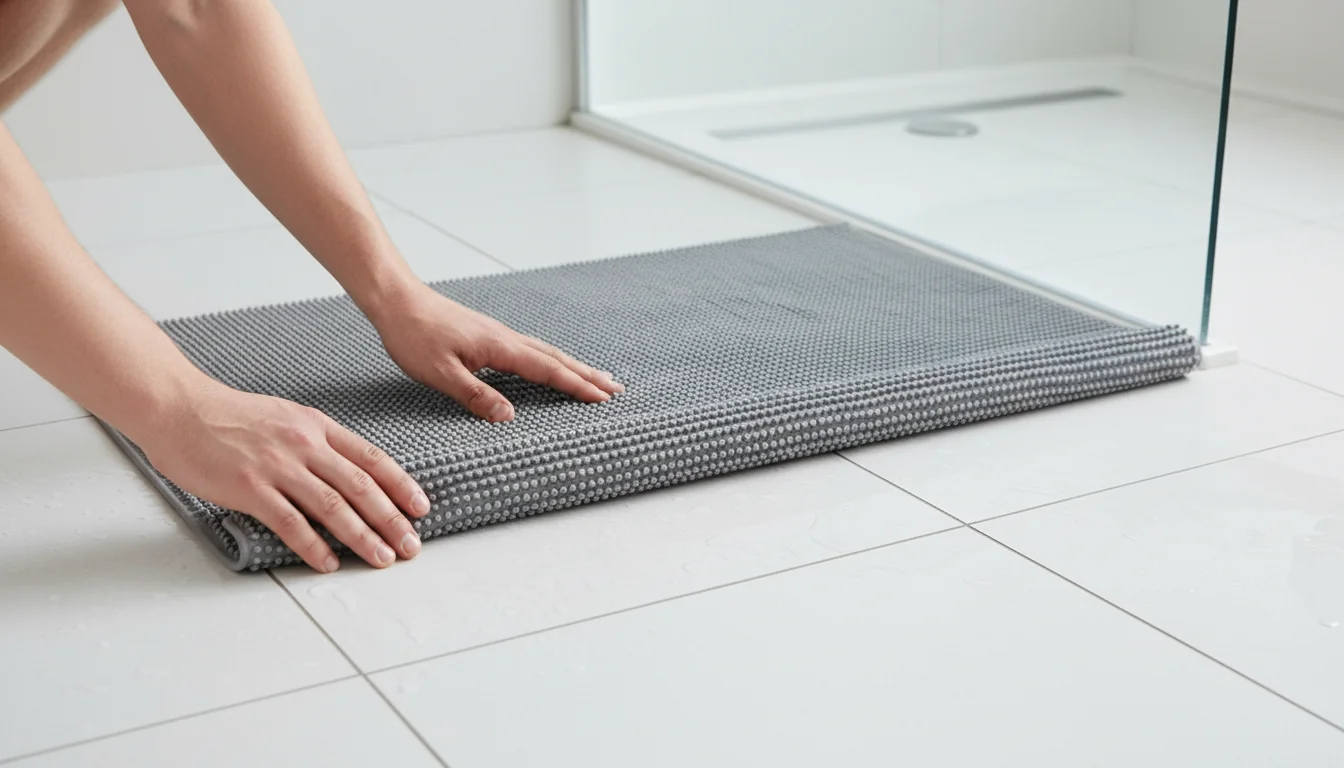
Easier care: air flow and drying
Inside a shower, airflow decides how quickly surfaces dry. A shape that hangs easily and doesn’t pool water will resist mildew growth better.
- Squares are simpler to align on wall tiles for drip‑drying after rinsing.
- Rectangles offer more edge length; they can drape over a rail or seat.
- Perforations and raised ribs improve drainage channels underfoot.
- Materials matter: rubber or PVC for grip; teak or bamboo slats for quick air exchange.
- Clean weekly: warm water, mild detergent; monthly deep clean if the shower runs daily.
A mat that dries within 2–4 hours after a rinse is far less likely to smell. Look for open patterns that ventilate.
If you prefer textile bathroom mats outside the stall, keep them out of the spray zone. For the wet interior, stick to non‑slip designs made for continuous contact with water.
Shape signals: comfort, style, and zoning
Inside a shower, shape can subtly control movement and comfort. It also sets a visual rhythm that complements tile patterns and grout lines.
- Square reads centered and calm; it invites you to stand symmetrically under the spray.
- Rectangular reads directional; it guides feet along a lane from entry to the water stream.
- Match the mat’s edges to grout for a tidy look; avoid diagonal placement that causes curl.
- Dark tones hide soap scuffs; lighter tones reveal residue and nudge quicker cleaning.
- For Ideas & Advice beyond the stall, reserve a “Bathroom Rug Sizes” note for outside-the-shower textiles.
Avoid novelty cuts inside the shower. Extra curves or cutouts reduce contact and can snag toes or a pivoting door.
Remember: a square or rectangle is not just a look—it’s a cue to stand, step, and turn with confidence in a confined, slippery environment.
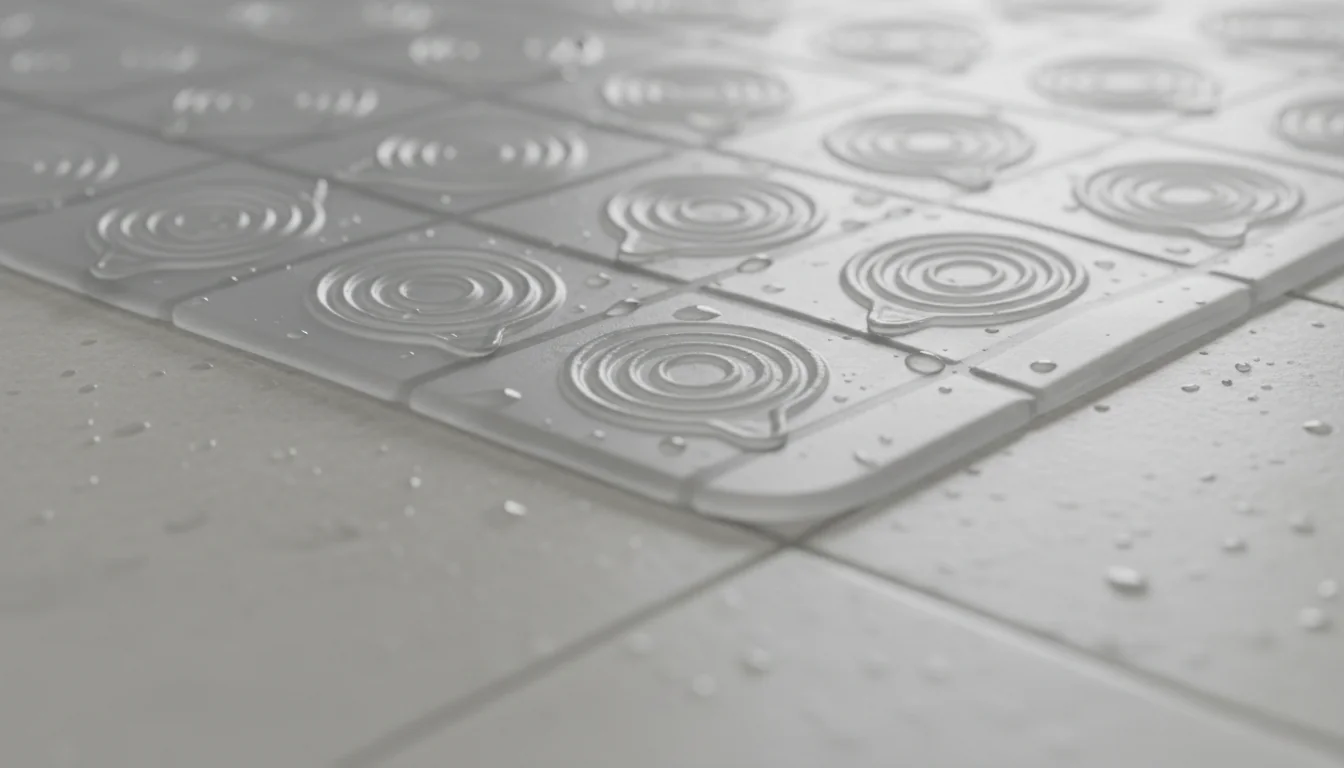
Materials that grip on wet floors
Shape works best with the right build. Your shower’s surface texture and cleaning routine inform material selection.
- PVC/TPE with cups: strong hold on smooth acrylic, fiberglass, or porcelain trays.
- Textured rubber: better friction on lightly textured tiles; often suction‑free.
- Bamboo/teak slats: quick‑drain platforms; ensure rubber feet to prevent skating.
- Perforation density: more holes = faster quick‑dry, but avoid overly large cutouts under heels.
Always lift and hang after use. 72 hours of constant contact encourages mildew on any surface.
For machine‑washable mats, check temperature and spin limits. Softer compounds can warp under high heat.
Guide 2026: measure and match your base
Use these quick steps to size a mat for your shower floor with fewer returns and better daily grip. Match shape to footprint, then confirm drainage.
- Map the tray: length, width, and door swing clearance.
- Locate the drain: center, end, or linear along a wall.
- Assess surface: smooth vs textured tile; pick cups or cup‑free.
- Dry run: place a towel template to preview coverage zones.
- Test removal: you should lift, rinse, and hang in seconds.
If you’re equipping a square stall and want edge‑to‑edge traction, consider extra large shower mat non slip as a reference for full‑floor coverage.
For a classic alcove tub‑shower, the longer side often wins. See extra long shower mat as a common rectangular baseline.
Why focus on shape inside a shower?
Shape sets coverage, drainage, and how steadily you move. A mat that mirrors your stall footprint keeps your stance on non‑slip texture during rinsing and turning.
Square vs rectangular: which fits most stalls?
Square works great in square trays and many corner enclosures. Rectangular excels in long alcoves. For a compact square stall, explore a square anti‑slip option to maximize edge coverage.
How does the drain position affect the choice?
Center drains favor symmetric footprints; linear drains suit long mats aligned to the slope. Perforation patterns should always keep water moving.
What if my shower floor is textured tile?
Pick mats designed for textured surfaces. Suction cups may not seal; choose heavier, grippy materials that rely on surface friction instead of vacuum hold.
How do I size for a tub‑shower combo?
Measure the flat base where you stand and track it lengthwise. A longer shape improves stability. Consider antibacterial shower mat to match the alcove’s axis.
Care tips to keep mats safe in the shower?
Rinse soap off, lift after use, and hang to dry. Machine‑wash if allowed. Re‑seat suction cups periodically to maintain full‑floor contact and traction.
For showers, shape is not cosmetic—it’s how you control grip, coverage, and drainage every day.
- Square mats shine in square and corner stalls with centered drains.
- Rectangular mats suit alcove and tub‑shower footprints with linear flow.
- Drain alignment and lift‑and‑dry habits matter as much as shape.
Prefer a minimalist look in a compact stall? A discreet finish like a black anti‑slip version can blend with fixtures while keeping the shower floor secure.

0 comments