


Wondering which non-slip shower mat for seniors with reduced mobility truly improves safety in 2026? You are right to ask. Wet, soapy surfaces plus slower, careful steps raise the fall risk.
This guide focuses on movement needs first. We translate mobility challenges into clear selection criteria: grip, coverage, compatibility with walkers or chairs, and low-effort upkeep. You will learn how to match a mat to a specific gait, surface, and transfer routine—then install and test it with confidence.
Stability first: match mat to ability
Start with movement. A mat that suits strong legs can be unsafe for those who need support. Map the person’s balance, step length, and transfer method to the mat’s grip and coverage to keep bathing safer.
- Unsteady standing: choose a firm, non-slip surface with raised texture for sensory feedback on wet floors.
- Users with a cane or rollator: prioritize wide coverage to reduce stepping from slick tile to the mat.
- Shower chair or transfer bench: ensure the mat’s holes and pattern do not catch chair feet.
- Neuropathy or Parkinson’s: pick a design with tactile cues and minimal edge lift to prevent trips.
- Post-op or injury recovery: favor higher traction with strong suction on smooth shower bases.
Test barefoot in a dry shower first, then with water and soap. If the stance widens or feet shuffle, your traction is not adequate.
Link every choice to mobility constraints: the right non-slip shower mat reduces slips, supports transfers, and preserves confidence during bathing.
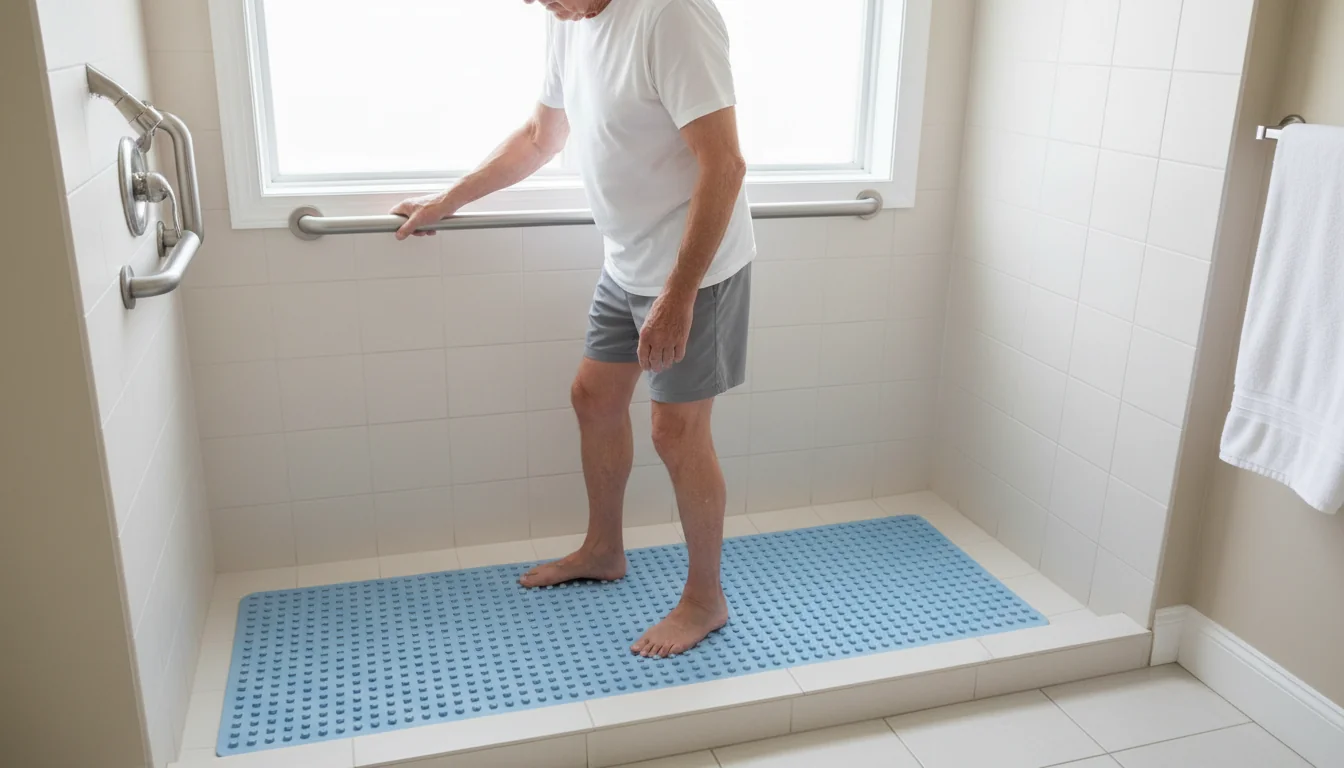
Traction science: surfaces and textures
Grip depends on both the mat and the shower floor. Smooth acrylic favors suction cups. Textured tile often rejects suction, calling for anti-slip alternatives that stay steady without vacuum hold.
- Smooth acrylic or enamel: suction-cup mats excel; confirm full adhesion across the shower floor.
- Textured tile or stone: consider self-adhesive anti-slip strips or loofah-style mats that grip via weight and texture.
- Fiberglass bases: check manufacturer guidance; some finishes need adhesive treads instead of suction.
- Raised textures: pebble or ribbed tops improve underfoot traction in soapy, wet conditions.
- Edges: low-profile borders reduce trips for seniors with limited foot clearance.
| Shower surface | Mat type that works |
|---|---|
| Smooth acrylic/enamel | Suction-cup mat with drain holes and firm texture |
| Textured tile/stone | Adhesive treads, anti-slip coatings, or loofah-style mat |
| Fiberglass with coating | Manufacturer-approved non-suction solution |
If a suction mat lifts anywhere, do not use it. In reduced mobility, a partial bond can trigger slips and falls.
For a wider view of traction formats and textures, see our non-slip shower range for complementary options to pair with grab rails and seating.
Full coverage: right size, right fit
Coverage matters more when step height is limited. A mat that leaves gaps between entry, seat, and drain increases risk for older adults and those with impaired balance.
- Walk-in stalls: choose formats that span typical foot placements during transfers.
- Tub-shower combos: longer mats reduce slippery zones at the drain and faucet side.
- Seat users: align mat under the seating footprint and foot positions when standing.
- Walker use: verify legs do not catch in holes; test rolling or lifting through pivot turns.
In 2026, bathroom safety guidance still ranks showers among top fall sites for seniors. Full-coverage mats help close the gap.
Tie sizing to movement patterns: entry foot, stance under running water, and the final pivot to exit. That alignment supports safer, repeatable routines.

Comfort balance: cushioning without drift
Comfort helps seniors stay calm, but too much softness can shift underfoot. Aim for firm cushioning with a textured top so traction remains consistent as you move.
- Raised ribs: enhance proprioception and reduce sliding during weight shifts.
- Moderate foam: eases pressure yet keeps a predictable stance for limited mobility.
- Loofah weaves: feel soft, drain quickly, and can suit textured floors without suction.
- Firm rubber: reliable traction on smooth tubs; confirm adhesion before each use.
If shuffling starts when soap hits the floor, upgrade texture density rather than thickness. Grip beats plush for safety.
Choose feel for comfort, but verify stability for reduced movement control. That is the balance that lowers slip risk.
Drainage hygiene: grip that lasts
Water under a mat cancels traction. Look for drain holes that move water away and designs that lift easily for drying. Clean routines protect both safety and skin health.
- Lift and hang after each shower; let the floor dry to prevent biofilm buildup.
- Weekly disinfect under the mat; residue reduces grip on wet surfaces.
- Machine-washable designs simplify maintenance for caregivers and families.
- Adhesive treads: scrub gently with a soft brush to keep texture effective.
Consistent hygiene preserves steady traction for seniors and individuals with limited balance, reinforcing bathroom safety day after day.

Safer layout: integrate supportive aids
A non-slip mat works best inside a system. Combine it with secure grab bars, good lighting, and low or no-threshold access to support reduced stride and careful transfers.
- Grab rails: vertical near entry; horizontal on back wall; fixed into studs.
- Seating: shower chair feet must sit stably on the mat without catching.
- Handheld shower: reduces twisting while seated or during one-handed washing.
- Lighting: motion night lights cut trip hazards on bathroom floors.
For impaired balance, the combination of mat traction and fixed bars reduces slips more than either solution alone.
Build the layout around current movement patterns—and recheck after any change in strength, pain, or medication.
Install right: five steps
If you need a senior-focused surface with predictable grip, consider this option as a reference point: non slip shower mat for senior. Then apply these quick steps.
- Dry-fit first. Mark where feet land during entry, pivot, and exit.
- Clean both surfaces. Press cups from center out, or smooth a suction-free mat flat.
- Wet test. Soap the feet, then perform a slow heel-to-toe roll.
- Simulate transfers. Place chair or walker; check leg stability and hole spacing.
- Set a routine. Lift weekly, disinfect beneath, and hang to dry.
If cups lose hold, re-clean the floor to remove residue. Even a thin film reduces suction.
Prefer a firmer feel under cautious steps? A rubber-based option can increase friction without adding much bulk.
Why prioritize movement needs over generic features?
Because mobility patterns dictate risk points. Matching grip, coverage, and edge design to a person’s gait and transfers reduces slips more than any single “best” feature list.
Suction mat vs adhesive strips—what suits limited mobility?
On smooth floors, suction mats with drainage work well. On textured stalls, go suction-free plus strips. In square walk-ins, an 80×80 square format helps maintain full-foot traction.
What size and thickness work with walkers or chairs?
Use broad coverage and moderate thickness. Too thin can bunch; too thick can lift leg tips. Ensure beveled edges and hole spacing that do not trap rubber feet.
Does texture choice matter for neuropathy or balance issues?
Yes. Softer top textures improve feedback without pressure points. A antibacterial shower mat mirrors most stalls and supports orientation during slow pivots.
How do I clean when reach and stamina are limited?
Choose lightweight mats you can lift with one hand. Hang after use. Once a week, use a long-handle brush and mild disinfectant to clean both floor and mat underside.
Do mats replace grab bars in mobility-focused bathrooms?
No. Mats add traction; bars add pull and balance support. For safer transfers, use both—plus a seat if standing tolerance is low.
The right mat follows the person’s pace and patterns. That is how you turn reduced mobility into a safer, calmer routine in 2026.
- Match floor and mat: suction for smooth, suction-free for texture.
- Cover transfer zones: size and bevels matter for stable steps.
- Maintain weekly: lift, dry, and clean to preserve grip.
If you need a reference point, explore a surface non slip shower mat for elderly and adapt from there to your exact mobility needs.

0 comments