


A 70×70 shower cubicle is compact, bright, and efficient—but it gives you very little margin for error. Are you sure your non-slip mat fits the tray and drain layout?
In this 2026 guide, you’ll learn how to size precisely for a square enclosure, what drainage patterns work best, and which 10 mat models suit a 70×70 cubicle without bunching or blocking water flow.
Exact fit in a 70×70 stall
In a small enclosure, tolerance is minimal. A mat cut for a 70×70 shower cubicle reduces bunching, improves drainage, and stabilizes your footing on tiles.
- Target a tight perimeter: 3–5 mm gap at walls prevents curl-up.
- Check door clearance: framed doors in an alcove stall can snag thick edges.
- Align with the drain: center or corner cut-outs keep water moving.
- Opt for low profile mats if your threshold is high.
- Confirm the pan texture; smooth pans need stronger suction cups.
On day one, wet the cubicle floor, press the mat from center to edges, then “burp” air at corners to seat each suction cup.
Unlike outside-the-tub rugs, a true in-cubicle mat must be perforated, quick-drain, and dimensioned for your square box. That’s the difference you feel every time you step in.
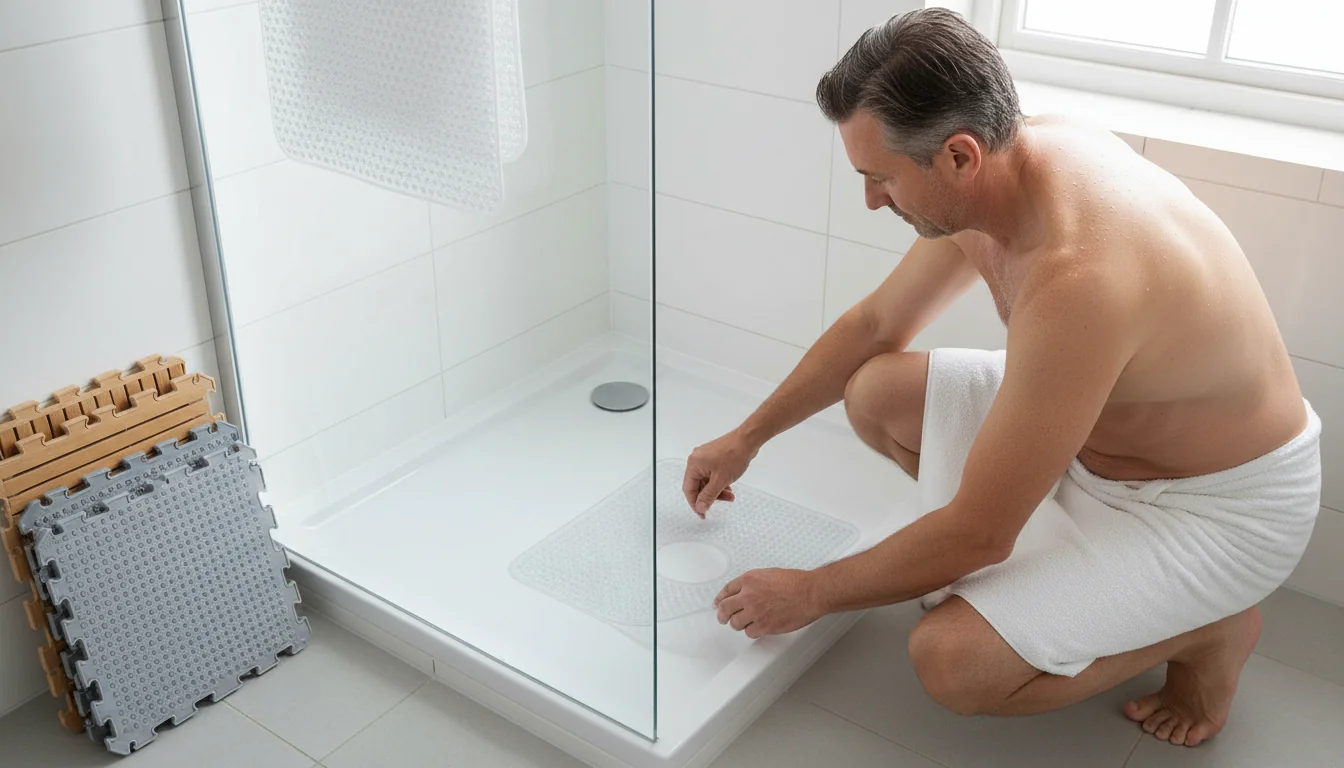
Drain layouts: choose smart
A 70×70 cubicle often sits on a white composite pan. In alcove configurations or four-piece shower kits, drains may be centered or offset. Your mat must respect this geometry.
| Drain position | Recommended mat feature |
|---|---|
| Center drain | Circular or diamond-grid cut-out; removable disk for cleaning |
| Corner drain | Triangular relief with sloped lattice channels |
| Linear drain | Edge-to-edge slats; narrow elongated slots |
- Confirm if your alcove tray is a center drain before ordering.
- Avoid covering the weep holes or hair trap; use removable inserts.
- Prefer mats with underside channels so water travels under your feet.
- Check mat stiffness; it should conform to the pan’s slope.
Blocked drains raise standing water and slip risk. If suds pool for more than 20–30 seconds, re-seat or trim the mat around the outlet.
In small cubicles, flow is everything. Good mats make the pan work as designed—great mats make it feel bigger.
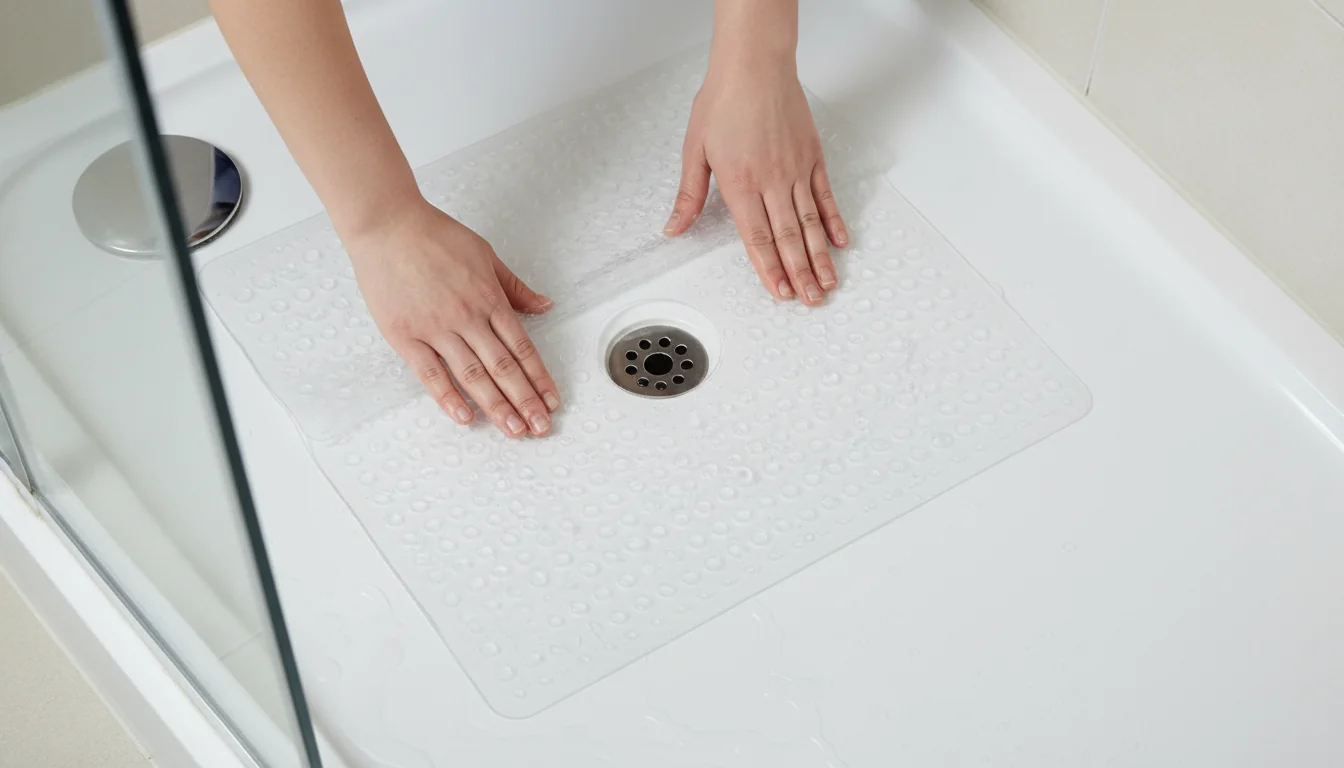
Grip materials that work
Inside a compact stall, the right surface texture stabilizes every step. Prioritize traction patterns that interlock with wet skin and soap film.
- Natural rubber: strong hold, supple feel; look for pebble/galet or ribbed textures.
- PVC/TPE with suction cups: versatile, washable, and widely perforated.
- EVA interlocking tiles: modular; create a 70×70 field that drains fast.
- Teak slats: raised slatted design; durable and naturally anti-wet in ventilated stalls.
- Micro-suction (smooth back): ultra-low profile for tight-door alcoves.
Diamond, striped, and raised grid textures spread pressure points to boost grip without feeling abrasive.
Avoid plush or tufted rugs inside the enclosure; they trap water. Reserve them for outside the cubicle’s door only.
10 models sized for 70×70
Below are ten non-slip mat archetypes that fit a 70×70 shower cubicle. Each model notes drainage, texture, and who benefits most.
- Model 1 — Square PVC suction grid: 70×70, perforated lattice, 80–120 suction cups. Great all-rounder for smooth pans.
- Model 2 — Rubber pebble surface: “galet” texture, soft underfoot, micro-channels between pebbles speed runoff.
- Model 3 — Center-drain cut-out: circular aperture with removable disk; ideal for alcove trays with a centered outlet.
- Model 4 — Corner-drain triangle relief: diagonal slots toward the corner; prevents puddling in square cubicles.
- Model 5 — Micro-suction low profile: adhesive micro-cups on a smooth back; door-friendly in tight enclosures.
- Model 6 — EVA interlocking tiles: 10–12 tiles build a 70×70 field; easy to lift, rinse, and reconfigure.
- Model 7 — Teak slatted platform: raised slats allow air/water flow; suits ventilated stalls, not sealed wet rooms.
- Model 8 — TPE diamond-grip mat: diamond embossing, supple feel, stable on gently sloped pans.
- Model 9 — Antimicrobial PVC lattice: wide perforations; resists mildew when rinsed after use.
- Model 10 — Quick-drain ribbed slats: parallel ribs create channels; excellent for linear drains along one edge.
If your feet feel “floaty,” the mat’s thickness is too high. Aim for 3–5 mm in a small cubicle to keep balance natural.
Each model above is suitable for a compact stall when sized and seated correctly. Prioritize drain access and grip you can feel with soapy feet.
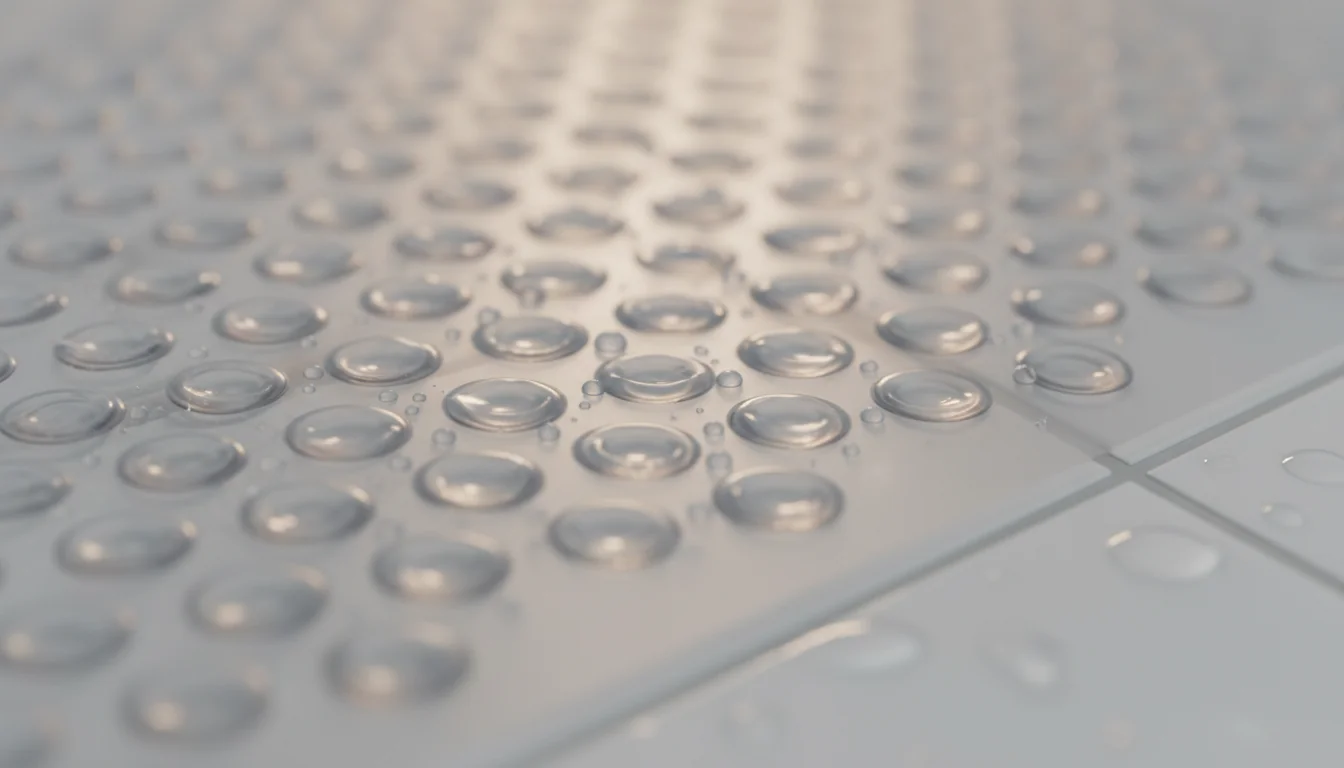
Hygiene in tight enclosures
In a 70×70 cubicle, airflow is limited. Keep routines simple and consistent to control biofilm on the mat and tiles.
- Rinse hot after every use; squeegee the pan and mat surfaces.
- Lift and hang the mat to dry; avoid sealing it flat on the floor.
- Wash weekly: mild detergent, 30–40°C if machine-safe; air-dry.
- Descale monthly; a 1:1 vinegar rinse clears soap films on suction cups.
- Replace if the back hardens or cups won’t re-seat—grip is gone.
If mildew returns within 72 hours, increase ventilation or switch to a more perforated lattice that dries faster in the enclosure.
For readers managing mobility changes (a common theme on caregiver forums), combine a non-slip mat with well-placed grab bars and, if needed, a seat—small upgrades that make a small stall feel safer.
Installation & care: 70×70 guide
Before you start, dry-fit the mat inside the cubicle and confirm door sweep clearance. For exact sizing, consider grey shower mat that aligns with your drain layout.
- Clean the tray with a non-oily bathroom cleaner; rinse thoroughly.
- Place the mat on a damp surface; press from center outward to seat cups.
- Check water flow toward the drain; adjust cut-outs if needed.
- After showering, lift one edge to vent; squeegee the tray if you can.
- Machine-washable models: cold cycle, gentle spin; air-dry fully before reuse.
Monthly, soak the mat in warm water with mild detergent to release soap film from suction cups and perforations.
Do not apply oils or silicone cleaners in the cubicle. They compromise traction on tiles and trays.
If you later upgrade to a larger square, choose a larger square alternative that keeps the same drainage logic you validated here.
Why prioritize a mat in a 70×70 cubicle?
The smaller footprint leaves less recovery space if you slip. A grippy surface stabilizes your stance and keeps water moving toward the drain.
How does a square enclosure compare to larger bases?
On larger trays, minor misfits go unnoticed. In a 70×70 space, millimeters matter. If your setup is tighter, consider small square shower mat outside the enclosure as a drying zone or for a secondary cabin.
What materials grip best in a square cabin?
Rubber and TPE grip well on textured pans. PVC grids suit smooth acrylic. Teak slats rely on weight and slats, not cups, and ventilate quickly.
Does drain location change my choice?
Yes. Use central cut-outs for center drains, and asymmetrical hole patterns for offset outlets. This keeps flow unobstructed in a small enclosure.
How do I clean a mat without removing it daily?
Rinse with the handheld head after each shower, lift one edge to vent, and deep-clean weekly. A textured option like a pebble-effect surface helps mask limescale between washes.
Is a non-slip mat enough for those with mobility concerns?
Combine a grippy mat with grab bars, a shower seat, and a wearable alert. These upgrades are widely advised in mobility and caregiver discussions.
How thick should the mat be in a 70×70?
8–12 mm is a safe range. It protects feet yet clears the door. Thinner ribs also drain faster in compact enclosures.
In a 70×70 shower cubicle, precision rules: fit, drainage, and traction must work as one system.
- Measure the inner tray and match the drain pattern carefully.
- Favor open grids or slats to keep water moving in tight quarters.
- Balance grip with comfort; add grab bars for comprehensive safety.
If you also want a visual accent for your enclosure, explore shower tray mat that still preserves drainage and secure footing.

0 comments