


Rubber vs PVC shower mat: which one to choose when real-world bathrooms are wet, soapy, and sometimes textured? In 2026, the right decision balances safety, hygiene, and upkeep.
This guide helps you choose with clarity. You’ll learn how grip actually works, what to measure, how to clean without ruining the mat, and when to opt for one material over the other.
Bottom line: by the end, you’ll know exactly which option to pick for your shower or tub—and why.
Safety first: match to surface
Start with the floor you stand on. Your decision should prioritize non-slip performance on wet surfaces and reliable anchoring under movement.
- Smooth tubs or stalls: Rubber usually grips best and sits flat; PVC relies on suction cups for hold.
- Textured or tiled bases: Many suction-cup mats won’t seal; consider rubberized undersides or cup-free PVC loofah styles.
- High-risk users: For seniors and kids, choose a mat with strong traction top and secure base—test before first use.
- Entry/exit zones: Ensure the mat covers the step-in and step-out path to prevent slips on wet tile.
- Low-profile design: Reduces trip risk at edges and under mobility aids.
To choose confidently, step onto the mat with wet feet and shift side-to-side. If it creeps or curls, reject it.
If your shower already has aggressive texturing, you may not need a mat. Otherwise, decide with safety as the north star.
Grip vs weight: material trade‑offs
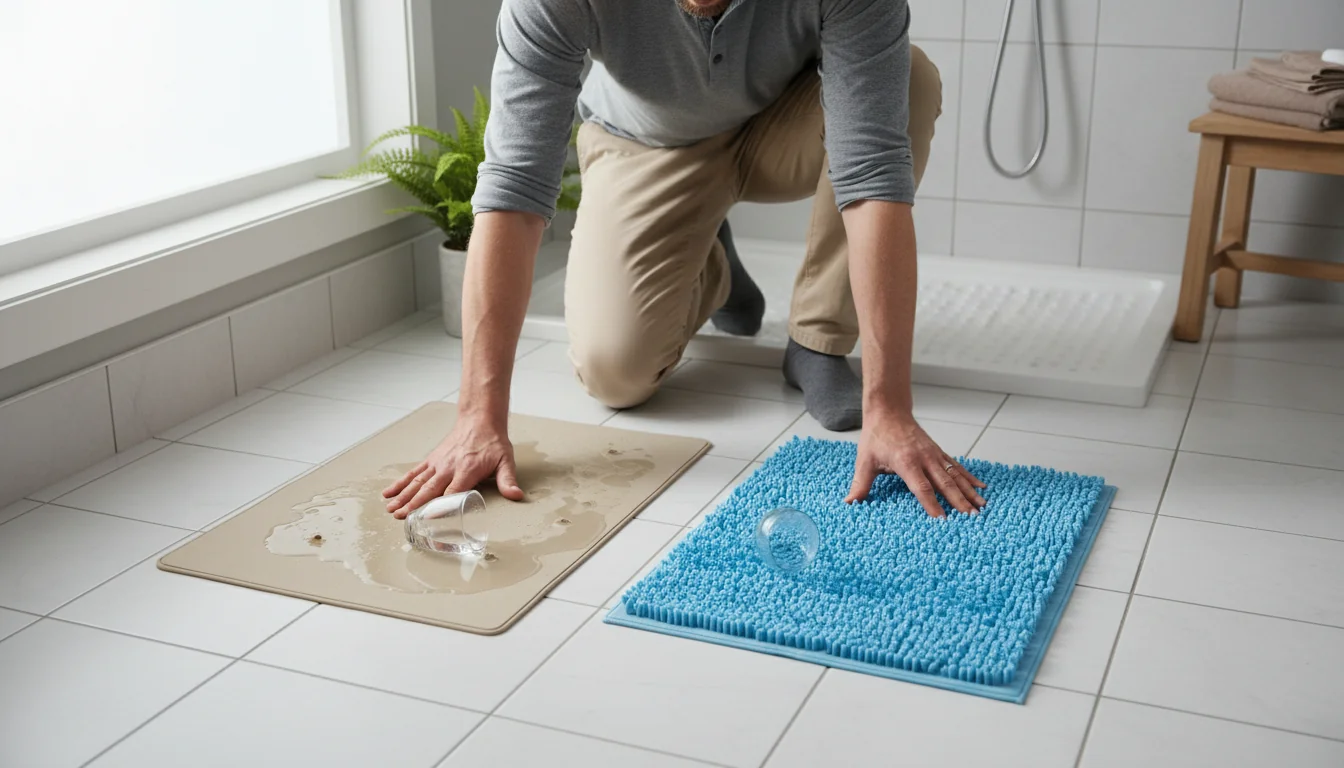
Rubber and PVC behave differently under soap, shampoo, and continuous wetting. Weigh these traits before you settle on one.
| Factor | Rubber vs PVC |
|---|---|
| Wet traction | Rubber: excellent floor grip and stable top; PVC: relies on suction cups, varies by surface. |
| Drainage | Both can have holes/channels; prioritize large perforations to prevent pooling and slime. |
| Durability | Rubber resists tearing and stays put; basic PVC can harden or curl over time. |
| Odor/VOCs | Natural rubber may smell initially; lower-grade PVC can off‑gas—look for low‑VOC claims. |
| Latex allergy | Rubber can contain latex; PVC is latex‑free by default. |
| Weight/feel | Rubber is heavier with a planted feel; PVC is lighter and easier to lift for cleaning. |
- If you prioritize steadfast grip, lean rubber.
- If latex is a concern, PVC provides a rubber‑free route.
- On textured floors, verify hold; suction cups may not seal.
- Choose pronounced texture underfoot for soapy scenarios.
Exploring options beyond a single model helps you choose with confidence—see our non‑slip shower range for varied textures and formats.
When traction and maintenance both matter, decide by surface first, then refine by care routine and health needs.
Cleanliness: care shapes the pick
Hygiene is a safety feature. Drainage holes, quick drying, and simple cleaning steps should steer what you finally choose.
- Daily habit: Rinse after showers and hang to dry to prevent mold and mildew.
- Weekly scrub: Use a soft brush and mild detergent; sanitize with 1:10 bleach or equal‑parts white vinegar, then rinse well.
- Machine‑washable claim: Verify on label; many mats prefer gentle hand cleaning to preserve suction cups.
- Open design: Loofah or perforated surfaces allow faster drying and less slime buildup.
Avoid high heat on rubber or PVC. Tumble drying or very hot water can warp, crack, or peel non‑slip backings.
If you rarely clean, choose a mat with larger drain holes and a top texture that won’t trap residue. The easier it is to rinse, the longer it stays safe.

Fit and coverage: measure, then decide
Coverage affects safety as much as material. Size, shape, and suction‑cup density should factor into your final selection.
- Size and coverage: Measure your shower or bathtub floor so the mat covers stepping zones fully.
- Drain path: Ensure holes align away from the drain to avoid slow pooling around your feet.
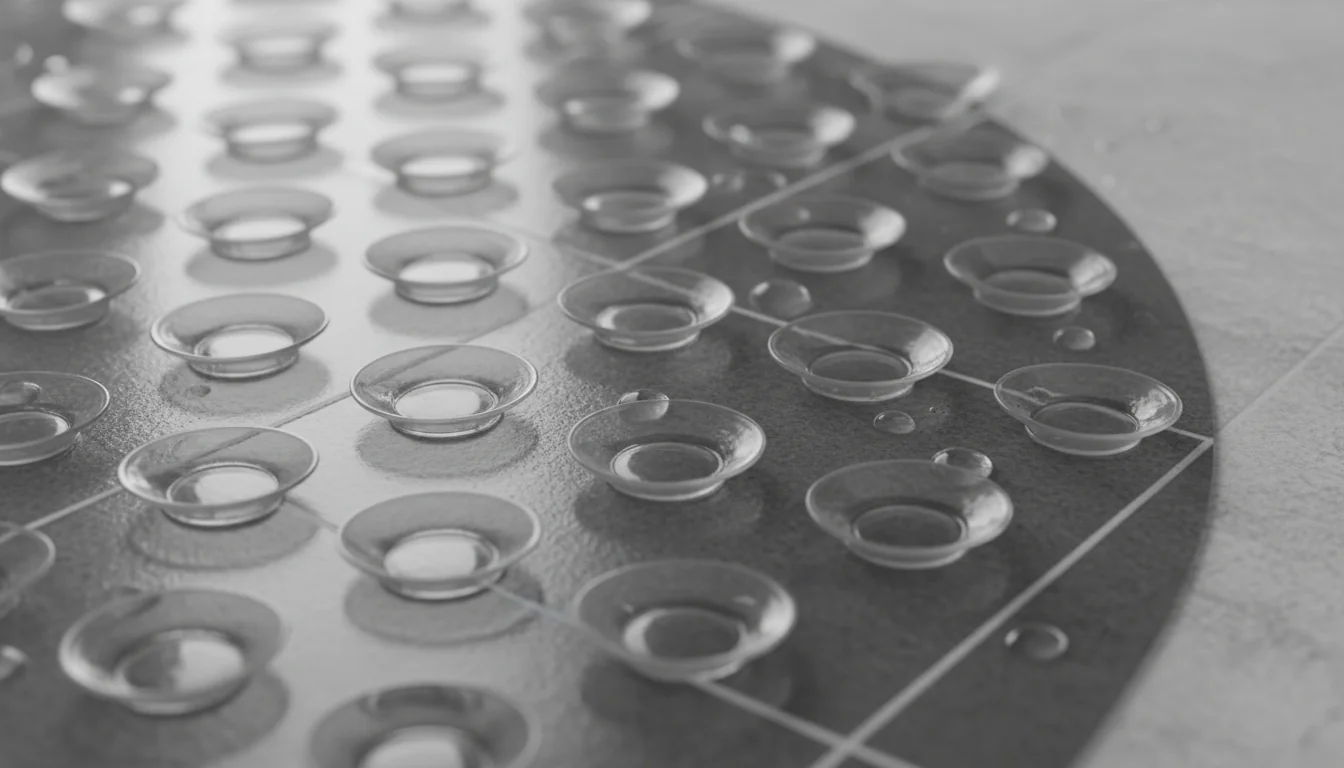
- Suction count: More cups usually means better hold on smooth bases—test in multiple spots.
- Shape: Rectangular for long stalls; square for compact bases; curved edges reduce curl risk.
Choose a mat with drainage holes and a textured top; together they reduce slipperiness in soapy water.
When in doubt, pick the mat that fits your footprint best before debating material—coverage mistakes are the most common cause of slips.
Health factors: safer materials matter
Your short list should account for allergies, odors, and indoor‑air considerations. This is crucial in small bathrooms.
- Latex sensitivity: If latex is an issue, avoid natural rubber and consider PVC or synthetic rubber alternatives.
- VOC odor: Initial smells can occur; ventilate and rinse. Seek low‑VOC claims where available.
- Antimicrobial claims: Helpful, but cleaning habits matter more for real‑world hygiene.
- Sustainability: Rubber can include recycled content; PVC is widely used but less recyclable—balance lifecycle with durability.
If allergy or odor is decisive, let that lead what you choose—material comfort means nothing if you can’t tolerate the mat in a steamy room.
Caregiver forums and home safety experts echo this: decide for the person using the bathroom, not just the space itself.
Maintenance: keep traction day after day
The safest mat is a clean one. Your ongoing routine should be simple enough that you’ll actually do it.
- After use: Rinse soap film, then stick to the wall or hang over a bar to dry fully.
- Weekly: Scrub with mild detergent; sanitize using diluted bleach (1:10) or vinegar; rinse thoroughly.
- Monthly check: Look for peeling backing, torn suction cups, or persistent odor; replace if found.
- Outside the tub: Consider non‑skid strips for thresholds where mats bunch or lift.
Don’t leave the mat wet on the floor for days. That’s when slime wins—and traction loses.
If time is tight, decide on designs with bigger perforations and stiffer top textures for faster rinse‑and‑dry cycles.
Quick guide: decide in 5 steps
- Identify your surface: smooth or textured/tiled?
- Set the priority: grip, easy cleaning, or comfort?
- Measure coverage: length, width, and drain position.
- Pick drainage: holes or channels that let water flow.
- Check care: machine-washable or bleach/vinegar safe.
If grip is your top need on smooth tubs, select a dense, cup-equipped sheet or a heavier flat rubber with strong texture.
Prefer a planted feel and robust underfoot traction? Consider a robust rubber option to keep stability front and center.
Don’t block the drain with a solid sheet. Standing water defeats traction and hygiene.
Working with a compact stall? This small square shower mat helps you choose coverage that fits neatly without trimming.
Rubber or PVC: how should I choose?
Decide by surface and priority. Rubber excels at planted grip and warmth; PVC offers cup-based hold and broad styles. Match drainage, coverage, and care to your habits.
Which performs better on textured floors?
Suction cups often struggle on texture. Choose mats that grip via weight and surface texture, or consider discreet anti-slip strips as a permanent aid.
What’s the safer pick for seniors?
Aim for low profile, reliable grip, and strong drainage. A purpose-built option like this senior-focused pick balances traction with easy cleaning.
Square showers: what should I select?
Measure the tray and cover the full stepping zone. A mat with a square profile, such as square shower mat, simplifies a precise fit.
How do I clean without damaging it?
Rinse after use, hang to dry, and deep clean weekly. Use a mild scrub, then sanitize with a 1:10 bleach solution or white vinegar. Avoid high heat on rubber.
Is there an option that looks more refined?
Yes. You can choose subtle textures and modern colors. A design-forward variant like shower tray mat pairs safety with aesthetics.
When should I replace the mat?
Replace when suction weakens, backing peels, odor persists after cleaning, or the surface tears. If it slides during a wet test, make a new choice immediately.
To choose between rubber and PVC in 2026, match material to surface, grip to habits, and cleaning to your routine.
- Prioritize traction plus drainage on your actual floor.
- Measure coverage precisely; keep the drain flowing.
- Clean regularly; hang to dry after every use.
Make a clear, needs-based selection—and step into safer showers with confidence.

0 comments