


Small knocks today often become big cracks tomorrow. If your shower tray already looks scratched or feels fragile, the first goal is to control everyday impacts, not to mask them.
What are the real-life hits your tray faces each day, and how can you cut their force in half—fast? In this 2026 guide, you’ll learn how to identify risky contact zones, soften daily shocks, and install discreet buffers that save surfaces and nerves.
Understand forces, stop breaks
Damage comes from two things: how hard an object lands and how concentrated the load is where it lands. Scratches make both worse.
- Impact energy rises with mass and height; even a shampoo bottle can deliver a sharp jolt.
- Point loads at edges, corners, and around the drain create stress spikes.
- Flex underfoot amplifies shocks; unsupported bases act like a drum skin.
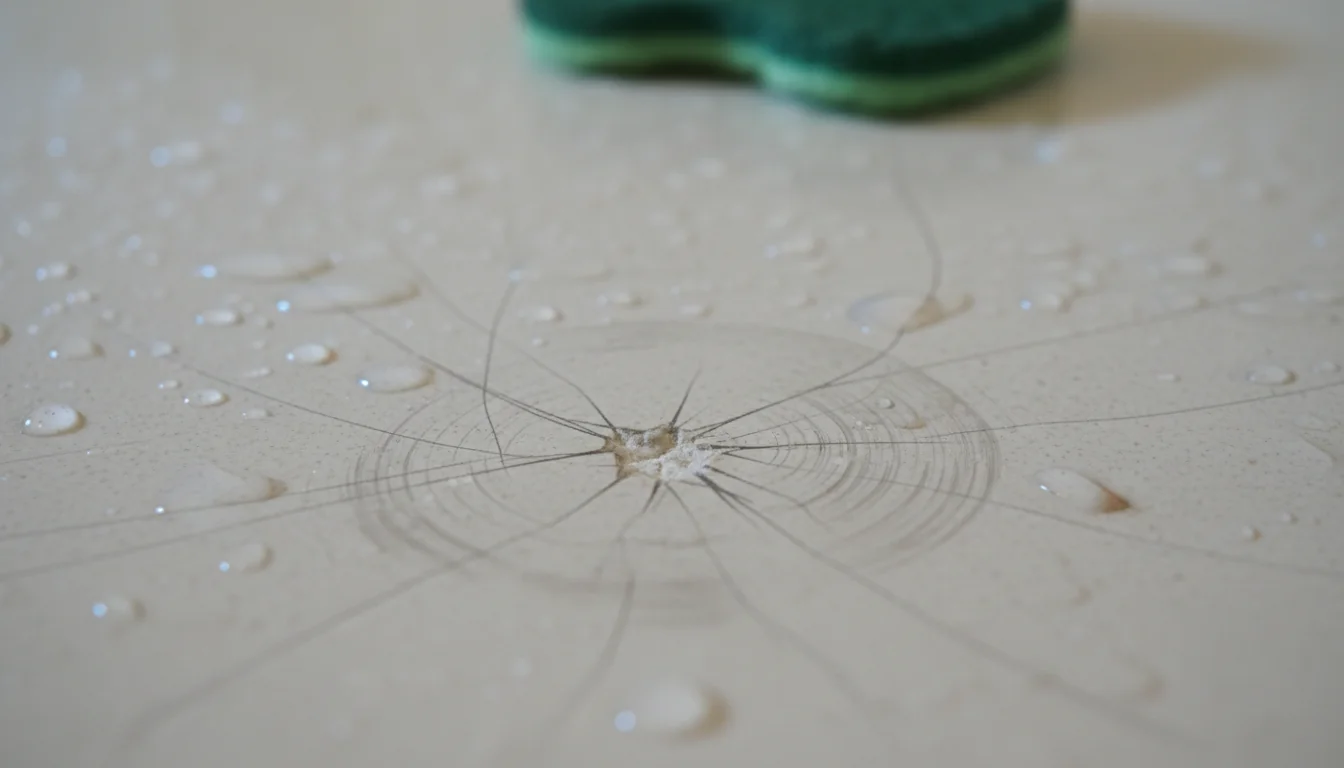
- Existing scratches act as micro‑crack starters, so repeat hits travel farther.
- Thermal changes plus knocks = higher risk of tiny fractures.
Impact energy from a 1 kg bottle falling 0.5 m is roughly 5 J—enough to mark a thin acrylic or brittle fiberglass tray.
| Common drop | Approx. energy at 0.5 m (J) |
|---|---|
| 1 L shampoo (≈1 kg) | ≈4.9 |
| Hand shower (≈0.3 kg) | ≈1.5 |
| Glass jar (≈0.4 kg) | ≈2.0 |
| Metal razor (≈0.1 kg) | ≈0.5 |
If a tray already feels “drummy,” reduce point loads immediately with cushioned feet and a soft landing zone.
Keep this physics in mind; it’s how you will cut everyday impacts without changing your routine.

Map the danger zones
Not all areas suffer equally. Hits often cluster where our hands reach and where water guides objects.
- Edges and corners: rigid geometry concentrates contact stress.
- Drain ring: thin surround, frequent collisions with metal grates or plugs.
- Front lip: foot traffic, bottle kicks, and sliding stools hit here.
- Under the hand shower: most drops happen right below the holder.
- Behind a curtain: falls hidden from view keep repeating.
If you see “starburst” marks around a scratch, that area is now high‑risk for further shocks. Protect it first.
Once you know where impacts cluster, you can add targeted cushioning instead of covering the whole tray.
Cushion and distribute loads
Soft interfaces cut the shock of everyday bumps. You’re aiming to spread force and slow it down.
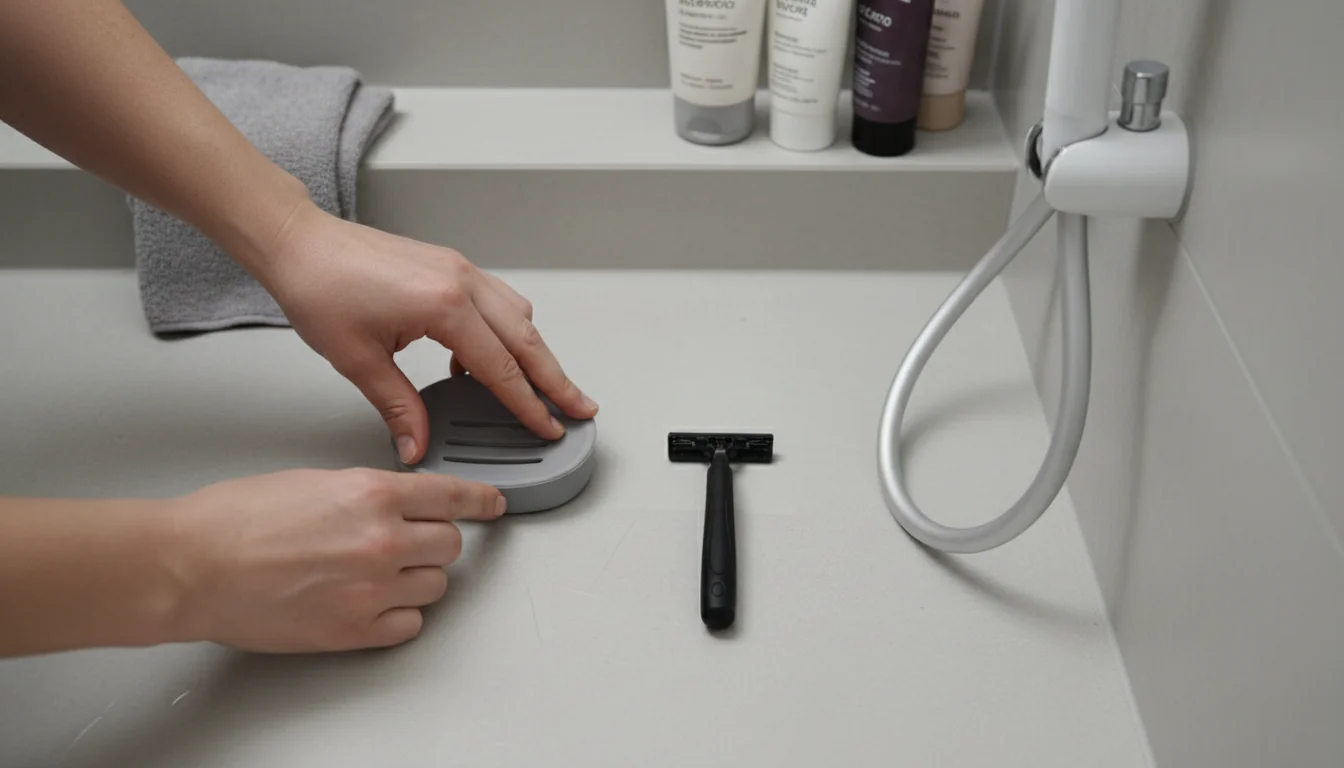
- Use a thin, drain‑friendly mat to absorb drops under the hand shower.
- Add silicone bumpers to the drain plug and to bottle bases to blunt hits.
- Choose caddies with rubber feet or add neoprene dots to metal legs.
- Place a small EVA foam patch near corners where bottles land.
- Fit soft sleeves on the hand shower to reduce clangs.
A 3–5 mm cushion under the most hit spots can halve perceived knock intensity without raising a trip hazard.
If your tray is sensitive or already scratched, consider custom shower mat that hugs the drain layout. Custom edges help keep water moving while softening routine impacts.
Soft interfaces work like your skin’s fat layer: they spread force over time. That’s why mats and bumpers feel so effective against everyday impacts.
Start with the one zone where you see the most scuffs. You’ll feel the difference on day one.
Organize to prevent drops
Most hits are accidental. Smart storage cuts the events that create new chips and extends the life of repairs.
- Fix a corner caddy at chest height to shorten fall distance and reduce impact energy.
- Switch to pump bottles with soft bases; keep glass outside the shower.
- Add a low “landing shelf” under the hand shower for quick parking.
- Corral small items in a tray with silicone feet to stop sliding.
- Clip the hand shower hose to reduce swings and side hits.
Avoid overloading high shelves. A 1 m fall doubles the energy compared with 0.5 m. Fewer, lighter items = fewer impacts.
Think “shorter falls, softer landings.” Every small change reduces the daily hits your tray takes.
Clean without adding harm
Harsh cleaning can make surfaces brittle. Then minor knocks become cracks. Gentle care is essential prevention.
- Use gentle cleansers (pH‑neutral). Skip scouring powders and metal pads.
- Rinse soap residue; dried films increase friction and snagging impacts.
- Avoid solvent-based “topical” restorers that can embrittle resins.
- Fill fine scratches with a compatible repair paste to stop crack growth.
- Dry after showers; water minerals harden edges around defects.
For repair sanding, progress through 800→1200→2000 grit, then polish. This smooths the “catch point” so bumps glide, reducing impact concentration.
Thermal shock plus a drop is a classic failure pair. Keep water temperature changes moderate to cut cumulative impacts on brittle spots.
Cleaning is not just about looks; it directly reduces the force spikes your tray will feel every day.
Stiffen the base, calm shocks
If a tray flexes, each footstep and drop hits harder. Support converts sharp knocks into dull thuds.
- Check for hollow spots; fill with a compatible mortar or foam per manufacturer guidance.
- Verify the slope is a steady 1–2%; standing water invites slips and sudden hits.
- Seal the rim fully; loose rims rattle and amplify impacts on the lip.
- Use a drain gasket that cushions the ring against the deck.
- Add a narrow threshold protector where doors strike.
Unsupported corners fail first. If you feel movement when you press, add support before focusing on cosmetic fixes.
Stability reduces daily impacts at the source. The tray simply stops “punching back.”
How to limit impacts today: quick 5‑step plan
- Rinse grit before stepping in; keep the contact surface clean.
- Lower shelf heights; shorten drop distances immediately.
- Add soft bumpers to drain, handset, and bottle bases.
- Place a thin pressure-spreading pad in the standing zone.
- Switch to pH-neutral cleaner; retire abrasive powders.
A custom-cut anti-slip pad both increases grip and spreads foot loads, sharply reducing everyday knocks. See custom shower mat.
Do not place thick, bouncy foam under a wobbly tray; it can increase flex and amplify edge stress on hits.
How do I know which impacts matter most?
Track where scuffs appear, where you stand, and where items fall. Edges, drains, and under the shower head usually take the hardest everyday blows.
Are mats really effective against daily knocks?
Yes. Thin pads spread foot pressure and catch small drops. They cut peak forces from routine contact and make slips less likely, lowering cumulative damage.
What’s safer: plastic or glass bottles in the shower?
Plastic with soft bases. If you keep glass, add silicone sleeves and lower their shelf height to reduce impact energy if they fall.
How do chemicals increase future impact damage?
Abrasives create micro-grooves that act like stress notches. Harsh cleaners also dry or embrittle finishes, so the next knock chips more easily.
Can I polish out scratches on a fragile tray?
Light buffing is sometimes fine, but do not thin edges or the drain zone. Prioritize buffering future hits instead of removing too much material.
How to protect stone or enamel edges from chips?
Install discreet corner guards, add a soft drain ring, and avoid metal-on-stone contact. Keep storage low to avoid sharp, vertical drops.
Do temperature swings count as “impacts”?
Yes—thermal shock stresses surfaces like a hidden strike. Warm the tray gradually to reduce internal stress before normal use.
Protecting a scratched or fragile shower tray in 2026 is about managing forces, not fear. Tame the common hits, spread loads, and buffer sharp contact points.
- Target hotspots: edges, drains, landing zones.
- Cut drop energy: lower shelves, soften bottle bases.
- Add thin buffers: custom pads, bumpers, corner guards.
Do these, and everyday impacts turn from threats into non-events.

0 comments