


Slips happen fast. The right anti-slip solution should work even with soap, shampoo, and rushing water. But which is more effective in 2026: a shower mat or non-slip stickers?
This article drills into real-world performance—traction under wet feet, drainage, hygiene, durability, and installation. You’ll learn how to judge effectiveness at home, avoid common pitfalls, and match the option to your shower floor and users.
Grip you can trust: wet traction
Traction under water and soap is the first yardstick of real-world effectiveness. Shower mats rely on suction cups and a textured top; non-slip stickers (self-stick strips or discs) rely on permanent adhesive and micro-texture.
- On a smooth shower floor, well-installed stickers create fixed contact points that don’t migrate.
- A bath mat can feel cushioned, but traction drops if suction cups lose seal or if the mat floats in pooled water.
- Strips spaced 5–8 cm apart give continuous underfoot feedback, reducing sudden foot slips when you pivot.
- For tubs with slow drainage, stickers keep grip consistent; mats can slide if water lifts their edges.
Effectiveness rises when the foot’s first contact meets texture. Distributed stickers create more initial micro-grip points than a single sheet.
To make it practical, judge traction by how stable you feel when turning, lifting one foot, or reaching for shampoo. That dynamic stability is the clearest sign of anti-slip performance.
| Metric | Shower Mat | Non-slip Stickers |
|---|---|---|
| Instant foothold on wet soap film | Good when cups sealed; drops if floating | Consistently firm where placed |
| Pivot stability (heel-to-toe turns) | Can bunch or shift under load | Fixed points resist lateral shear |
| Dependence on drain rate | High—pooling undermines grip | Low—adhesive contact remains |
Textured or tiled bases change outcomes. Suction-cup mats struggle on texture; adhesive stickers need a smooth, non-porous surface.
If your shower floor is truly smooth, stickers often edge mats on day-to-day grip. Where floors are uneven, a mat designed for textured bases can be the more effective solution.
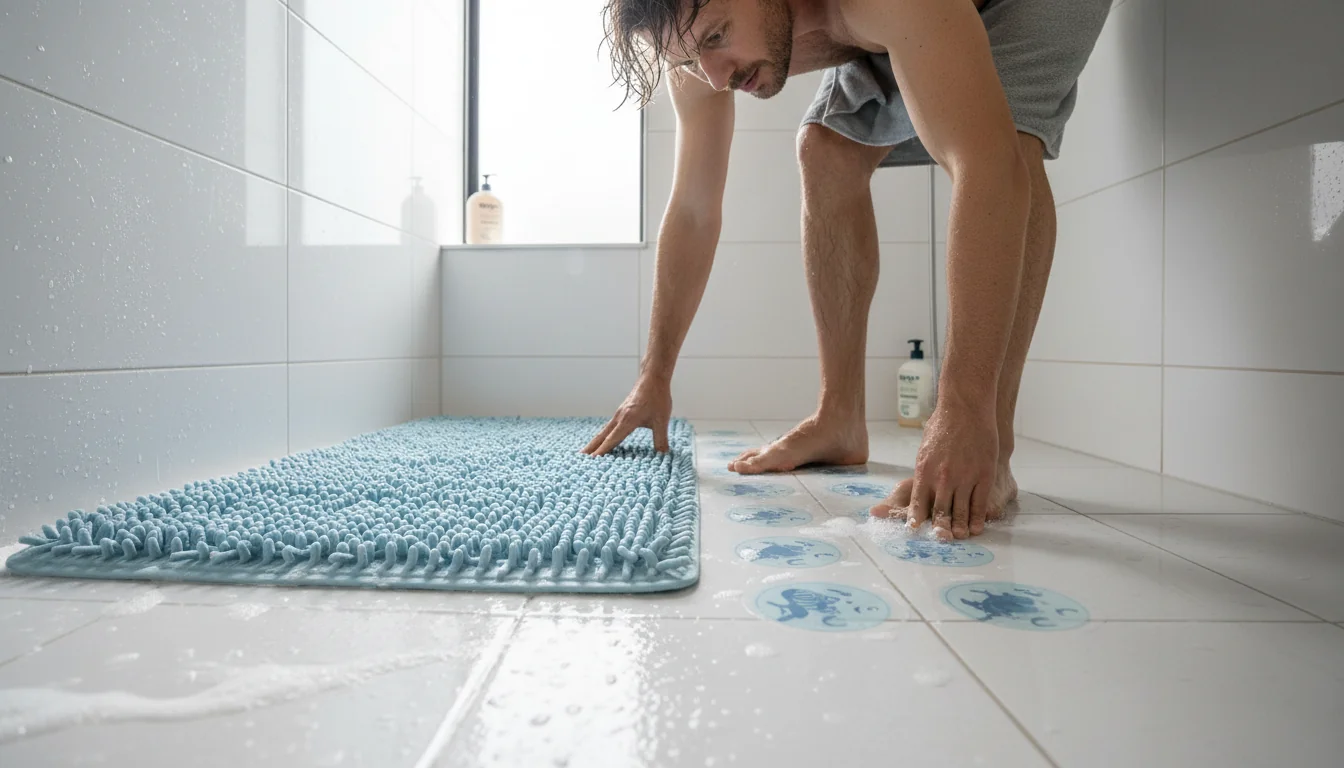
Hygiene matters: cleaning and mold
Effectiveness doesn’t last without hygiene. Soap scum, shampoo residue, and trapped moisture reduce traction on both mats and stickers if you let buildup persist.
- Mats can trap water under the sheet; suction cups become a mildew hotspot without frequent drying.
- Stickers are easier to wipe clean in place; fewer crevices means less biofilm accumulation.
- Machine-washing a mat helps, yet reapplying suction every time is tedious and affects daily reliability.
- A weekly rinse plus quick squeegee pass over stickers preserves their anti-slip properties.
After showering, keep the curtain inside to limit overspray, then lift the mat or squeegee the floor. Cleanliness directly sustains anti-slip performance.
If you prefer a curated set of anti-slip options that emphasize easy upkeep, browse our dedicated anti-slip shower range for formats that simplify routine cleaning.
Coverage fit: floor compatibility check
Coverage determines how much of the tub or shower floor is actually protected. Gaps create slip zones. The right layout improves the overall effectiveness more than material alone.
- Mats are size-bound; if the base is large, you may leave edges exposed or face bunching at drains.
- Stickers let you map high-risk spots: near the drain, under the shower head, and at entry points.
- For bathtubs, run strips along the standing path from faucet to center where soap collects.
- For kids’ baths, denser discs underfoot lower wobble risk during playtime rinses.
Two extra grip rows at the tub entry can reduce step-in slips—the moment most falls start on a slippery bathtub surface.
Compatibility is non-negotiable. Stickers need a smooth, non-porous surface; mats with suction prefer polished acrylic or enamel. For textured tiles, consider mats designed for texture or a paint‑on grip coating as an alternative.
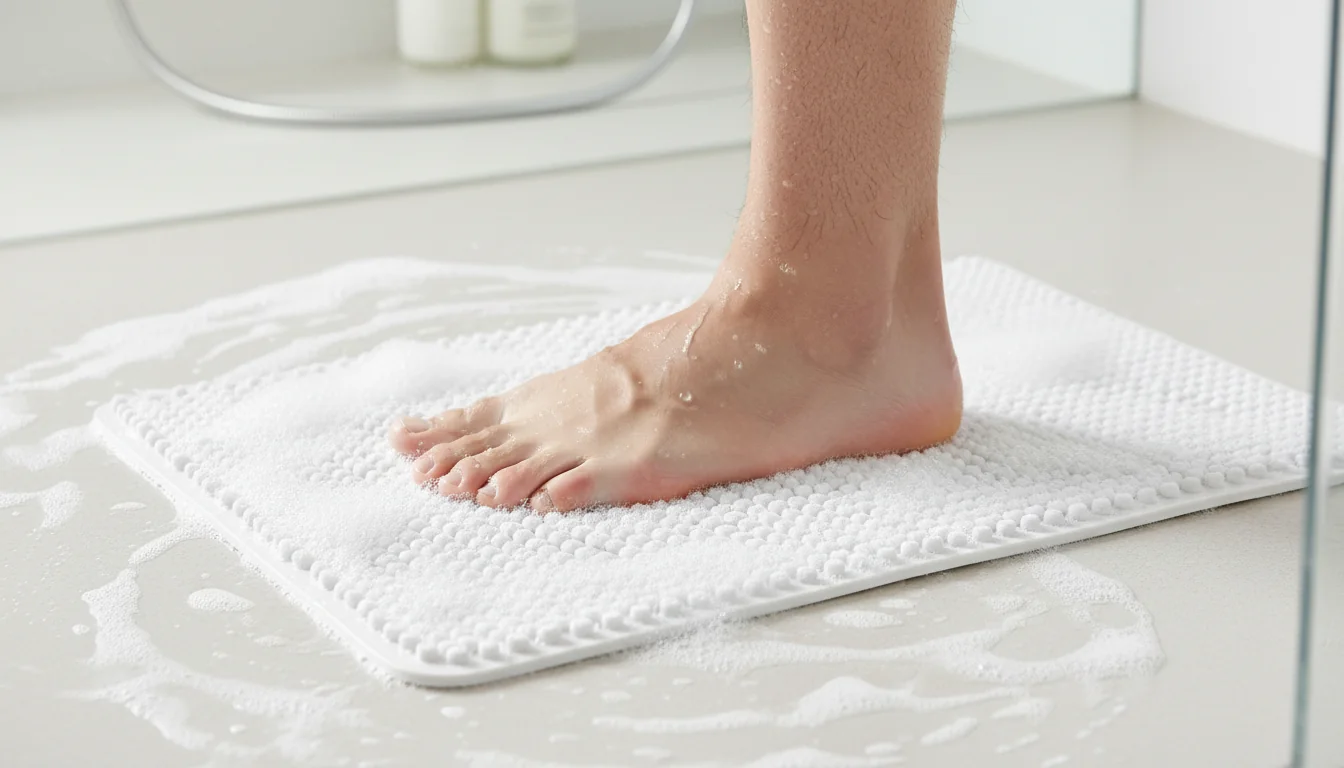
Longevity counts: wear and lifecycle
A safe first week is not enough. Effectiveness must persist as months pass, especially where multiple household members share one shower or bath.
- Mats can harden or lose suction, reducing grip at the edges first—often unnoticed until a near fall.
- Quality stickers typically fail only if installation trapped residue; proper prep prolongs adhesion.
- Drainage design matters: mats with generous holes dry faster, slowing mold growth and keeping texture crisp.
- Lifecycle cost goes beyond price tags—count cleaning time and replacement frequency into the equation.
If your drain backs up, a mat may float and slide. In that scenario, fixed adhesive strips usually retain superior real-world grip.
In 2026, households seeking stable performance often model the annual plan: quick monthly checks, quarterly deep clean, and timely replacement once texture wears smooth.
Risk reduction: users and settings
Effectiveness is contextual. Households with older adults, children, or anyone with balance issues must prioritize dependable anti-slip performance over everything else.
- For older adults, fixed strips reduce trip points compared to loose bathroom floor mats or rugs.
- For kids, broad coverage with fun, tactile discs keeps play safer while rinsing shampoo.
- If you use a shower chair or transfer bench, ensure legs don’t catch in mat holes; stickers avoid this hazard.
- Complementary aids—grab rails near the toilet and tub—multiply safety benefits when combined with anti-slip surfaces.
Map falls history. Where did slips occur—entry step, under the shower head, at the faucet? Place stickers or a mat to neutralize those exact zones.
In care settings or caregiver forums focused on Home Safety, the advice converges: use non-slip solutions inside the tub or shower floor first, then address the outside bath mat and nearby Bed & Bath accessories.
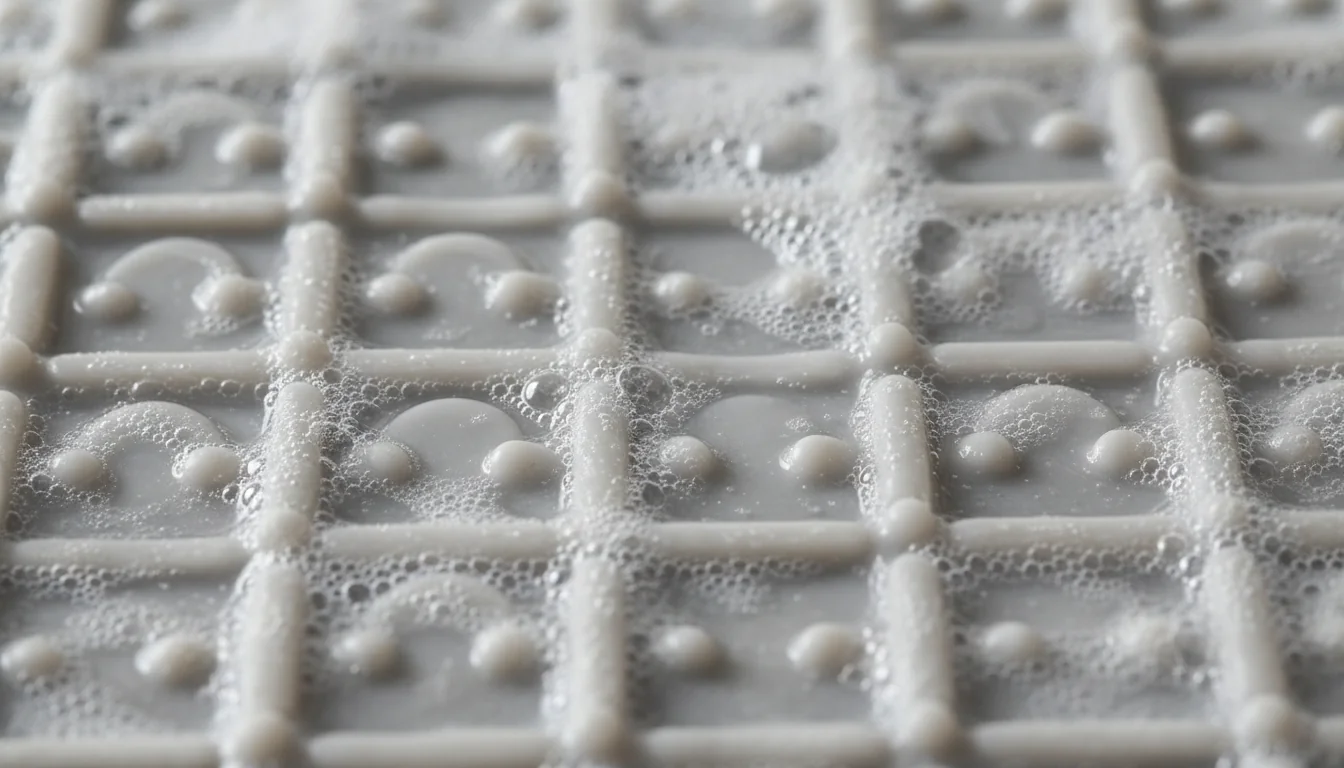
Guide 2026: test and boost anti‑slip performance
For compact stalls, a square mat gives full coverage with fewer gaps; see an example of this footprint with small square shower mat. Use this quick process to verify the actual slip reduction you’re getting.
- Prep the surface: degrease, rinse, and dry. Residue ruins adhesion and suction.
- Install: seat all suction cups or press stickers firmly, then wait 24 hours.
- Soap test: wet, add a small soap line, twist one foot across typical footfalls.
- Adjust: add stickers where you feel slides; re-seat a mat that moves.
- Maintain: rinse after use; deep clean weekly to preserve traction.
Mark slippery spots with painter’s tape first. Place stickers exactly where sliding occurs for maximum effect.
Prefer a resilient, grippy feel underfoot? A rubber build improves foot comfort while maintaining traction—see a representative format like this rubber-based style.
Don’t install over moisture. Even a thin water film can halve adhesion and shorten lifespan.
Why compare mats and stickers at all?
Because effectiveness depends on floor type, drainage, and user habits. Mats and bathtub non‑slip appliques solve traction differently. Testing both against your shower floor reveals which maintains grip with soap and daily use.
Which works better in small square stalls?
Stickers let you grid the entire area, but a snug square mat can be equally effective if coverage is complete. For visualization, consider a larger square layout like large square shower mat and scale accordingly.
Are stickers as durable as a mat?
If applied to a clean, non‑porous surface, sticker grip can last many months. Mats can last as long, but suction fatigue or edge curl reduces reliability. Maintenance frequency largely decides longevity for both.
What about larger shower bases?
Use contiguous coverage. Bigger stalls reward a mat that spans the stepping path or a dense sticker map. To imagine scale, review a generous footprint like non-slip shower mat 90x90 and match it to your base.
How does cleaning affect performance?
Regular rinsing and weekly scrub preserve microtexture and suction. Soap films lower friction, so short, frequent cleaning cycles keep day‑to‑day traction high and consistent.
Is a mat safer for full-length tubs?
Full-length coverage reduces surprise slips while you shift position. A long, low‑profile option helps—see a representative elongated format such as antibacterial shower mat for reference.
How do I judge real effectiveness at home?
Do a wet, soapy twist test in entry, center, and near the drain. If any spot slides, add stickers or reposition the mat. Re‑test monthly; usage patterns change with seasons and products.
In 2026, mats and stickers can both prevent slips—provided they match your surface, drain well, and stay clean. The most effective setup is the one that delivers reliable grip in your exact wet, soapy conditions.
- Fit coverage to footfalls: eliminate bare zones and entry hazards.
- Preserve texture: quick rinse after use; weekly deep clean.
- Verify traction: run the twist test; adjust until sliding stops.
Choose confidently, maintain consistently, and reassess seasonally for a safer bath or shower.
Proof points: what truly changes outcomes
To keep the spotlight on effectiveness, focus on behaviors and environment as much as gear. The best anti-slip setup can still fail if the floor is dirty or water pools unchecked.
- Households using a rinse‑and‑dry habit report steadier grip week after week.
- Stickers placed where feet actually land outperform generic “even spacing.”
- Mats with active drainage holes fare better in slow‑drain tubs.
- If slips persist, expand coverage or combine with nonskid treads outside the tub.
Outside the shower, keep rugs thin and nonskid. Big plush rugs can slide or curl, undermining your careful work inside.
When you treat cleaning, drainage, and coverage as one system, you protect the core promise: stable, non-slip footing during every bath or shower.

0 comments